








Introduction
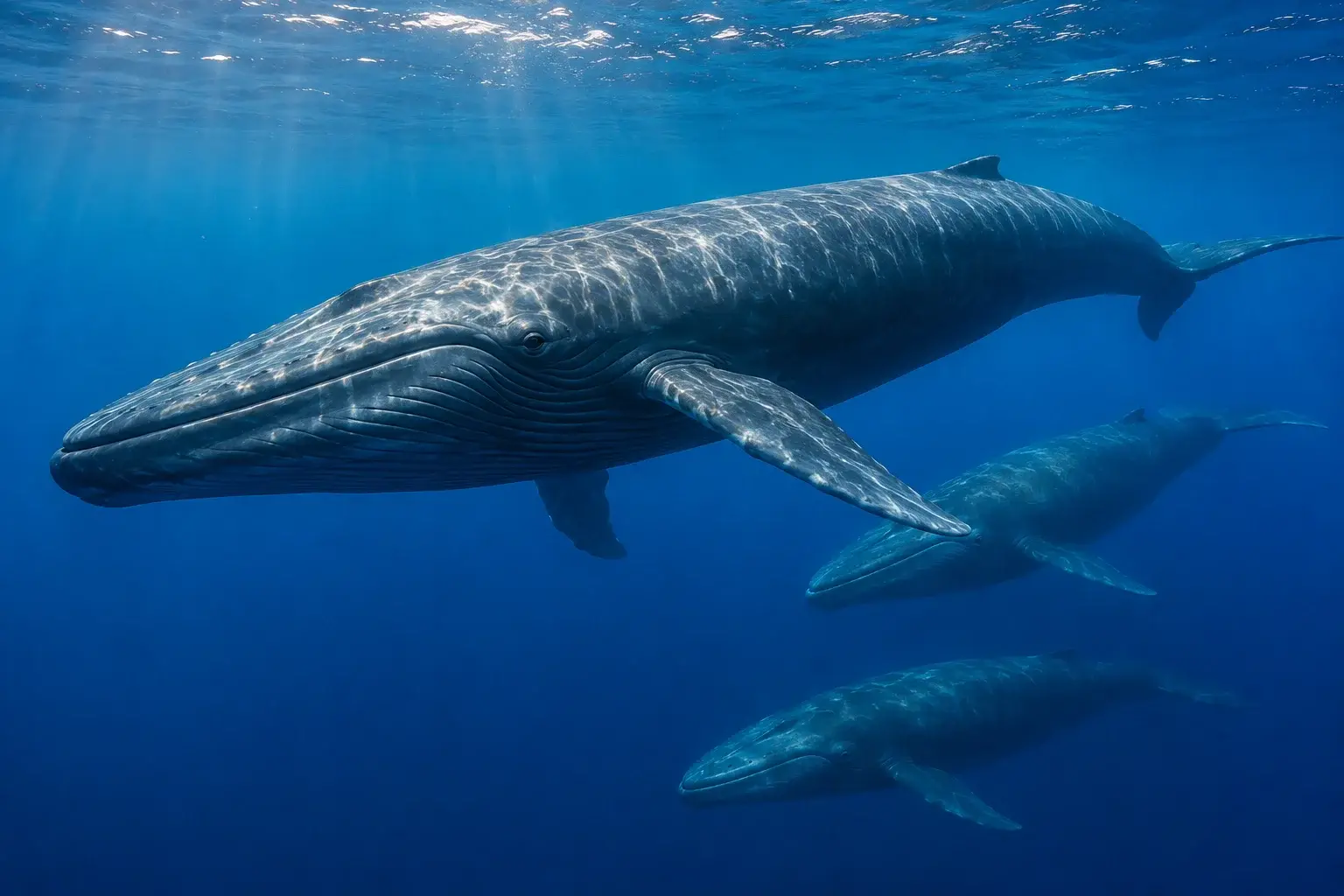
Imagine an animal so large that its heart is about the size of a small car and its tongue weighs as much as an adult elephant. That incredible creature is the blue whale, the biggest animal in the world and the largest animal ever known to have lived on Earth. Even the biggest dinosaurs discovered by scientists were not as massive as this gentle ocean giant.
Many people know that the blue whale is enormous, but few understand how it became so large, what it eats, how it survives, or why scientists are working hard to protect it. Most articles only mention its size and weight, leaving out fascinating facts about its evolution, anatomy, role in the ocean ecosystem, and the challenges it faces today.
In this complete guide, you’ll discover everything you need to know about blue whales—from their incredible size and feeding habits to their migration, conservation, and the reasons they continue to amaze marine biologists around the world.
AI Overview
What Is the Biggest Animal in the World?
The biggest animal in the world is the blue whale (Balaenoptera musculus). It can grow up to 100 feet (30 meters) long and weigh up to 200 tons (180 metric tonnes), making it the largest animal ever known to exist on Earth.
Quick Answer
| Feature | Details |
|---|---|
| Largest Animal | Blue Whale |
| Scientific Name | Balaenoptera musculus |
| Maximum Length | Around 100 feet (30 m) |
| Maximum Weight | Up to 200 tons |
| Diet | Krill |
| Habitat | Atlantic, Pacific, Indian & Southern Oceans |
| Animal Group | Marine Mammal |
| Conservation Status | Endangered |
Key Facts
- Largest animal ever discovered
- Bigger than every known dinosaur
- Eats tiny krill despite its huge size
- Heart weighs around 180 kg (400 lb)
- Tongue weighs nearly as much as an African elephant
- Can live for more than 80 years
What Is the Biggest Animal in the World?
The title of the biggest animal in the world belongs to the blue whale, a marine mammal that has ruled the oceans for millions of years. Although dinosaurs are often imagined as the largest creatures ever, scientific evidence shows that blue whales reached greater body mass than any dinosaur discovered so far.
Blue whales belong to a group of whales called baleen whales, which filter tiny sea creatures from the water instead of hunting large prey. Their scientific name is Balaenoptera musculus, and they are found in every major ocean except the Arctic.
Despite their enormous size, blue whales are known for their calm nature. They spend much of their lives swimming long distances, feeding on krill, and communicating through deep, powerful calls that can travel hundreds of miles underwater.
Unlike sharks or giant squids, blue whales are warm-blooded mammals. They breathe air through blowholes, give birth to live calves, and nurse their babies with milk, just like other mammals.
Why Is the Blue Whale the Biggest Animal Ever?
One of the most interesting questions scientists ask is why blue whales became so enormous while most other animals remained much smaller. The answer lies in millions of years of evolution and the unique environment of the world’s oceans.
The Ocean Supports Giant Bodies
Living in water allows blue whales to grow much larger than land animals. Water provides natural buoyancy, reducing the pressure that gravity places on the body. On land, an animal weighing 200 tons would struggle to support its own weight.
This is why the African elephant, the largest land animal, weighs only a small fraction of a blue whale.
Endless Food During Feeding Season
Blue whales feed in areas where trillions of krill gather during certain times of the year. These tiny shrimp-like animals form dense swarms, providing an enormous food supply.
During feeding season, an adult blue whale can consume nearly 4 tons of krill every day. This rich food source provides enough energy to maintain its massive body.
Efficient Feeding System
Instead of chasing prey, blue whales simply swim through krill swarms with their mouths wide open. Water enters the mouth while flexible baleen plates trap the krill inside.
This feeding method allows them to gather thousands of tiny animals in just one mouthful.
Evolution Favored Larger Whales
Scientists believe larger whales had advantages during migration and feeding. Bigger bodies store more energy, travel long distances efficiently, and stay warmer in cold oceans.
Over millions of years, natural selection favored whales that could grow larger, eventually leading to the giant blue whales we know today.
Blue Whale Size Explained
Pictures alone cannot fully show how enormous a blue whale really is. Comparing its body parts with familiar objects makes its size easier to understand.
| Feature | Blue Whale Size |
|---|---|
| Maximum Length | Around 100 feet (30 m) |
| Maximum Weight | Up to 200 tons |
| Heart Weight | Around 180 kg (400 lb) |
| Tongue Weight | About the weight of an African elephant |
| Newborn Length | Around 25 feet |
| Newborn Weight | Around 3–4 tons |
| Lifespan | 80–90 years or more |
Bigger Than a Dinosaur
Many people assume dinosaurs were always larger than modern animals. However, while some dinosaurs were longer, scientists estimate that blue whales reached greater overall body mass than any dinosaur discovered to date.
A Heart Built for a Giant
The blue whale’s heart is one of the largest in the animal kingdom. It pumps blood through a body nearly 100 feet long, delivering oxygen to powerful muscles that allow the whale to travel thousands of miles every year.
An Elephant-Sized Tongue
The tongue of a blue whale can weigh almost as much as an adult African elephant. This enormous tongue helps push water through the baleen plates while trapping krill inside the mouth.
Blue Whale vs. Dinosaurs
Many people wonder whether the largest dinosaurs were bigger than today’s blue whale. The comparison is fascinating because these giants lived in completely different environments.
| Animal | Length | Weight | Habitat |
|---|---|---|---|
| Blue Whale | Up to 100 ft | Up to 200 tons | Ocean |
| Argentinosaurus | Around 100–115 ft | Estimated 70–100 tons | Land |
| Patagotitan | Around 120 ft | Estimated 70 tons | Land |
| Tyrannosaurus rex | Around 40 ft | Around 9 tons | Land |
| African Elephant | Around 24 ft | Up to 7 tons | Land |
Although Argentinosaurus may have matched or exceeded the blue whale in length, scientists estimate that the blue whale had a significantly greater body mass. This makes it the largest animal ever known.
The ocean also allowed whales to evolve beyond the physical limits faced by land animals. Gravity places strict limits on how large creatures can become on land, while buoyancy helps marine mammals grow much larger.
What Do Blue Whales Eat?
One of the biggest surprises about blue whales is their diet. Despite being the largest animal on Earth, they feed almost entirely on tiny creatures called krill.
Krill are small shrimp-like animals that live in huge swarms throughout the world’s oceans. During feeding season, blue whales migrate to cold waters where krill populations are at their highest.
Instead of chewing food, blue whales use hundreds of flexible baleen plates hanging from their upper jaws. As the whale rushes through a swarm of krill with its mouth open, it takes in enormous amounts of water.
The whale then pushes the water back out using its tongue. The baleen acts like a giant filter, trapping thousands of krill inside before they are swallowed.
An adult blue whale can eat around 4 tons of krill in a single day during peak feeding months. This incredible appetite provides enough energy for its long migrations and enormous body.
Interestingly, blue whales do not hunt fish, seals, or other whales. Their entire feeding strategy depends on one of the smallest animals in the ocean, proving that size does not always determine what an animal eats.
Where Do Blue Whales Live?
Blue whales are found in every major ocean except the Arctic. They are highly migratory animals, traveling thousands of miles every year between feeding and breeding areas.
During summer, they usually stay in cold, nutrient-rich waters where huge swarms of krill are available. In winter, they move to warmer tropical and subtropical waters to breed and give birth.
Blue Whale Habitats
- Southern Ocean
- North Pacific Ocean
- North Atlantic Ocean
- Indian Ocean
- Eastern Tropical Pacific
Unlike many marine animals, blue whales do not remain in one place throughout the year. Their migration follows the movement of food and suitable breeding conditions.
Blue Whale Life Cycle
Blue whales have one of the longest life cycles among marine mammals.
Birth
A baby blue whale, called a calf, is born after a pregnancy of about 11–12 months. At birth, the calf measures around 25 feet (7.5 meters) and weighs approximately 3–4 tons.
Early Growth
During the first months of life, the calf drinks its mother’s rich milk and gains nearly 80–90 kilograms (175–200 pounds) every day.
This rapid growth helps young whales survive in cold ocean waters.
Adulthood
Blue whales become sexually mature between 5 and 15 years of age. Adults spend much of their lives migrating, feeding, and breeding.
Lifespan
Scientists estimate that many blue whales live 80 to 90 years, while some individuals may live even longer.
Incredible Blue Whale Facts
Blue whales are full of surprises. Here are some fascinating facts that many people do not know.
- Blue whales are the largest animals ever known to exist.
- Their scientific name is Balaenoptera musculus.
- A blue whale can weigh as much as 33 African elephants.
- Their heart is roughly the size of a small car.
- Their tongue weighs about as much as an adult elephant.
- A newborn calf is already larger than most adult mammals.
- Blue whales breathe air through two blowholes.
- Their calls are among the loudest sounds produced by any animal.
- They can communicate across hundreds of miles underwater.
- They swallow tiny krill instead of large prey.
- An adult may consume around 4 tons of krill in one day.
- They migrate thousands of miles every year.
- Their thick layer of blubber helps keep them warm.
- Blue whales have very few natural predators.
- Killer whales occasionally attack young or weak individuals.
- Commercial whaling once pushed them close to extinction.
- Today, they are protected by international law.
- Scientists monitor many blue whales using satellite tracking and drones.
- Every blue whale has unique markings that help researchers identify individuals.
- Healthy whale populations support healthier oceans.
Top 10 Biggest Animals in the World
While the blue whale holds the first position, several other animals are also incredibly large.
| Rank | Animal | Maximum Weight | Habitat |
|---|---|---|---|
| 1 | Blue Whale | Up to 200 tons | Ocean |
| 2 | Fin Whale | Around 80 tons | Ocean |
| 3 | Sperm Whale | Around 57 tons | Ocean |
| 4 | Whale Shark | Around 20 tons | Ocean |
| 5 | Southern Elephant Seal | Around 4 tons | Coast |
| 6 | African Bush Elephant | Around 7 tons | Land |
| 7 | White Rhinoceros | Around 2.5 tons | Land |
| 8 | Hippopotamus | Around 2 tons | Rivers |
| 9 | Giraffe | Around 1.9 tons | Savannah |
| 10 | Saltwater Crocodile | Around 1 ton | Rivers & Coasts |
This comparison highlights just how extraordinary the blue whale truly is. Even the second-largest animal is much lighter.
Why Blue Whales Matter to the Ocean Ecosystem
One topic many articles overlook is the important role blue whales play in keeping the ocean healthy.
They Help Marine Food Chains
Blue whales feed on massive amounts of krill while also recycling nutrients through their waste. These nutrients support the growth of tiny marine plants called phytoplankton.
They Support Ocean Biodiversity
Healthier phytoplankton populations provide food for countless marine organisms, making whales an important part of the ocean food web.
They Help Store Carbon
Marine scientists have found that whales indirectly support carbon storage in the ocean by helping phytoplankton grow. Since phytoplankton absorb carbon dioxide from the atmosphere, healthy whale populations contribute to natural climate processes.
Protecting blue whales is not only about saving one species—it also helps maintain healthier oceans for many other forms of marine life.
Why Are Blue Whales Endangered?
Although commercial whaling has largely ended, blue whales still face several serious threats.
Ship Collisions
Large cargo ships sometimes collide with blue whales during migration.
Climate Change
Changes in ocean temperatures affect krill populations, reducing food availability.
Ocean Noise
Shipping traffic, sonar, and industrial activities create underwater noise that interferes with whale communication.
Plastic Pollution
Plastic waste harms marine ecosystems and can affect the food chain that blue whales depend on.
Fishing Gear
Some whales become entangled in fishing ropes and nets, leading to injuries or death.
Conservation Efforts
Blue whales receive legal protection in many parts of the world, but conservation work continues.
Important efforts include:
- International bans on commercial whaling.
- Marine protected areas.
- Satellite tracking for migration studies.
- Research using drones and acoustic monitoring.
- Reducing ship speeds in whale habitats.
- Public awareness and conservation programs.
These actions have helped some blue whale populations recover, although the species remains classified as Endangered.
Common Myths About Blue Whales
Myth: Blue whales eat sharks.
Fact: Blue whales feed almost entirely on tiny krill.
Myth: Dinosaurs were much larger.
Fact: Some dinosaurs were longer, but blue whales are believed to have had greater overall body mass.
Myth: Blue whales are dangerous to humans.
Fact: Blue whales are gentle animals and rarely interact with people.
Myth: They breathe underwater.
Fact: Like all mammals, blue whales must surface regularly to breathe air.
Myth: Blue whales are fish.
Fact: They are marine mammals that give birth to live young and produce milk.
Frequently Asked Questions
1. What is the biggest animal in the world?
The blue whale is the biggest animal in the world. It can grow up to 100 feet long and weigh as much as 200 tons, making it the largest animal ever known.
2. Is the blue whale bigger than a dinosaur?
Yes. Although some dinosaurs were longer, scientists believe blue whales had a greater body mass than any known dinosaur.
3. What do blue whales eat?
Blue whales mainly eat krill, tiny shrimp-like animals that gather in huge swarms. An adult can consume several tons during feeding season.
4. Where do blue whales live?
They live in the Atlantic, Pacific, Indian, and Southern Oceans, migrating between feeding and breeding grounds each year.
5. How long do blue whales live?
Most blue whales live between 80 and 90 years, although some may survive even longer.
6. Are blue whales endangered?
Yes. Commercial whaling greatly reduced their numbers. Today they remain endangered despite international protection.
7. Can humans swim with blue whales?
Although encounters are rare, blue whales are generally peaceful animals. Wildlife experts recommend observing them from a safe and respectful distance.
8. What is the biggest land animal?
The African bush elephant is the largest living land animal, but it is much smaller than the blue whale.
Conclusion
The blue whale is more than just the biggest animal in the world—it is one of nature’s greatest achievements. Its enormous size, remarkable migrations, unique feeding strategy, and vital role in maintaining healthy oceans make it one of the most fascinating animals on Earth.
While commercial whaling is no longer the threat it once was, climate change, ship strikes, pollution, and habitat changes continue to challenge blue whale populations. Protecting these gentle giants also helps protect marine ecosystems that support countless other species.
The next time you think about the largest creature ever to live on our planet, remember that it is not a dinosaur but a peaceful marine mammal still swimming through our oceans today.