







The outside of a car is more than just a unique appearance. The paintwork also takes daily batterings from dust, road debris, sunlight, bird droppings, and small scratches. Over time, these everyday hazards can age a vehicle beyond its real age. Owners who want to maintain their car’s finish face an important decision in choosing the right paint protection.
Today there are several options ranging from traditional waxes and ceramic coatings to paint protection film. Matte PPF has become an appealing choice among them for drivers who want a distinctive finish along with physical protection. But that’s not always the best solution for all vehicles. Understanding how the various options work can help you decide what suits your driving habits, appearance preferences, and budget.
What is Matte PPF?
Paint protection film PPF is a flexible layer of protection applied on painted surfaces of a vehicle. Many modern films are made from thermoplastic polyurethane (TPU), a material meant to absorb some minor impacts and resist abrasion.
Glossy PPF usually keeps the glossy look or enhances it, while matte PPF gives a satin, low-reflection appearance. Depending on the product selected, it can protect factory matte paint or alter the look of compatible glossy paint.
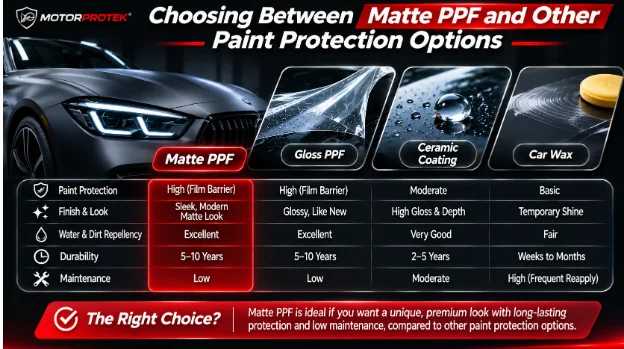
Matte PPF vs Other Protection Options
1. Matte vs. Gloss PPF
The main difference between these two options is the finish. PPF comes in gloss and matte. Gloss PPF is for owners who want a shiny, reflective look, while matte PPF gives a more subtle appearance.
Both can offer some physical protection against certain kinds of day-to-day wear if they are of good materials and properly fitted. It all depends on how you want to look.
2. Matte PPF or Ceramic Coating?
Ceramic coating is a liquid treatment that is applied to the prepared paintwork. Depending on the formulation, it can improve water repellency, facilitate routine cleaning, and enhance the surface appearance.
However, ceramic coating usually does not have the same impact resistance as PPF. It is not intended to withstand stone impacts like a physical film.
3. Matte PPF versus Wax and Paint Sealants
Car wax and paint sealants are popular because they’re relatively easy to apply and can improve the appearance of a vehicle’s finish. They may also add some water repellency and may help contaminants wash away more easily.
These products can be great for the budget-minded owner looking for a maintenance product, but they are not the same as film when physical protection is needed.
What To Consider Before You Buy?
Selecting the correct option is not only about comparing prices for products. Some practical factors deserve consideration.
Your driving situation: If you often drive on highways or loose gravel or construction sites, physical protection can be especially helpful. PPF can reduce damage risk in vulnerable areas.
Your finish: Matte PPF has a distinct appearance but calls for products and cleaning methods designed for matte surfaces. If you want a traditional shine gloss PPF or a proper coating, it would be a better option.
Your budget: Full-body PPF tends to be pricier than protecting select panels. Decide if you want full coverage or if you’ll benefit most from protecting the hood, front bumper, front fenders, and side mirrors.
Quality of installation: A high-quality film can look disappointing if it is poorly installed. Choose an experienced installer who will properly prepare the paint, handle the edges correctly, and explain the warranty conditions.
Existing Paint Condition: Scratches and chips may show through the film. Please inspect the paint prior to installation and make any required adjustments.
How to Keep Matte PPF Looking Great
With good care the film will keep its looks as well as its performance. Clean the vehicle with a mild automotive shampoo and a clean microfiber mitt. Remove bird droppings, insect residue, and other contaminants as soon as possible.
Avoid abrasive compounds, harsh chemicals, and waxes not approved for matte finishes, as they can cause unwanted shine or areas of unevenness. Follow the film manufacturer’s recommendations for pressure washing, cleaning products, and periodic inspection. If the film starts to lift, or if you notice any unusual discoloration, contact the installer.
Which Option Is Best for Your Vehicle?
No single method of protection is right for every driver. Wax and sealants can help with maintenance, and ceramic coatings can help with water repellency and cleaning. If you’re mainly worried about protection from physical impact, PPF is usually the better choice.
So, if you are looking for a PPF car solution that provides a unique look and a physical protective layer, matte PPF is worth a try. The best choice depends on your priorities, driving conditions, and how much effort you want to put into maintaining the finish.
Conclusion
Knowing what each product is meant to do helps to make the decision easier when choosing between matte PPF and other paint protection options. Matte PPF creates a low-gloss look and a physical barrier against some everyday hazards, but coatings and sealants are more about surface maintenance.
Compare product specifications, choose a skilled installer, and set realistic expectations. With the correct protection and regular care, you can keep your vehicle looking well maintained without sacrificing the finish you love.
Disclaimer
This article is for general informational purposes only. The performance, durability, appearance, and cost of matte paint protection film and other protective coatings may vary depending on product quality, installation methods, vehicle condition, and maintenance. Consult a qualified automotive detailing or paint protection specialist before selecting a treatment for your vehicle.