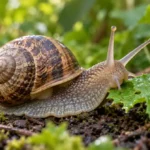






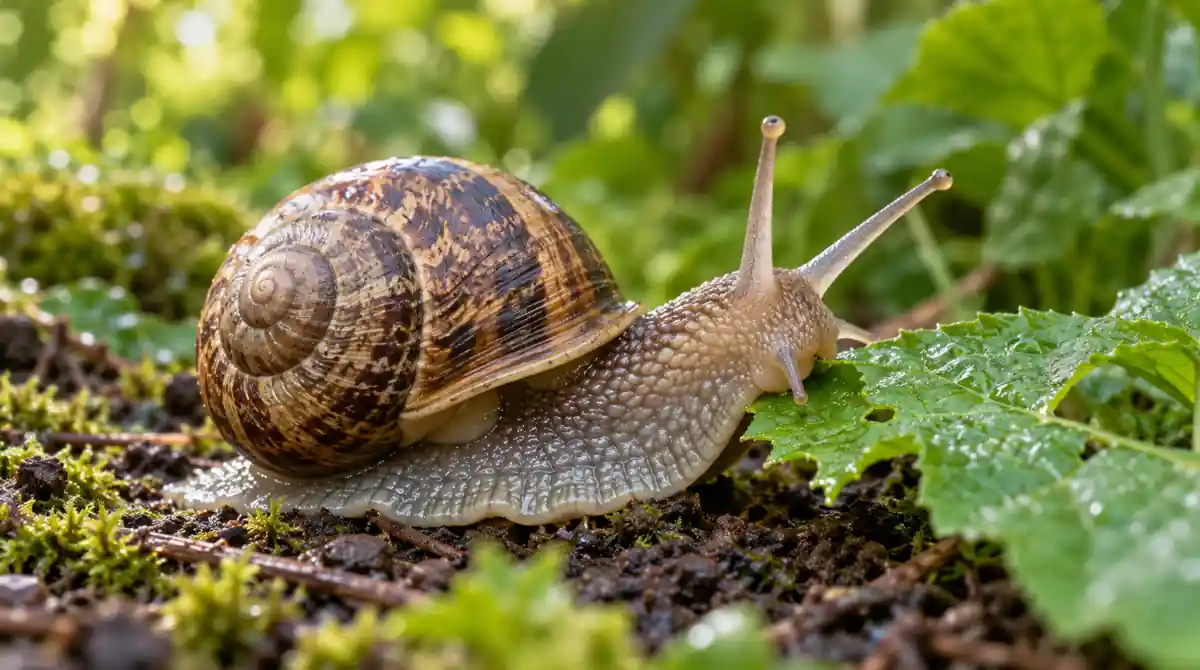
A snail moving across a leaf and a snail grazing on aquarium glass may look like they are doing the same thing. Both are searching for food, but what they need can be quite different.
Many snails eat plants, algae, fungi or decaying organic matter. Some are scavengers, and others hunt animals, including other snails. Their diet depends on the species and where they live.
For pet owners, identifying the snail is the first feeding decision. A vegetable-based menu for a plant-eating land snail will not suit every freshwater or marine species.
This guide explains the main differences, suitable food examples and the feeding mistakes that are easy to overlook.
What Do Different Types of Snails Eat?
There is no single food list that works for all snails. Even species living in the same habitat may use different food sources.
| Snail type | Typical food sources | Main feeding consideration |
|---|---|---|
| Many garden snails | Living plants, dead plant material and surface growth | Diet varies between species |
| Plant-eating pet land snails | Suitable vegetables, plant material and species-appropriate additions | Provide variety and an appropriate calcium source |
| Mystery snails | Prepared aquarium foods, biofilm and decaying plant material | Do not assume leftovers provide enough food |
| Nerite snails | Algae and other surface growth | Make sure enough suitable grazing food is available |
| Predatory snails | Animal prey, sometimes including other snails | A plant-only menu is unsuitable |
| Marine snails | Algae, detritus or animal food, depending on species | Identify the species before planning its diet |
Use this table to choose the right section of a care guide. It is a starting point, not a replacement for species-specific instructions.
What Do Garden Snails Eat in the Wild?
Many garden snails feed on leaves, shoots, flowers and decomposing plant material. Others graze on fungi or the thin growth found on bark, rocks and other surfaces.
This is why a snail on a tree trunk is not necessarily eating the tree itself. It may be grazing on material growing across the bark.
Land snails also contribute to decomposition. Feeding on dead organic material helps return nutrients to the surrounding environment.
However, the familiar image of a snail eating lettuce does not describe every species. Some land snails eat animal remains, eggs or other snails.
The safest way to understand a wild snail is to observe it where it lives. Finding one beside a damaged leaf does not prove it caused all the damage, and finding one in leaf litter does not mean it needs a bowl of vegetables.
How Do Snails Eat?
Many snails feed using a radula, a tongue-like structure covered with tiny tooth-like elements. It works across food, scraping or rasping material from a surface.
That feeding action can leave marks on leaves or trails through a film of algae. The structure and use of the radula vary with the snail’s diet.
The Natural History Museum’s guide to snails and slugs explains this feeding mechanism and the variety within this group.
A snail does not need to take a large, visible bite to be feeding. Watching it steadily move over a food surface may tell you more than looking for pieces disappearing.
What Do Pet Land Snails Eat?
For a plant-eating pet land snail, suitable vegetables can form part of a varied feeding plan. Common giant African land snail guidance includes leafy plants, squash, sweet bell pepper, broccoli and green beans.
These examples should not be treated as a universal prescription for every land snail. Confirm the species and use a reliable care guide for its full diet, including any protein requirements.
Keep a simple record of what you offer and what the snail eats. If it repeatedly ignores one item, do not respond by providing an ever-larger pile of a favourite food.
A practical food rotation is easier to manage than a large daily buffet. It also makes it easier to notice spoiled leftovers.
Vegetable Examples for Plant-Eating Land Snails
| Food | How to offer it | What to remember |
|---|---|---|
| Squash | Washed, plain pieces | Include it within a varied diet |
| Sweet bell pepper | Washed flesh without seasoning | Use sweet pepper, not a spicy prepared dish |
| Green beans | Plain, manageable pieces | Check for uneaten food |
| Broccoli | Small, washed portions | Do not add sauces or salt |
| Suitable leafy greens | Clean leaves from a known source | Identify the plant before offering it |
Never assume that any green leaf is suitable. Avoid unidentified plants and anything that may have been exposed to pesticides, slug pellets or other chemicals.
Can Snails Eat Fruit?
Some plant-eating land snails can eat fruit. Giant African land snail guides include examples such as strawberry and banana.
Fruit should be part of an appropriate feeding plan, not the only food provided. Soft fruit also deteriorates quickly in a warm, damp enclosure.
Offer a modest amount that is easy to remove. Placing it on a shallow feeding surface makes cleanup simpler than leaving it mixed into the substrate.
Fruit advice for land snails should not be transferred automatically to aquarium snails. A piece of fruit left in water can become a water-quality problem rather than a useful feeding choice.
Why Do Snails Need Calcium?
Calcium is important for shell formation and growth. A shell is part of the animal, so supporting healthy growth requires more than offering a favourite vegetable.
For commonly kept giant African land snails, cuttlebone is a recognised calcium source. Other species need care appropriate to their biology and environment.
Aquatic snails introduce another consideration: the surrounding water. Mineral availability and water chemistry can affect shell condition as well as the food being eaten.
Do not respond to shell damage by adding random powders or household materials. First identify the snail, review its food and conditions, and seek experienced help if damage is progressing.
A calcium source is not a complete meal. It belongs alongside an appropriate diet.
Do Land Snails Need Protein?
Some land snail care plans include a separate protein component. The amount and suitable source depend on the species, life stage and food being used.
This is one reason a diet of only watery vegetables may be incomplete.
Follow a species-specific guide rather than choosing a fixed protein percentage for every snail. If using a commercial snail food or supplement, check the intended species and feeding instructions.
Feeding plans also should not be borrowed from another small pet. Our guide to what hamsters can eat shows a different approach built around complete hamster food. Similar-sized pets can have very different nutritional needs.
What Do Aquarium Snails Eat?
Many freshwater aquarium snails graze on algae, biofilm and decaying plant material. Some also eat prepared foods that settle where they can reach them.
Biofilm is a thin layer of microorganisms and organic material that develops on submerged surfaces. It can provide grazing opportunities even when there is no obvious large patch of algae.
However, a tank containing food is not proof that every snail is getting enough. Fish or other animals may reach an added food first.
Watch the snail itself. Does it reach the feeding area? Does it remain there and feed? Does the food disappear because the snail eats it, or because a fish carries it away?
Snails also produce waste. They do not remove the need for regular aquarium maintenance.
What Do Mystery Snails Eat?
Mystery snails are scavengers that can eat prepared aquarium foods, biofilm and decaying plant material.
A feeding plan may include suitable sinking foods and appropriate vegetables, such as plain blanched leafy greens. Blanching briefly softens the food; it should be cooled before being placed in the aquarium.
Put food where the snail can access it and check what remains. Remove uneaten portions before they spoil.
Do not deliberately leave dead animals in the tank as food. Their ability to scavenge does not make a decomposing animal a sensible feeding method.
Correct identification matters here too. “Apple snail” is a broad label, and related species can differ in their appetite for living plants.
What Do Nerite Snails Eat?
Nerite snails are well known for grazing on algae-covered surfaces. Enough suitable grazing food is an important part of their care.
A new or heavily cleaned aquarium may contain less food than its appearance suggests. Adding more snails without considering that supply can create competition.
Suitable supplementary foods may be offered, but check whether the snail actually eats them. Dropping in a wafer is not the same as confirming that the nerite has fed.
If other tank inhabitants remove the food first, reconsider its placement and the overall feeding arrangement. Avoid repeatedly adding more food without observing what happens.
What Do Baby Snails Eat?
Young snails generally need food appropriate to their species, presented where they can reach it. “Baby snail” does not identify one universal diet.
For young plant-eating land snails, suitable food needs to be accessible and fresh. Growing shells also make an appropriate calcium supply important.
Young aquatic snails may use surface growth and species-appropriate foods, but their needs differ between species. Some aquatic snails have early life stages that require specialised conditions.
Do not assume that a hatchling needs milk, bread or a homemade baby-food mixture. Start with a care guide for the exact species.
How Often Should You Feed Snails?
There is no useful universal rule such as one cucumber slice per snail each day.
Food requirements depend on size, species, temperature, activity and the number of animals sharing the enclosure. Aquarium feeding also depends on existing grazing food.
For pet land snails, inspect the food daily and replace it as required by the species’ care routine. For aquarium snails, consider both natural grazing and any added food.
Use a simple observation cycle:
- Offer an appropriate amount.
- Watch whether the snail feeds.
- Check what remains.
- Remove deteriorating food.
- Adjust the next serving based on what you observed.
A repeated pile of leftovers is a reason to review the feeding plan, not to add another food on top.
Why Might a Snail Stop Eating?
An inactive snail is not automatically hungry or dead. Temperature, moisture and natural periods of dormancy can affect land snail activity.
Many land snails are easier to observe during damp conditions or at night. Our guide to nocturnal animals and nighttime habits explains more about activity after dark.
For a pet snail, first review its environment against the requirements of its species. A land snail kept in unsuitable conditions may withdraw rather than respond to additional food.
For aquarium snails, check water quality, food availability and whether tankmates are disturbing them.
Do not pull a snail from its shell or force food into its mouth. Persistent changes, injuries or worsening shell damage need advice from someone qualified or experienced in caring for that species.
Common Snail Feeding Mistakes
Using One Food as the Whole Diet
A snail accepting a vegetable does not prove that the vegetable supplies everything it needs. Favourite foods should not determine the entire menu.
Assuming Algae Is Always Enough
An aquarium may not produce enough suitable algae for all its grazing animals. Monitor the snail rather than relying on the label “algae eater.”
Leaving Spoiled Food in the Enclosure
Natural decomposition and uncontrolled mouldy leftovers in a small enclosure are not the same situation. Remove deteriorating food and keep feeding areas manageable.
Offering Seasoned Kitchen Leftovers
Keep sauces, salt, butter and processed meals out of a snail-feeding routine. Use food appropriate to the species, prepared plainly.
Treating Shell Problems as a Food Issue Only
Food matters, but so do enclosure conditions and, for aquatic snails, water chemistry. Review the whole setup.
Frequently Asked Questions
Do Snails Eat Algae?
Many aquatic snails do, and some land snails graze on algae growing on damp surfaces. The amount and type they consume depend on the species.
Do Snails Eat Dead Leaves?
Many do. Dead plant material and the organisms growing on it are part of the natural diet of numerous snails.
Do Snails Eat Other Snails?
Some species are predators and eat other snails. Others may scavenge remains. This is why a plant-only diet is not suitable for every snail.
Will Snails Eat Healthy Aquarium Plants?
It depends on the species. Some commonly kept snails mainly graze on surface growth and damaged leaves, while others consume living plants. Identify the animal before assuming it is plant-safe.
Do Snails Eat Fish Waste?
Do not rely on snails to dispose of fish waste or use it as their main food. They need appropriate nutrition, and the aquarium still needs cleaning and maintenance.
Should You Feed Wild Garden Snails?
In most situations, observation is enough. Leave them in their habitat rather than collecting them or putting out piles of kitchen scraps.
Start With the Species, Then Build the Feeding Plan
The right answer to “what do snails eat?” starts with identifying the snail. A garden species, a pet land snail and an aquarium grazer can use very different foods.
Choose suitable food, provide the right conditions and observe what the animal actually eats. That approach is more reliable than following a long food list that treats every snail as the same animal.