








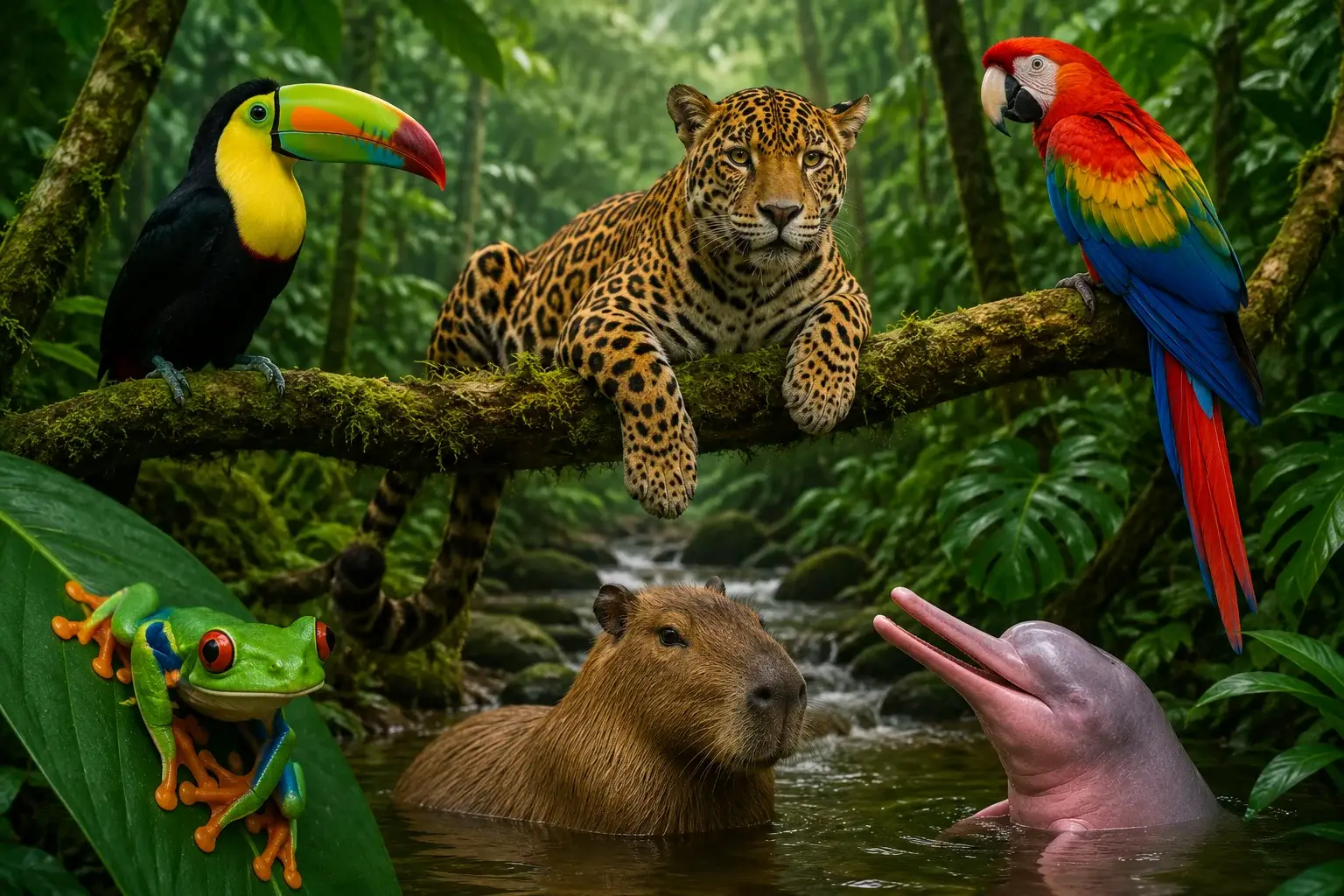
Imagine walking through a rainforest where every step reveals something extraordinary. A colorful macaw flies overhead, a three-toed sloth hangs quietly from a tree, and somewhere in the distance, a jaguar moves silently through the dense forest. This isn’t a wildlife documentary—it’s daily life in the Amazon Rainforest, the most biodiverse place on Earth.
The Amazon is home to millions of living species, many of which exist nowhere else. Scientists have identified more than 427 mammals, 1,300 bird species, over 400 amphibians, nearly 380 reptiles, around 3,000 freshwater fish, and millions of insects, with new species still being discovered. This incredible diversity makes the Amazon one of the most important ecosystems on our planet.
Most articles simply list famous animals like jaguars, sloths, and anacondas. This guide goes much further. You’ll learn why the Amazon supports so much wildlife, how different rainforest layers create unique habitats, how animals survive in one of Earth’s most competitive environments, and why protecting this ecosystem matters for the future of wildlife and people alike.
AI Overview
What Animals Live in the Amazon Rainforest?
The Amazon Rainforest is the world’s richest wildlife habitat, home to millions of species ranging from powerful jaguars and giant anacondas to tiny poison dart frogs and brilliant blue morpho butterflies. Its warm climate, dense vegetation, and vast river system allow an extraordinary variety of animals to thrive.
Quick Answer
| Category | Famous Animals |
|---|---|
| Mammals | Jaguar, Capybara, Sloth, Giant River Otter, Amazon River Dolphin |
| Birds | Harpy Eagle, Scarlet Macaw, Toucan, Hoatzin |
| Reptiles | Green Anaconda, Black Caiman, Boa Constrictor |
| Amphibians | Poison Dart Frog, Glass Frog |
| Fish | Piranha, Arapaima, Electric Eel |
| Insects | Blue Morpho Butterfly, Leafcutter Ant, Bullet Ant |
Key Highlights
- Home to around 10% of all known species on Earth.
- Contains the largest tropical rainforest in the world.
- Supports thousands of unique mammals, birds, reptiles, amphibians, fish, and insects.
- Many animals are found nowhere else on Earth.
- Healthy Amazon ecosystems help regulate the global climate and water cycle.
Why Does the Amazon Rainforest Have So Many Animals?
The Amazon is often called the planet’s greatest wildlife sanctuary, and for good reason. Stretching across nine South American countries, it covers millions of square kilometers and creates countless habitats where different species can survive.
Unlike deserts or polar regions, the Amazon receives heavy rainfall throughout the year and enjoys a consistently warm climate. These stable conditions allow plants to grow continuously, creating a reliable food supply for herbivores, which in turn support predators.
Another reason for its remarkable biodiversity is the Amazon River and its thousands of tributaries. Together they form the world’s largest freshwater system, providing homes for fish, dolphins, turtles, otters, and countless other aquatic animals.
Over millions of years, animals adapted to different parts of the rainforest. Some evolved to live high in the tree canopy, while others became experts at surviving on the dark forest floor or in flooded forests. This natural separation reduced competition and allowed more species to evolve.
Did You Know?
Scientists estimate that a single hectare of Amazon rainforest can contain more tree species than are found across entire countries in some parts of the world. That incredible plant diversity supports equally diverse animal life.
The Four Layers of the Amazon Rainforest and Their Animals
One feature that many articles overlook is that the Amazon is not a single environment. It is made up of four distinct layers, each supporting different wildlife.
1. Emergent Layer
Towering trees rise above the rest of the forest, reaching heights of more than 60 meters (200 feet). Animals living here enjoy sunlight and open skies.
Common Animals
- Harpy Eagle
- Scarlet Macaw
- King Vulture
- Blue-and-yellow Macaw
These birds rely on exceptional eyesight and strong wings to travel between the tallest trees.
2. Canopy Layer
The canopy forms a thick green roof over the rainforest and is home to nearly 70% of Amazon wildlife.
Animals Found Here
- Sloths
- Spider Monkeys
- Howler Monkeys
- Toucans
- Tree Frogs
- Parrots
Many animals spend their entire lives without ever touching the ground.
3. Understory Layer
The understory is darker, cooler, and filled with young trees and shrubs.
Wildlife
- Boa Constrictors
- Ocelots
- Insects
- Tree Snakes
- Poison Dart Frogs
Excellent camouflage helps these animals avoid predators.
4. Forest Floor
Only a small amount of sunlight reaches the forest floor, creating a humid environment rich in decomposing leaves and fungi.
Animals
- Jaguar
- Capybara
- Tapir
- Giant Anteater
- Leafcutter Ants
- Black Caiman (near rivers)
The forest floor is also where many predators hunt after sunset.
Meet the Most Iconic Amazon Rainforest Animals
Instead of simply listing names, let’s explore what makes each animal unique.
Jaguar – The King of the Amazon
The jaguar is the largest wild cat in the Americas and the undisputed apex predator of the Amazon Rainforest. Its muscular body, powerful jaws, and distinctive rosette-patterned coat make it one of the most recognizable animals in South America.
Unlike many big cats, jaguars are excellent swimmers. They often hunt near rivers, catching fish, turtles, caimans, and even capybaras. Their bite is so powerful that they can pierce the shells of turtles and the skulls of large prey.
Quick Facts
| Feature | Details |
|---|---|
| Scientific Name | Panthera onca |
| Diet | Carnivore |
| Habitat | Forests, wetlands, rivers |
| Top Speed | Around 80 km/h (50 mph) |
| Conservation Status | Near Threatened |
Capybara – The World’s Largest Rodent
Despite their impressive size, capybaras are gentle, highly social animals. They spend much of their day grazing on grasses or relaxing near rivers, where they can quickly escape predators.
Capybaras are excellent swimmers, and their partially webbed feet make moving through water easy. They often live in groups, using teamwork to watch for danger.
Interestingly, many birds perch on capybaras to eat insects from their fur, creating a natural example of cooperation between species.
Sloth – The Rainforest’s Energy Saver
Sloths are famous for moving slowly, but this is actually a clever survival strategy. By conserving energy and blending into the trees, they avoid attracting predators such as harpy eagles and jaguars.
Their long claws allow them to hang upside down for hours while feeding on leaves. Algae often grow on their fur, providing natural camouflage that helps them disappear among the branches.
Unlike fast-moving monkeys, sloths rely on patience rather than speed to survive.
Why These Animals Matter
Every animal in the Amazon plays a role in keeping the rainforest healthy. Jaguars control prey populations, capybaras help shape wetland ecosystems, and sloths contribute to forest biodiversity. Together, they form part of a complex web of life that has evolved over millions of years.
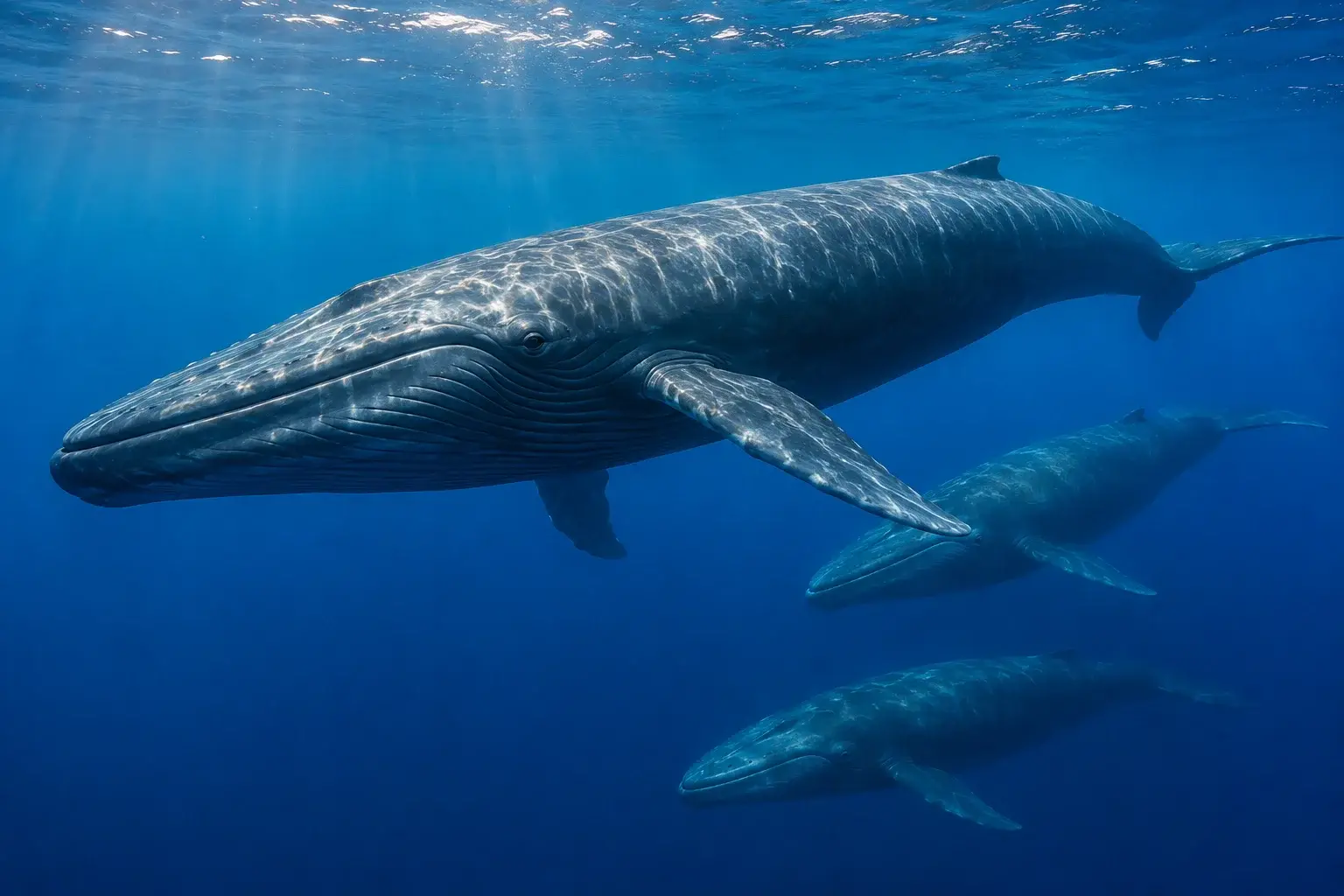
MUST READ:Biggest Animal in the World: Complete Blue Whale Guide
The Most Incredible Birds of the Amazon Rainforest
The Amazon sky is just as alive as the forest floor. More than 1,300 bird species live here, making it one of the richest bird habitats on Earth. Many of these birds play an important role by spreading seeds, controlling insects, and pollinating plants.
Harpy Eagle – The Rainforest’s Top Hunter
The Harpy Eagle is one of the largest and most powerful birds of prey in the world. With claws larger than a grizzly bear’s, it can catch monkeys, sloths, and large birds from the forest canopy.
Unlike eagles that hunt in open skies, the harpy eagle has short, broad wings that help it fly through dense rainforest trees with surprising speed and precision.
Quick Facts
| Feature | Details |
|---|---|
| Scientific Name | Harpia harpyja |
| Wingspan | Up to 2 meters (6.5 feet) |
| Diet | Monkeys, sloths, birds |
| Habitat | Canopy & emergent layer |
| Status | Near Threatened |
Scarlet Macaw – The Colorful Messenger
Few birds are as recognizable as the Scarlet Macaw. Its bright red, yellow, and blue feathers make it one of the Amazon’s most beautiful animals.
Macaws are highly intelligent parrots that often stay with the same partner for life. They communicate through loud calls that can travel long distances across the rainforest.
Their strong beaks easily crack hard nuts and seeds that many other animals cannot open.
Toucan – The Bird With the Giant Beak
The toucan’s oversized bill may look heavy, but it is surprisingly light because it contains tiny air pockets.
Scientists believe this remarkable beak helps regulate body temperature while also allowing the bird to reach fruit on thin branches.
Toucans also spread seeds throughout the rainforest, helping new trees grow naturally.
Amazon Reptiles That Rule Rivers and Forests
Reptiles have lived in the Amazon for millions of years. Some are harmless, while others are among the rainforest’s most powerful predators.
Green Anaconda – The World’s Heaviest Snake
The Green Anaconda is one of the most famous Amazon rainforest animals. It spends most of its life in slow-moving rivers, swamps, and flooded forests.
Unlike venomous snakes, anacondas kill prey by wrapping their muscular bodies around it and squeezing until it can no longer breathe.
Large females are much bigger than males and may grow over 9 meters (30 feet) long.
Quick Facts
| Feature | Details |
|---|---|
| Type | Snake |
| Diet | Fish, birds, capybaras, caimans |
| Habitat | Rivers & wetlands |
| Venomous | No |
| Hunting Method | Constriction |
Black Caiman – The River’s Apex Predator
The Black Caiman is the largest crocodilian in the Amazon Basin.
Adult males can reach nearly 5 meters (16 feet) in length. They hunt fish, turtles, birds, monkeys, and even capybaras.
At night, their eyes reflect light, making them easier for researchers to spot during wildlife surveys.
Amazing Amphibians of the Amazon
Although small, amphibians play a huge role in the rainforest ecosystem.
Poison Dart Frog
These tiny frogs display brilliant colors such as blue, yellow, orange, and red.
Their bright appearance warns predators that they produce powerful toxins through their skin.
Not every poison dart frog is equally poisonous, but their warning colors help protect them from being eaten.
Glass Frog
Glass frogs have transparent skin on the underside of their bodies, allowing parts of their internal organs to be seen.
This unusual adaptation helps them blend into leaves while resting above streams.
Fascinating Fish Living in Amazon Rivers
The Amazon River contains more freshwater fish species than any other river system on Earth.
Piranha
Piranhas have gained a frightening reputation through movies, but reality is very different.
Most piranha species are opportunistic feeders that eat fish, fruits, insects, and dead animals. They rarely attack healthy humans.
Their sharp teeth allow them to cut food efficiently rather than constantly hunt large animals.
Arapaima
The Arapaima is among the largest freshwater fish in the world.
Some individuals grow over 3 meters (10 feet) long and weigh more than 200 kilograms.
Unlike most fish, arapaimas regularly surface to breathe air because Amazon waters often contain little oxygen.
Electric Eel
Despite its name, the electric eel is actually a type of knifefish.
It produces powerful electric shocks for hunting prey and defending itself.
Some shocks exceed 600 volts, making it one of the most remarkable fish on Earth.
Incredible Amazon Insects
Millions of insect species keep the rainforest alive.
Without insects, many plants could not reproduce, and countless animals would lose their main food source.
Blue Morpho Butterfly
This butterfly is famous for its bright metallic blue wings.
Interestingly, the blue color is created by microscopic wing structures rather than blue pigments.
Leafcutter Ants
Leafcutter ants do not eat leaves directly.
Instead, they carry pieces of leaves underground to grow a special fungus, which becomes their food.
Scientists often describe them as one of nature’s earliest farmers.
Bullet Ant
The Bullet Ant delivers one of the most painful insect stings known.
Despite its fearsome reputation, it usually attacks only when disturbed.
Amazon Rainforest Food Chain Explained
One major topic missing from many competitor articles is how Amazon animals depend on each other.
Understanding the rainforest food chain helps explain why every species matters.
Sunlight
      ↓
Rainforest Plants
      ↓
Leaves • Fruits • Seeds
      ↓
Insects • Capybara • Monkeys • Sloths
      ↓
Snakes • Eagles • Caimans
      ↓
Jaguar (Apex Predator)
If one level of this food chain disappears, many other species are affected.
For example, fewer fruit-eating birds mean fewer seeds are spread across the forest, slowing the growth of new trees.
Likewise, fewer jaguars can lead to overpopulation of herbivores, which may damage young vegetation.
Amazing Animal Adaptations
The Amazon is one of the most competitive environments on Earth.
Animals survive by developing incredible adaptations.
| Animal | Special Adaptation |
|---|---|
| Jaguar | Powerful bite |
| Sloth | Energy conservation |
| Chameleon Lizard | Camouflage |
| Poison Dart Frog | Toxic skin |
| Macaw | Strong beak |
| Toucan | Heat-regulating bill |
| Electric Eel | Electric shock |
| Leafcutter Ant | Fungus farming |
These adaptations have evolved over millions of years, allowing different species to survive in crowded rainforest habitats.
Dangerous vs Harmless Amazon Animals
Many people think every Amazon animal is dangerous.
The truth is very different.
| Dangerous Animals | Harmless Animals |
|---|---|
| Jaguar | Capybara |
| Black Caiman | Sloth |
| Green Anaconda | Giant Anteater |
| Electric Eel | Macaw |
| Bullet Ant | Toucan |
| Poison Dart Frog | River Dolphin |
Most rainforest animals avoid humans whenever possible.
Encounters are rare because wildlife usually disappears long before people notice it.
Rare Amazon Animals You Probably Haven’t Heard Of
Beyond famous species, the Amazon is home to many remarkable animals.
Bald Uakari Monkey
Known for its bright red face, this monkey lives in flooded forests and feeds mainly on fruits and seeds.
Bush Dog
One of South America’s rarest wild dogs, the bush dog is secretive and difficult to observe in the wild.
Hoatzin
Often called the “stink bird,” the hoatzin has a unique digestive system similar to that of cows.
Young chicks even have claws on their wings to help them climb trees.
Giant Armadillo
This nocturnal mammal digs large burrows that later provide shelter for dozens of other animal species.
Its role makes it an important ecosystem engineer.
Why Amazon Rainforest Animals Are Important to the Planet
Many people think Amazon animals only matter to South America. In reality, they help keep the entire planet healthy.
Every species has a role. Some spread seeds, others control insect populations, while top predators keep ecosystems balanced. If one important species disappears, many others are affected.
Scientists often describe the Amazon as one of Earth’s most valuable ecosystems because it supports incredible biodiversity and plays a major role in the global water and carbon cycles.
How Amazon Animals Keep the Rainforest Alive
The rainforest is like a giant living machine where every animal has a job.
Seed Dispersers
Many birds and mammals eat fruit before dropping seeds far from the parent tree.
Important seed dispersers include:
- Toucans
- Macaws
- Spider Monkeys
- Tapirs
Without these animals, many tree species would struggle to reproduce.
Nature’s Gardeners
Capybaras, insects, monkeys, and many birds help shape the rainforest by spreading seeds and recycling nutrients.
Leafcutter ants even improve soil quality while farming underground fungi.
Natural Population Control
Top predators prevent ecosystems from becoming unbalanced.
Examples include:
- Jaguar
- Harpy Eagle
- Black Caiman
- Green Anaconda
If predators disappear, herbivore populations may increase rapidly, causing damage to forests.
Endangered Amazon Rainforest Animals
Although the Amazon still supports extraordinary wildlife, many species face serious threats.
Jaguar
Jaguar numbers have declined because of habitat loss and illegal hunting.
Road construction and forest fragmentation reduce the areas where jaguars can safely hunt and breed.
Giant River Otter
These intelligent mammals were once heavily hunted for their valuable fur.
Today they continue to face pressure from pollution and habitat destruction.
Harpy Eagle
Large forest trees are essential for harpy eagle nests.
Deforestation removes these nesting sites, making breeding much more difficult.
Pink River Dolphin
River pollution, fishing equipment, and dam construction threaten freshwater dolphin populations throughout the Amazon Basin.
Giant Armadillo
This shy nocturnal animal is rarely seen.
Expanding agriculture and deforestation continue to reduce its habitat.
Biggest Threats Facing Amazon Wildlife
Protecting Amazon rainforest animals means protecting their habitat.
The greatest dangers include:
Deforestation
Millions of trees have been removed for farming, cattle ranching, logging, and infrastructure projects.
Every year, wildlife loses more of its natural home.
Illegal Wildlife Trade
Some rare birds, reptiles, and mammals are captured and sold illegally as exotic pets.
This trade affects many vulnerable species.
Climate Change
Changing rainfall patterns and rising temperatures influence river levels, food supplies, and breeding seasons.
Many species struggle to adapt quickly.
Mining
Gold mining pollutes rivers with harmful chemicals such as mercury, affecting fish, dolphins, and local communities.
Forest Fires
Natural fires are uncommon in tropical rainforests.
However, human activities have increased the number of destructive fires, damaging wildlife habitats.
Conservation Success Stories
There is hope for Amazon wildlife.
Governments, scientists, Indigenous communities, and conservation organizations continue working together to protect one of Earth’s greatest natural treasures.
Successful conservation efforts include:
- Establishing protected national parks.
- Restoring damaged rainforest habitats.
- Fighting illegal logging.
- Monitoring wildlife using camera traps.
- Satellite tracking of endangered species.
- Supporting Indigenous land management.
These efforts have helped stabilize populations of several threatened animals in protected regions.
25 Amazing Amazon Rainforest Animal Facts
- The Amazon is home to around 10% of all known wildlife species.
- New species are discovered almost every year.
- Jaguars are excellent swimmers.
- Sloths can rotate their heads much farther than humans.
- Capybaras are the world’s largest rodents.
- Harpy eagles have claws larger than grizzly bear claws.
- Green anacondas spend much of their lives underwater.
- Electric eels breathe air.
- Poison dart frogs advertise danger through bright colors.
- Giant river otters live in family groups.
- Some Amazon butterflies have transparent wings.
- Leafcutter ants farm fungus for food.
- The Amazon River Dolphin is naturally pink.
- Black caimans are apex aquatic predators.
- Macaws often mate for life.
- Spider monkeys rarely touch the ground.
- Toucans help spread rainforest seeds.
- Some frogs care for their young on their backs.
- Arapaimas can survive in low-oxygen water.
- Bullet ants deliver one of the world’s most painful insect stings.
- Giant armadillos create burrows used by many other animals.
- The Amazon River contains thousands of fish species.
- Many rainforest insects remain undiscovered.
- Healthy predators help maintain balanced ecosystems.
- Every species contributes to rainforest biodiversity.
Common Myths About Amazon Rainforest Animals
Myth: Every Amazon animal is dangerous.
Fact: Most animals avoid people and are not aggressive unless threatened.
Myth: Piranhas attack humans constantly.
Fact: Healthy people are rarely attacked. Most piranhas feed on fish, insects, fruits, and carrion.
Myth: Green anacondas eat humans regularly.
Fact: Documented attacks are extremely rare. These snakes normally prey on wild animals.
Myth: Sloths are lazy.
Fact: Their slow movement is an energy-saving adaptation that improves survival.
Myth: Jaguars hunt humans.
Fact: Jaguars generally avoid people and prefer natural prey.
Frequently Asked Questions
What is the most dangerous animal in the Amazon Rainforest?
The jaguar is the Amazon’s top land predator, while the black caiman dominates many rivers. However, mosquitoes carrying diseases are often considered a greater danger to humans than large predators.
How many animals live in the Amazon Rainforest?
Scientists estimate that millions of animal species live in the Amazon. More than 427 mammals, 1,300 birds, hundreds of reptiles and amphibians, thousands of fish, and countless insects have already been identified.
What is the largest animal in the Amazon Rainforest?
The Amazonian manatee is one of the largest mammals found in the rainforest’s rivers, while the green anaconda is among the heaviest snakes in the world.
Which Amazon animal is the rarest?
Species such as the giant armadillo, bush dog, and certain tamarin monkeys are among the rarest animals in the Amazon because they are difficult to find and have declining populations.
Can tourists safely visit the Amazon?
Yes. Guided tours with experienced local guides allow visitors to observe wildlife safely while respecting conservation rules and animal habitats.
Why is the Amazon called the world’s greatest rainforest?
The Amazon contains the largest tropical rainforest on Earth and supports unmatched biodiversity, making it one of the planet’s most important natural ecosystems.
Which Amazon animal is the strongest predator?
The jaguar is considered the strongest land predator because of its powerful bite and ability to hunt a wide range of prey.
Why is biodiversity important in the Amazon?
Greater biodiversity creates healthier ecosystems, supports food chains, improves resilience to environmental change, and helps maintain essential ecological processes.
Conclusion
The Amazon Rainforest is far more than a collection of exotic animals. It is the world’s richest wildlife ecosystem, where millions of species work together to maintain a delicate balance that has developed over millions of years.
From the silent jaguar and the colorful macaw to the giant anaconda and the tiny poison dart frog, every creature contributes to the rainforest’s survival. These animals are not only fascinating to study but also essential for maintaining biodiversity, healthy rivers, and thriving forests.
As deforestation, climate change, and habitat loss continue to threaten the Amazon, protecting its wildlife has become more important than ever. Every conservation effort—whether through responsible tourism, supporting environmental organizations, or raising awareness—helps preserve one of Earth’s greatest natural wonders for future generations.