








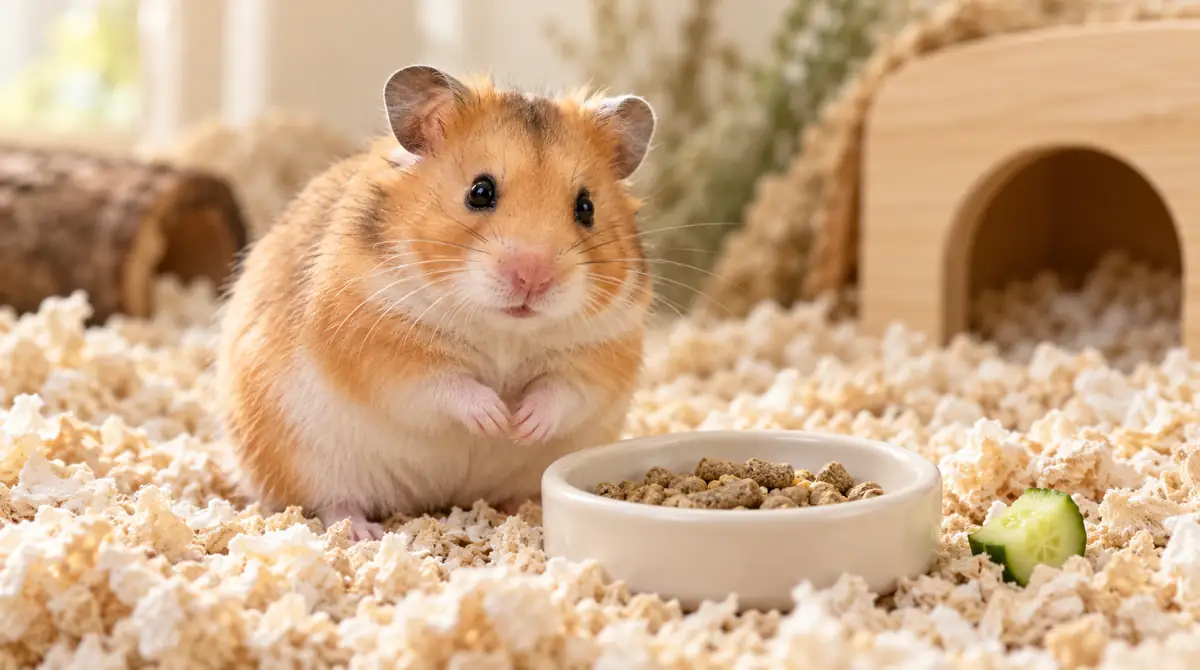
A hamster may happily carry away a sunflower seed, a piece of cucumber or a pellet. But enthusiasm for a food does not tell you how much of it belongs in a healthy diet. Some foods work well as everyday nutrition, while others should remain occasional treats.
Hamsters should eat a complete, balanced hamster food as their main diet, with small amounts of suitable vegetables and occasional treats. Plain cucumber, sweet bell pepper and broccoli are examples of fresh foods they can have. Small pieces of certain fruits are also suitable, but fruit should not replace their main food. Clean drinking water must always be available.
Getting the balance right is more useful than building a long menu. Once you understand the main food, suitable extras and your hamster’s habit of hiding supplies, feeding becomes much easier to manage.
What Do Hamsters Eat Naturally?
Hamsters are omnivores. In the wild, their diet can include seeds, grains, plant material and insects, depending on the species and available food.
They also collect and store food. Their cheek pouches help them carry supplies back to a sheltered place rather than eating everything where they find it.
A pet hamster still shows these behaviours, but its feeding needs are different from the challenge of finding enough food in the wild. An enclosure provides a dependable food supply, so regularly adding rich treats can upset the balance.
Different rodents also have different diets. The grass-based feeding habits described in our guide to what capybaras eat should not be used as a feeding plan for a hamster.
Choose the Main Food Before Choosing Treats
The first item to get right is a complete food formulated for hamsters. Read the packaging rather than choosing a product only because it has a hamster pictured on the front.
Look for a clear statement that it is a complete food. A complementary food, snack mix or treat is intended to be fed alongside a balanced diet.
Complete hamster pellets are a practical option because the ingredients are combined in each piece. Your hamster cannot easily pick out favourite seeds while leaving other parts of the meal.
Some welfare organisations also recommend carefully formulated, species-appropriate mixtures. These are different from a homemade handful of seeds and grains. If you use a mixture, watch whether your hamster consistently leaves certain ingredients behind.
Before buying, check:
- Whether the product is complete or complementary.
- Which hamster species and life stage it suits.
- The recommended daily amount.
- Storage instructions and the expiry date.
- Whether your hamster can comfortably eat it.
If you are unsure about the current food, take the packaging to a vet who treats small mammals. Avoid replacing a balanced food with a homemade diet based on foods your pet seems to prefer.
Hamster Food List: Suitable Foods and Their Role
This table gives examples, not a daily menu. Your hamster does not need every item, and several small treats can add up to a large amount.
| Food | Role in the diet | How to offer it |
|---|---|---|
| Complete hamster pellets | Main source of balanced nutrition | Follow the product’s feeding guide |
| Cucumber | Small fresh extra | Washed and cut into a small piece |
| Sweet bell pepper | Small fresh extra | Plain, washed flesh without seasoning |
| Broccoli | Small fresh extra | A small, washed piece |
| Green bean | Small fresh extra | Plain and cut into a manageable piece |
| Carrot | Occasional extra | A small piece rather than a large chunk |
| Apple | Occasional fruit treat | Remove the seeds and core |
| Strawberry | Occasional fruit treat | Washed and served in a small piece |
| Blueberry | Occasional fruit treat | A small portion suited to the hamster |
| Banana | Occasional fruit treat | A tiny piece of peeled fruit |
| Sunflower seed | Occasional rich treat | Plain and unsalted |
| Dried mealworm | Optional protein treat | A suitable product intended for pet feeding |
Offer foods plain. Butter, oil, sauces, salt and seasoning do not belong on a hamster’s vegetables.
What Vegetables Can Hamsters Eat?
Suitable vegetables provide variety alongside the main food. Cucumber, broccoli, sweet bell pepper and green beans are useful examples.
Wash produce thoroughly and remove any spoiled areas. Cut a small piece that your hamster can handle comfortably. There is no benefit in serving a large portion that will disappear into bedding and spoil.
Introduce one unfamiliar food at a time in a small amount. Keeping the rest of the diet consistent makes it easier to notice whether a new food is followed by a change in appetite or droppings.
If loose droppings develop, stop the new extra and contact a vet. Do not assume that a digestive problem is harmless simply because it started after a vegetable.
Can Hamsters Eat Carrots?
Yes, a small piece of carrot can be offered occasionally. It should be part of a varied feeding routine rather than the only vegetable your hamster receives.
A large carrot chunk is unnecessary. Cut a small portion and check later for any uneaten pieces.
Can Hamsters Eat Cucumber?
Yes, a small piece of cucumber is suitable. However, its water content does not remove the need for fresh drinking water.
Do not give a large serving to compensate for an empty or blocked water bottle. Fix the water supply immediately.
Can Hamsters Eat Broccoli?
Yes, a small piece of plain broccoli is an option. Keep it separate from food prepared with sauce, salt or seasoning.
What Fruits Can Hamsters Eat?
Small pieces of apple, strawberry, blueberry and banana can be offered as occasional treats. Fruit is optional; it does not need to appear in the bowl every day.
Use fresh, plain fruit and remove seeds or pits where relevant. For apples, remove the core and seeds before cutting the portion.
The amount matters more than how healthy a fruit seems for people. A serving that looks tiny in your hand may still be substantial for a hamster.
Avoid combining several fruit treats in one feeding. If one person gives apple and another adds banana, the total can become much larger than intended.
Can Hamsters Eat Apples?
Yes, a small piece of apple flesh is suitable occasionally. Remove the seeds and core, and serve it plain.
Can Hamsters Eat Bananas?
Yes, but keep the portion tiny and occasional. A thick banana slice is much more than your hamster needs as a treat.
Can Hamsters Eat Strawberries?
Yes, a small washed piece can be offered occasionally. Remove leftovers before they deteriorate.
Can Hamsters Eat Grapes?
Advice differs between animal welfare organisations. Some allow small occasional portions, while others advise against grapes.
There is no need to include them in a balanced feeding routine. Choose another suitable food, such as a small piece of cucumber, and ask your vet if you want advice specific to your hamster.
Do Hamsters Need Mealworms, Eggs or Meat?
Hamsters need protein, but a complete hamster food should already provide it. Extra protein foods are optional additions, not something you must supply at every meal.
Dried mealworms intended for pet feeding can be offered as a small treat. They should not crowd out the main food.
Some feeding guides also allow tiny amounts of plain, thoroughly cooked egg or chicken. If offered, these must be unseasoned and removed promptly if uneaten. They are not necessary simply because your hamster is an omnivore.
Avoid raw meat, processed meat and seasoned leftovers. Do not collect insects from the garden for feeding, as their identity and exposure to chemicals may be uncertain.
Foods Hamsters Should Not Eat
Keep the following out of a hamster’s regular feeding routine:
- Onions, garlic, leeks and chives.
- Rhubarb and rhubarb leaves.
- Apple seeds and fruit pits.
- Bitter almonds.
- Chillies and spicy foods.
- Salty snacks and seasoned meals.
- Sugary sweets and sticky spreads.
- Raw or green potato.
- Mouldy, spoiled or contaminated food.
Not every unsuitable food poses the same problem. Some ingredients may be toxic, while others are inappropriate because of their texture, preparation or nutritional balance.
Sticky foods can cling inside cheek pouches. Rich treats can also displace balanced food even when the ingredients are not immediately poisonous.
When you cannot confirm a food’s suitability, leave it out. A hamster does not need to sample everything in the kitchen.
If your hamster eats something potentially harmful, contact a vet promptly. Keep the ingredient list or packaging and explain what was eaten, roughly how much and when. Do not try a home remedy or wait for symptoms before asking for advice.
How Much Should You Feed a Hamster?
Start with the feeding instructions on the complete food. The appropriate amount depends on the hamster’s species, size, life stage, health and the food itself.
A spoonful is not a precise measure across different products. Pellets, seeds and mixed foods have different weights and energy content.
If the packet gives the allowance in grams, a small kitchen scale can make portioning more consistent. Your vet can help adjust the amount if your hamster is gaining or losing weight.
The Merck Veterinary Manual’s hamster care guidance advises keeping treats to no more than 10% of the diet. Treat this as a maximum, not a daily goal.
That does not mean adding a pile of treats equal to one-tenth of the pellet bowl. Foods vary in energy content, and rich extras can contribute more than their size suggests.
Do Syrian and Dwarf Hamsters Need Different Feeding Plans?
The same basic principles apply: suitable complete food, modest extras and constant access to water. However, the amount and product choice should suit the individual animal.
A dwarf hamster should not automatically receive the same portion as a larger Syrian hamster. Check whether the food is intended for your hamster’s species and life stage.
Medical conditions can change the plan. If your hamster has a diagnosed illness, follow the vet’s instructions rather than a general online food chart.
Young, pregnant, nursing and elderly hamsters may also need individual advice. Avoid increasing protein, fruit or supplements on your own because a pet seems to need “extra energy.”
When and How Often Should Hamsters Be Fed?
Check food and water every day. Evening is often a convenient feeding time because many pet hamsters become more active around dusk and during the night.
Let your hamster wake naturally. There is no need to disturb its sleeping area to offer a treat.
Our guide to nocturnal animals and their nighttime habits explains more about animals that are active after dark.
A consistent routine also makes changes easier to spot. If your hamster normally comes out to collect food but suddenly stays hidden and leaves it untouched, pay attention.
Fresh foods should be checked and removed before they spoil. In warm conditions, be especially careful about leaving perishable extras in the enclosure.
Why Is the Bowl Empty When the Hamster Has Not Eaten Much?
Hamsters often move food into a hidden store. The bowl can look empty while much of the meal remains under bedding or inside a hide.
Before adding another full portion, consider what has been offered and check accessible food stores without unnecessarily disturbing the nest.
Do not deliberately remove all food to force your hamster to eat unwanted ingredients. Persistent selective eating is a reason to review the food choice with your vet.
There is an important difference between dry food stored normally and damp or spoiled food. Remove contaminated supplies and perishable leftovers as part of routine care.
Make Feeding Interesting Without Adding Extra Calories
Searching for food is a useful activity for a hamster. You can scatter part of the normal dry-food allowance in a clean area or place it in a simple, safe foraging toy.
Use food already included in the daily amount. Otherwise, enrichment can quietly become a second meal.
Keep the activity manageable. If a hamster is elderly, unwell or has mobility problems, make sure it can reach its food easily.
For a practical routine:
- Measure the main food.
- Put some in an accessible feeding area.
- Use another part for simple foraging.
- Offer a small suitable extra when appropriate.
- Check leftovers and drinking water.
Water and Food Storage Matter Too
Fresh vegetables cannot replace drinking water. A full bottle is also not enough if the spout is blocked or positioned out of reach.
Check that water actually flows and that your hamster can drink comfortably. Clean the container regularly and replace the water daily. A suitable shallow, stable bowl is another option, but it needs checking for bedding and other contamination.
Store dry food according to its packaging instructions. Keep it dry, protected from pests and away from excessive heat. If you transfer it to another container, retain the product name, expiry date and feeding guide.
Do not mix fresh food into a large batch of dry food for later use. Prepare fresh extras separately so you can remove them easily.
Signs That Feeding Problems Need a Vet
Eating less is not always fussiness. Dental problems, illness and difficulty reaching food or water can affect feeding.
Seek prompt veterinary advice if your hamster:
- Stops eating or eats noticeably less.
- Loses weight without an intended diet change.
- Struggles to chew or repeatedly drops food.
- Develops loose droppings or a dirty rear end.
- Has unusual swelling around the mouth or cheek area.
- Becomes weak or unusually inactive.
Do not keep offering sweeter treats to tempt a sick hamster while delaying care. Also avoid force-feeding or changing to a liquid diet without instructions from a vet.
A short food record can help at the appointment. Note the main food, recent changes, treats and what you have actually seen the hamster eat.
Frequently Asked Questions
Can Hamsters Live on Sunflower Seeds?
No. Sunflower seeds can be occasional treats, but they are not a complete diet. A hamster eating mostly favourite seeds may miss essential nutrients.
Can Hamsters Eat Only Vegetables?
No. Vegetables are extras, not a replacement for balanced hamster food. A vegetable-only diet does not meet the full feeding requirements described in this guide.
Should Hamsters Have Fruit Every Day?
Fruit is not required daily. Keep it occasional and small, and consider the total treats already offered.
Can I Give Vitamin Supplements?
Do not add them routinely without veterinary advice. An appropriate complete food should provide balanced nutrition, and extra supplements are not automatically helpful.
What If My Hamster Only Eats Treats?
Review how many treats are being offered and whether the main food is suitable. Do not try to solve the problem by withholding all food. Ask your vet for a safe plan, particularly if appetite or weight has changed.
Is Eating Droppings Normal for Hamsters?
Hamsters may normally eat some of their own droppings. This alone does not prove that the diet is inadequate. Changes such as diarrhoea, weight loss or reduced appetite still need attention.
A Feeding Routine You Can Maintain
Choose a suitable complete food, measure it consistently and keep extras modest. Check hidden supplies, remove spoiled food and make sure fresh water is always accessible.
You do not need an elaborate menu to care for a hamster well. A dependable routine gives your pet balanced nutrition and helps you notice when something changes.