
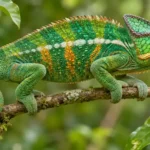
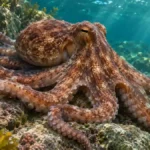


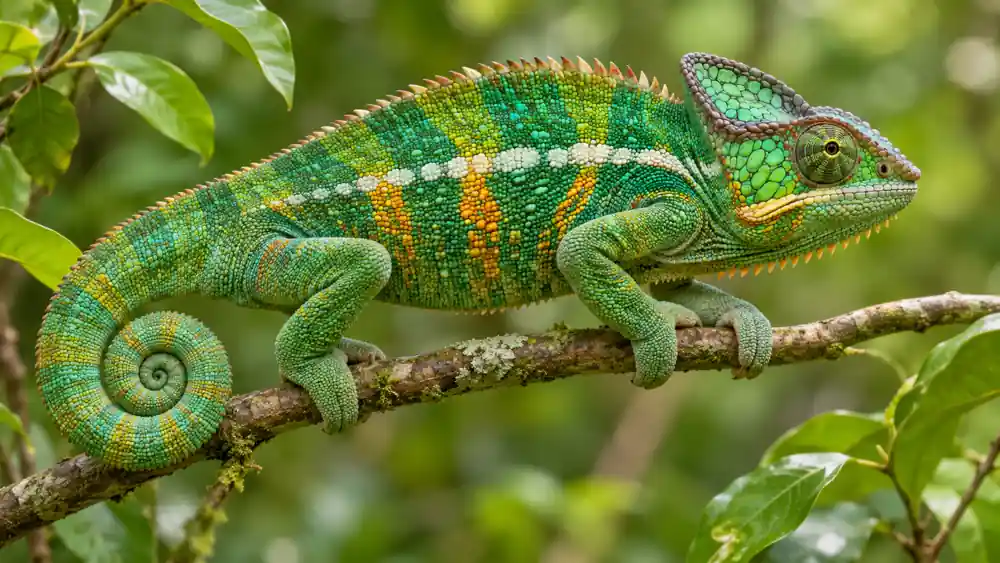
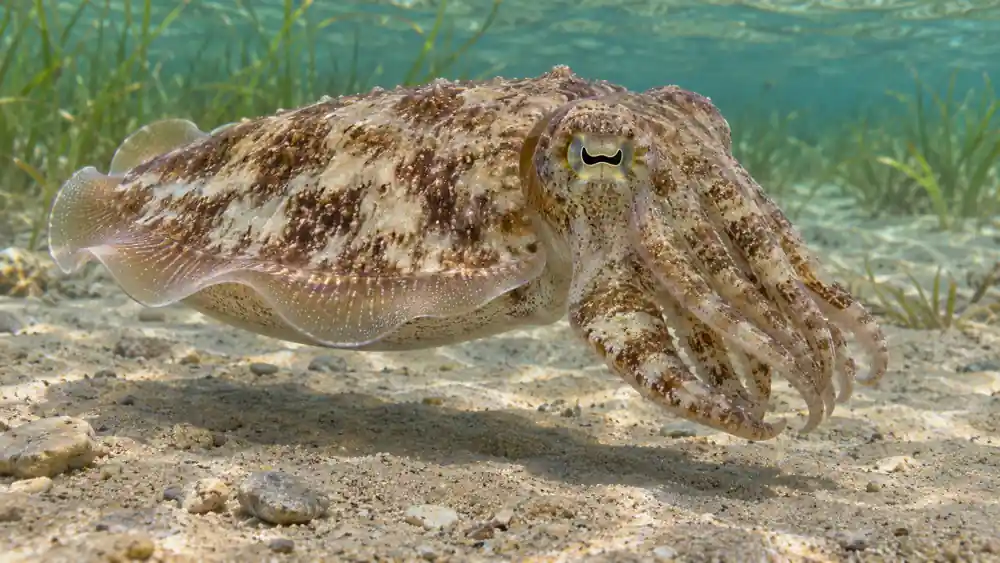
A chameleon becomes brighter on a branch. A cuttlefish blends into a patch of sand. Farther north, a brown hare grows a white winter coat.
All three animals change color, but they do not do it in the same way—or for exactly the same reason.
Animals that change color include chameleons, octopuses, cuttlefish, squid, gray treefrogs, golden tortoise beetles, snowshoe hares, and Arctic foxes. Some alter their appearance quickly through changes in their skin. Others gradually replace their fur as the seasons change.
Camouflage is part of the story. Color can also help animals communicate, respond to temperature, or react to a threat.
Understanding those differences makes these animals even more interesting than a simple before-and-after picture suggests.
Which Animals Can Change Color?
Here is a quick comparison before we look at each example.
| Animal | What changes? | Main reason or context |
|---|---|---|
| Chameleon | Skin color and brightness | Communication, temperature responses, and camouflage |
| Octopus | Skin color, pattern, and sometimes texture | Concealment and signaling |
| Cuttlefish | Skin color, contrast, pattern, and texture | Camouflage and communication |
| Squid | Skin color and patterns | Signaling and camouflage |
| Gray treefrog | Skin shades, including gray and green | Responses to background and temperature |
| Golden tortoise beetle | Metallic appearance and visible color | Changes can occur when disturbed |
| Snowshoe hare | Seasonal fur color | Blending into changing surroundings |
| Arctic fox | Seasonal coat color, depending on color form | Camouflage in Arctic habitats |
The important distinction is between changing the appearance of existing skin and growing a new coat. An octopus does not need to replace its skin to change its pattern. A hare’s winter transformation happens through a molt.
1. Chameleons: Color Is More Than Camouflage
Chameleons are the best-known color-changing animals, but they are often misunderstood.
A chameleon cannot simply copy every color it sees. Putting one beside a bright object will not make it reproduce that object like a living screen.
Its available colors depend on the species and the individual. Changes can also reflect social interactions and environmental conditions.
Research on panther chameleons found that tiny crystals inside specialized skin cells play an important role. Changing the spacing between these crystals alters the light reflected from the skin.
That is different from mixing paint or covering the body with a new pigment.
A brighter display may be important when another chameleon is nearby. In other situations, becoming darker or lighter can be part of a response to temperature.
So, when you see a chameleon change color, ask what is happening around it. The change may be a signal rather than an attempt to disappear.
2. Octopuses: Changing the Whole Impression
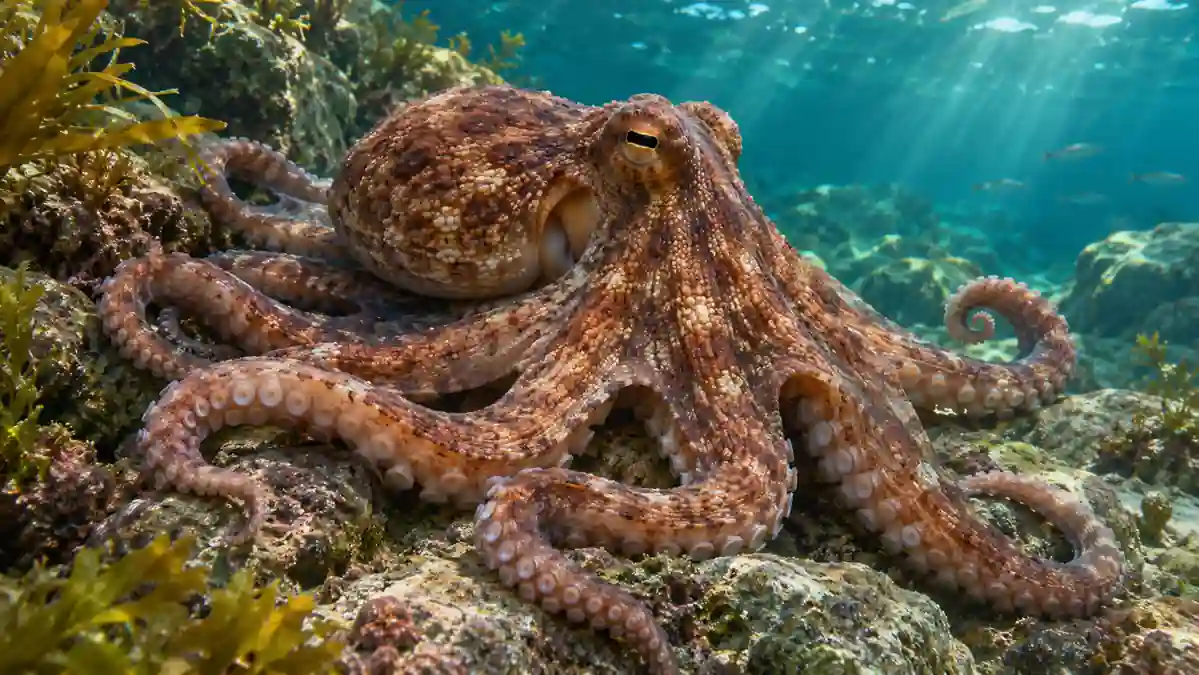
An octopus can be surprisingly difficult to spot against rocks or other uneven surfaces.
Many species can rapidly alter skin color and pattern. Some can also change skin texture, making their surface appear smoother or more raised.
These abilities work together. Matching the general color of a rock is useful, but matching its uneven appearance can make the disguise more convincing.
Pigment-containing structures called chromatophores help produce visible changes. Muscles expand or contract them, showing more or less of their color.
An octopus is not limited to one uniform shade. Different areas of its skin can form contrasting patches.
However, a photograph captures only one moment. It cannot show the animal’s full range of patterns or prove how quickly a particular change happened.
That is one reason footage of a living octopus can reveal much more than a still image.
3. Cuttlefish: Masters of Pattern and Texture
Cuttlefish deserve their own place on this list. Their camouflage involves more than becoming “the same color as sand.”
They can alter brightness, contrast, markings, and the three-dimensional texture of their skin.
A background with large stones presents a different visual problem from a smooth sandy bottom. Cuttlefish can respond with different body patterns rather than using one disguise everywhere.
Researchers study these responses by changing the surfaces and patterns around the animals. This helps reveal which visual features guide their camouflage.
The Marine Biological Laboratory’s common cuttlefish guide explains research into these changes in color, pattern, and skin texture.
For a reader watching a cuttlefish, the useful question is not simply, “What color is it?” Look at the size of its markings, the contrast between patches, and the texture of its body.
Those details are part of the disguise.
4. Squid: Color Can Send a Message
Squid also use rapid changes in skin appearance.
Like their octopus and cuttlefish relatives, they have chromatophores that can expand or contract. This changes how much pigment is visible.
These patterns can help with camouflage, but concealment is not their only purpose. Color changes can also take part in communication.
A display may occur during an interaction with a potential mate or another animal. The meaning depends on the species and the situation.
That makes it risky to label every dramatic change as fear, anger, or excitement. A human description of a mood may not accurately explain what the squid is doing.
When watching a video, notice the context. Is another squid present? Is the animal moving through a different background? Has something approached it?
The surroundings help make sense of the display.
5. Gray Treefrogs: A Gray Frog Can Look Green
The name “gray treefrog” does not mean the animal always looks gray.
Gray treefrogs can show shades ranging from light gray to green. Temperature and background can influence their appearance.
This flexibility is useful for animals resting among bark, leaves, and other changing surfaces.
It also creates a challenge for identification. A green frog is not automatically a green treefrog, and a gray-looking individual may not stay that shade.
Color should therefore be considered alongside other features. Depending on the species, body markings, location, and calls may provide more useful clues.
The broader lesson applies to many color-changing animals: one visible shade is not always a reliable identity card.
A photograph may show what an animal looked like at that moment, rather than its only possible appearance.
6. Golden Tortoise Beetles: A Tiny Metallic Surprise
Golden tortoise beetles look almost like small drops of polished metal sitting on a leaf.
Their rounded bodies can appear shiny gold or orange, with partly transparent edges around their wing covers.
They can also change color when disturbed.
That makes them an unusual example among color-changing animals. The shift is not a mammal’s seasonal molt or a chameleon’s display.
There is an important naming issue here, too. Closely related tortoise beetles may share similar common names. A detailed explanation established for one species should not automatically be applied to all of them.
For a casual observer, the most useful point is simple: a beetle’s bright metallic appearance may not remain constant.
Enjoy the change if you happen to observe it naturally. There is no need to handle or disturb the insect to trigger a reaction.
7. Snowshoe Hares: A New Coat for a New Season
Snowshoe hares show a much slower kind of color change.
Across much of their range, their darker summer coat gives way to a mostly white winter coat. Instead of changing the shade of existing hairs instantly, they shed and replace fur.
Changes in day length help trigger this seasonal process.
White fur can make a hare harder to see against snow. Brown or gray-brown fur provides a better match for many snow-free surroundings.
However, seasonal camouflage does not always match the landscape perfectly. A white hare can stand out if snow arrives late or melts early.
This shows why color-changing adaptations depend on the environment. A useful disguise in one setting may be less effective in another.
A hare with patches of brown and white may simply be partway through its seasonal molt.
8. Arctic Foxes: Not Every Fox Turns White
The Arctic fox is another well-known animal that changes coat color with the seasons.
But the familiar brown-to-white description needs an important qualification.
Arctic foxes occur in two main color forms, often called the white morph and the blue morph.
White-morph foxes have a white winter coat and a darker, brown-gray summer appearance. Blue-morph foxes remain darker rather than becoming snowy white.
Their coats are replaced through seasonal molts. This is a gradual change, not a quick response to standing on snow.
The distinction matters when identifying photographs. A dark Arctic fox in winter is not necessarily an animal whose seasonal change has failed.
It may belong to the blue color form.
This is a good example of why broad animal facts need room for natural variation.
How Do Animals Change Color?
The examples above involve several different biological processes.
Pigment structures change their visible area
In squid and other cephalopods, muscles act on pigment-containing structures. Expanding them reveals more color; contracting them reveals less.
Coordinated changes across the body create patterns rather than just a single overall shade.
Microscopic structures change reflected light
Research on panther chameleons shows that the arrangement of tiny crystals can alter the light reflected by the skin.
This is known as structural color. The visible result depends partly on physical structure, rather than pigment alone.
Fur is shed and replaced
Seasonal mammals change their appearance through coat replacement.
This explains why a hare or Arctic fox may look patchy during a transition. Old and new fur can be visible at the same time.
It also explains why these transformations take much longer than the rapid displays seen in many marine animals.
Why Do Animals Change Color?
To become harder to notice
Camouflage can make an animal less obvious against its surroundings.
That may help prey avoid detection. It can also help predators approach other animals without being noticed.
To communicate
A visible change can matter precisely because another animal notices it.
Displays may be involved in courtship or other social interactions. This is why “color change” and “hiding” should not be treated as identical ideas.
To respond to environmental conditions
Temperature, light, and seasonal cues can be involved in different animals’ changes.
There is no universal trigger. A chameleon’s skin response and a hare’s seasonal molt should not be explained as though they work the same way.
Our wildlife guides explore more examples of how animals respond to their surroundings.
Color Change, Color Varieties, and Glowing Are Different
These ideas are easy to mix up.
Color change happens when an individual animal alters its appearance over time.
Color varieties describe differences between individuals. Two animals of the same species may have different inherited appearances without being able to switch between them.
For example, the varieties covered in our axolotl colors guide should not be confused with an octopus rapidly changing its pattern.
Bioluminescence means producing light through a chemical process. It is not simply another word for a bright color.
A shiny beetle reflects light. That does not mean it glows in darkness.
Keeping these terms separate makes animal facts much easier to understand.
Frequently Asked Questions
Which animals change color for camouflage?
Many octopuses and cuttlefish alter their appearance to blend with their surroundings. Seasonal changes in snowshoe hares and white-morph Arctic foxes also provide camouflage.
Why do chameleons change color?
Their changes can relate to communication, temperature responses, and camouflage. They do not simply copy any background placed behind them.
Which animals turn white in winter?
Snowshoe hares and white-morph Arctic foxes are familiar examples. Other animals, including some ptarmigans and weasels, also develop white seasonal coverings. The pattern depends on the species and population.
How do octopuses change color so quickly?
Muscles control pigment-containing chromatophores in their skin. Coordinated expansion and contraction can rapidly alter visible colors and patterns.
Can all Arctic foxes turn white?
No. The white color form develops a white winter coat. The blue form remains darker.
Can frogs change color?
Some can. Gray treefrogs can shift between shades including gray and green, with background and temperature influencing their appearance.
Do animals change color on purpose?
There is no single answer for every species. Different changes involve different nervous, hormonal, and seasonal processes. “On purpose” can make these responses sound more human than the evidence supports.
Is every color change a sign of stress?
No. Normal communication, camouflage, temperature responses, and seasonal molting can all involve color changes. Appearance needs to be considered in context.
An animal’s color is sometimes a stable feature and sometimes a changing part of its behavior or seasonal life. Looking at the pattern, the timing, and the surroundings helps reveal which kind of change you are seeing.
Explore more unusual animal adaptations on Viltnemnda.