





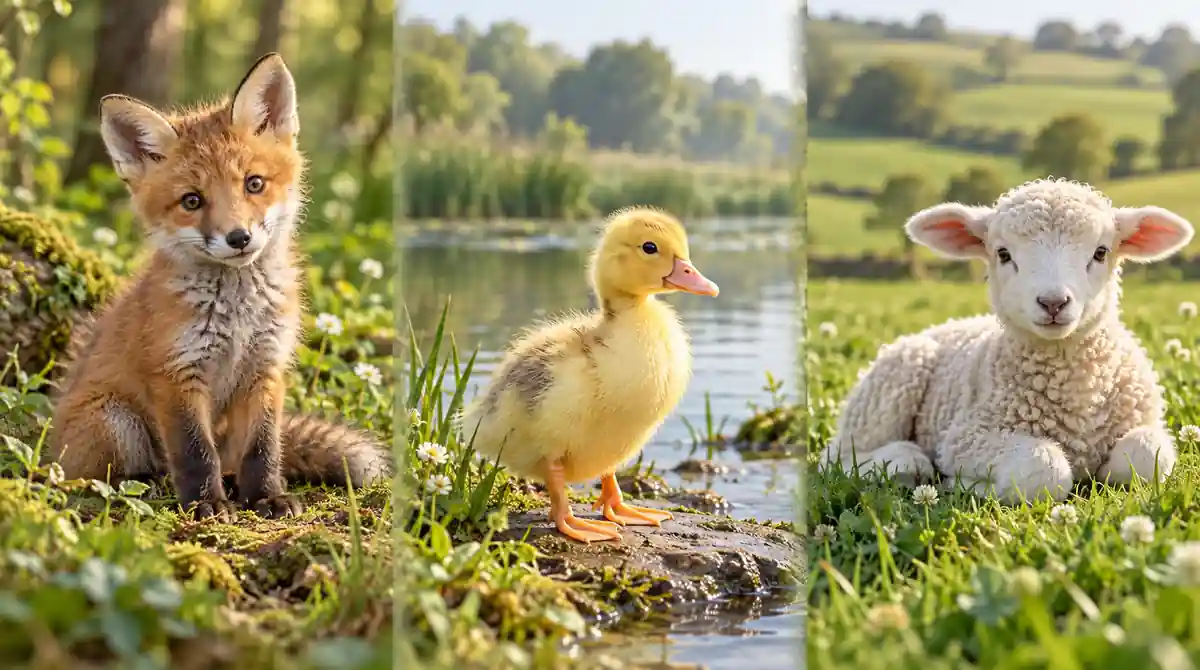
A baby goat is a kid, a baby sheep is a lamb, and a baby swan is a cygnet. Some baby animal names are easy to recognise. Others are less familiar, such as a leveret for a young hare or a cria for a young alpaca.
This Viltnemnda guide brings together 40 names for young animals, followed by explanations of the terms people often confuse. Find an animal in the table, or explore why different species can share names such as calf, cub, kit, and joey.
Baby Animal Names: Quick Reference Table
The list below gives common English terms. Where two names are shown, both are used. It is a practical reference rather than a complete list of every regional or specialist term.
| Animal | Name of its young |
|---|---|
| Alpaca | Cria |
| Bear | Cub |
| Cat | Kitten |
| Chicken | Chick |
| Cow | Calf |
| Deer, such as white-tailed deer | Fawn |
| Dog | Puppy or pup |
| Dolphin | Calf |
| Donkey | Foal |
| Duck | Duckling |
| Eagle | Eaglet |
| Elephant | Calf |
| Ferret | Kit |
| Fox | Kit or cub |
| Frog | Tadpole, during its larval stage |
| Giraffe | Calf |
| Goat | Kid |
| Goose | Gosling |
| Hare | Leveret |
| Horse | Foal |
| Kangaroo | Joey |
| Koala | Joey |
| Lion | Cub |
| Llama | Cria |
| Moose | Calf |
| Otter | Pup |
| Owl | Owlet |
| Pig | Piglet |
| Pigeon | Squab |
| Rabbit | Kit or kitten |
| Reindeer | Calf |
| Seal | Pup |
| Sheep | Lamb |
| Swan | Cygnet |
| Tiger | Cub |
| Turkey | Poult |
| Turtle | Hatchling |
| Whale | Calf |
| Wolf | Pup |
| Zebra | Foal |
Farm Animal Babies: Kids, Lambs, Calves, and Foals
Farm animals are a useful place to start because their young have familiar, distinct names. A pig has a piglet, a sheep has a lamb, and a goat has a kid. These words identify the young animal without needing to say “baby” before the species every time.
The easiest pair to mix up is kid and lamb. Both refer to young farm animals, but they are not interchangeable. If you are describing a young goat, use kid. For a young sheep, use lamb. In a caption, “goat kid” can help readers who might otherwise think of a child.
A young cow is a calf, but calf is not limited to cattle. It also appears elsewhere in the animal world, including among elephants and whales. Adding the species makes the meaning clear: “an elephant calf” leaves no doubt about which animal you mean.
Is a Baby Horse a Foal, Colt, or Filly?
A foal is a young horse, whether male or female. Colt refers to a young male horse, while filly refers to a young female. That means foal is the useful general word when you do not know the animal’s sex.
For example, “The mare stood beside her foal” is clear without extra detail. If you know the young horse is female, you can call her a filly. Avoid using colt as the default name for every baby horse.
Wild Baby Animals: Cubs, Kits, and Pups
Several familiar wildlife names repeat across species. Bears, lions, and tigers have cubs. Young foxes can be called kits or cubs, while young wolves are commonly called pups. These shared terms make more sense when you learn each one together with the animal’s name.
Imagine reading the caption “Two cubs waited outside.” You know the animals are young, but you do not know what they are. “Two fox cubs waited outside the den” gives a much clearer picture. The same principle helps with schoolwork, nature notes, and wildlife articles.
What Is a Baby Rabbit Called?
A baby rabbit is a kit or kitten. Kitten is therefore not limited to cats. Bunny is a familiar, informal word for a rabbit, but it does not reliably tell you the animal’s age.
If you are making a young-animal list, use kit or kitten for accuracy. In a casual story, baby bunny is easy to understand. The choice depends on whether you need the recognised young-animal term or simply a friendly description.
What Is a Baby Hare Called?
A baby hare is a leveret. It has a different name from a baby rabbit, so the two should have separate entries in a reference table. Remember the pair as “rabbit kit, hare leveret.”
You do not need to replace leveret with a more familiar word once you have explained it. A sentence such as “The young hare, called a leveret, rested nearby” introduces the term naturally.
Is Every Baby Deer a Fawn?
Fawn is familiar for the young of deer such as white-tailed deer. However, it is not the term used for every member of the deer family. Young moose and reindeer are called calves. This is why a specific animal name is more useful than one blanket label for all deer.
For a closer look at deer body features, see our deer anatomy guide. Learning a young animal’s name and learning to recognise its features are related skills, but one does not replace the other.
The same caution applies to footprints. A small print alone is not enough to assign an exact age to the animal that made it. Our deer tracks guide explains the wider clues to examine in snow and mud.
Baby Bird Names: More Than Just Chicks
Chick is a common name for a young bird, but many birds also have more specific terms. A young duck is a duckling, a young goose is a gosling, and a young swan is a cygnet. Eagle and owl become eaglet and owlet.
Two less obvious names are squab for a young pigeon and poult for a young turkey. They are worth learning separately because you cannot work them out simply by adding an ending to the adult bird’s name.
You may also encounter words that describe a bird’s stage of development rather than its species. These terms answer a different question: how far has the young bird developed?
| Term | What it tells you |
|---|---|
| Hatchling | The bird has recently emerged from its egg |
| Nestling | The young bird is still at the nest-dependent stage |
| Fledgling | The bird has reached the stage of leaving the nest; it may still depend on its parents |
A fledgling is not necessarily an adult or a strong flyer. Likewise, nestling does not tell you which species the bird belongs to. A description such as “an owl nestling” combines the bird’s identity with its stage of development.
Why Kangaroos and Koalas Both Have Joeys
Joey is not a name reserved for baby kangaroos. Young koalas and wombats are also called joeys, as are young wallabies. These animals belong to the marsupial group.
When you see joey used on its own, check the surrounding description. “A koala joey” and “a kangaroo joey” identify very different animals. Using the full phrase is especially helpful in a picture caption or a mixed-species list.
Baby Sea Animals: Calves and Pups
Some of the same words used for land animals also appear at sea. A baby dolphin or whale is a calf, while a baby seal is a pup. The animal’s habitat does not determine a unique naming pattern.
This can make a useful memory exercise. Put cow, elephant, dolphin, and whale together under calf. Then compare that group with dog, wolf, and seal under pup. You are grouping them by vocabulary, not claiming that they belong to the same biological family.
Hatchlings and Tadpoles: Names for Life Stages
Hatchling describes an animal that has recently emerged from an egg. The term can apply to turtles as well as birds. It tells you something about the start of the animal’s life rather than giving a name exclusive to one species.
Tadpole is different: it describes the larval stage of frogs and toads. It is not a general term for every small frog. As the animal develops beyond that stage, the wording needs to change too.
These examples show why a baby animal names list is most useful when it includes a little context. Some words identify the species, some indicate sex, and others describe a stage of growth.
A Simple Way to Remember Young Animal Names
Start with five familiar pairs: dog and puppy, cat and kitten, sheep and lamb, goat and kid, and duck and duckling. Say each pair aloud, then cover the second word and try to recall it.
Next, add the easily confused pairs: rabbit and kit, hare and leveret, horse and foal, and swan and cygnet. Learning a few at a time is easier than trying to memorise the whole table in one sitting.
Finally, practise with full sentences. “The gosling followed the goose” connects the young and adult names. “The calf stood beside the elephant” reminds you that calf has several uses. These are example sentences for learning, rather than accounts of observed events.
For further vocabulary checking, the Collins Dictionary reference for baby and young animals records many of these terms and their alternatives.
Frequently Asked Questions
What Is a Baby Fox Called?
A baby fox can be called a kit or a cub. Both terms are used. Adding fox before either word keeps the meaning clear because other animals also have kits or cubs.
What Is a Baby Goat Called?
A baby goat is a kid. A lamb is a young sheep, so the two names should not be swapped. “Goat kid” is useful when the word kid might otherwise be misunderstood.
What Is a Baby Swan Called?
A baby swan is a cygnet. The plural is cygnets. A young goose is a gosling, while a young duck is a duckling.
What Is a Baby Owl Called?
A baby owl is an owlet. You may also see an owl described as a nestling or fledgling. Those words tell you about its development rather than replacing its species name.
What Is a Baby Elephant Called?
A baby elephant is a calf. The plural is calves. The same young-animal name is used for several other mammals, including cattle, giraffes, dolphins, and whales.
What Is a Baby Rabbit Called?
A baby rabbit is a kit or kitten. Bunny is an informal rabbit name rather than a precise term for its young. For a factual list, kit or kitten is the clearer choice.
Is a Foal Male or Female?
A foal can be male or female. Colt specifies a young male horse, and filly specifies a young female. Use foal when the sex is unknown or does not matter to the description.
What Is the Difference Between a Cub and a Pup?
Cub and pup are young-animal terms used for different species, with some variation in usage. Learn them with the species, such as bear cub and seal pup, rather than treating them as two universal biological categories.

2 thoughts on “Baby Animal Names: 40 Young Animals and What to Call Them”