








Animal tracks identification is a useful skill for anyone who enjoys nature. A small footprint in mud or snow can tell you which animals have visited an area, even when you never see them.
You might find deer hoofprints near a woodland path, fox tracks beside a field, or rabbit footprints in fresh snow. Each animal leaves different signs. Learning to recognize them can make an ordinary walk more interesting.
At Viltnemnda, we explore wildlife, animal behavior, and the natural world. Understanding animal footprints is one simple way to learn more about the creatures living around us.
This guide explains how to identify common animal tracks, compare footprints, and understand the patterns animals leave behind.
You will also learn how to recognize tracks in snow, mud, and soft soil without disturbing wildlife.
What Are Animal Tracks?
Animal tracks are marks left when an animal walks, runs, hops, or moves across a surface.
Most people think of footprints when they hear the word tracks. However, animal tracking can involve much more.
Wildlife may also leave claw marks, tail marks, feeding signs, fur, or disturbed soil.
These clues can help you understand where an animal traveled and what it may have been doing.
Why Do Animals Leave Different Footprints?
Animals have different feet because their bodies are adapted to different ways of moving.
Deer have hooves that support their weight while walking and running.
Foxes and wolves have padded paws with claws that help them move across different surfaces.
Rabbits have long hind feet that support powerful jumps.
Birds have toes adapted for walking, perching, swimming, or catching prey.
These differences create recognizable patterns on the ground.
How to Identify Animal Tracks in Five Simple Steps
You do not need expensive equipment to begin identifying wildlife footprints.
A camera, a small ruler, and careful observation are often enough.
Step 1: Look at the Shape
Start by studying the outline of the footprint.
Is it round, oval, long, narrow, or divided into two parts?
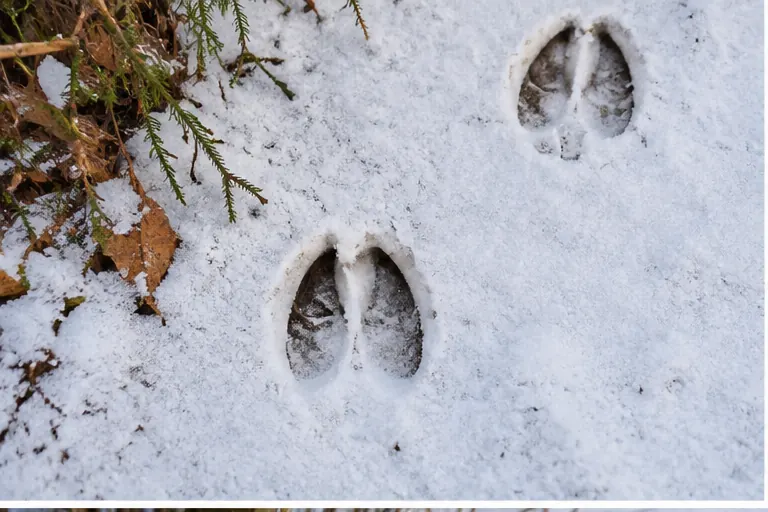
A split hoofprint may belong to a deer or another hoofed animal.
A round paw print may belong to a cat or another mammal.
A long print with several toes may come from a larger animal.
Shape is your first clue, but it should never be your only clue.
Step 2: Count the Toes
Look for individual toe marks.
Many members of the dog and cat families have four toes visible in their tracks.
Bears usually show five toes.
Raccoons have five long toes that can look like small fingers.
Bird tracks often show three toes pointing forward. Some also show a backward-facing toe.
Remember that not every toe will appear clearly.
Soft ground, snow depth, and the animal’s movement can change the print.
Step 3: Check for Claw Marks
Claw marks can help you narrow down the animal family.
Foxes, wolves, and domestic dogs often leave claw impressions.
Cats usually keep their claws retracted while walking, so their tracks often lack clear claw marks.
However, a missing claw mark does not prove that a track belongs to a cat.
The ground may simply have been too firm to record it.
Step 4: Measure the Footprint
Place a ruler beside the track and take a photograph.
Measure its length and width.
Try to measure several clear prints rather than relying on a single footprint.
Animal tracks can look larger in melting snow or very soft mud.
The actual foot may be smaller than the impression suggests.
Step 5: Study the Trail Pattern
Look beyond one footprint.
Are the tracks arranged in a straight line?
Do they appear in groups of four?
Are the footprints widely spaced?
The pattern can reveal whether an animal was walking, trotting, running, or hopping.
It may also help you distinguish animals with similar feet.
Common Animal Tracks Identification Chart
The table below provides a simple comparison of common wildlife footprints.
| Animal | Track Shape | Common Clues |
|---|---|---|
| Deer | Split hoof | Two pointed halves |
| Fox | Oval paw | Four toes, possible claws |
| Wolf | Large oval paw | Four toes, possible claws |
| Dog | Oval or rounded paw | Four toes, possible claws |
| Cat | Rounded paw | Four toes, usually no claws |
| Rabbit | Long hind prints | Groups of four |
| Squirrel | Small paired prints | Bounding pattern |
| Bear | Broad paw | Five toes |
| Raccoon | Hand-like | Five long toes |
| Otter | Rounded or webbed | Five toes, sometimes tail marks |
| Duck | Webbed foot | Three forward toes |
| Moose | Large split hoof | Broad hoof impressions |
These are general features, not fixed rules.
Some animals leave similar tracks. The location, size, and movement pattern are important when making an identification.
Deer Tracks: How to Recognize Deer Footprints
Deer tracks are among the most recognizable animal footprints.
Deer have cloven hooves. This means each foot has two main hoof sections.
When a deer walks across soft ground, these sections often leave a heart-shaped impression.
The pointed ends usually face the direction of travel.
What Do Deer Tracks Look Like?
A clear deer footprint normally shows two narrow hoof marks placed side by side.
In soft mud or deep snow, additional marks from the dewclaws may appear behind the main hoofprints.
Track size varies between species.
A small roe deer leaves much smaller prints than a large red deer or moose.
Deer Tracks in Snow
Fresh snow can reveal where deer have been walking.
You may see a series of split hoofprints crossing a forest path or open field.
When snow is deep, the animal’s legs may create extra marks around the hoofprints.
Melting snow can also make the prints appear wider than they were originally.
Deer Tracks vs Other Hoofprints
Deer, sheep, goats, and some other animals leave split hoofprints.
Deer tracks are often more pointed than sheep tracks, but this is not always enough for identification.
Look at the animal species living in the area and compare several footprints.
For a closer look at hoof shapes and deer movement, read our Deer Tracks Guide.
Fox Tracks: Small Paw Prints with a Clear Pattern
Foxes are found in many forests, grasslands, and rural areas.
They are often difficult to see because they may be most active when people are not nearby.
Their tracks can reveal where they have traveled.
What Do Fox Tracks Look Like?
Fox tracks usually show four toes and a central paw pad.
The prints are often oval rather than completely round.
Small claw marks may appear in suitable ground.
Foxes often move in a fairly direct line when traveling.
Their hind feet may land close to the impressions made by their front feet.
Fox Tracks in Snow
Fresh snow can make fox trails easier to follow visually.
A fox may leave a narrow line of prints across a field or along a woodland edge.
However, a straight trail does not prove that the animal was a fox.
Domestic dogs and other wild canids can produce similar patterns.
Wolf Tracks: How Are They Different from Dog Tracks?
Wolves belong to the dog family.
Their footprints share many features with those of domestic dogs.
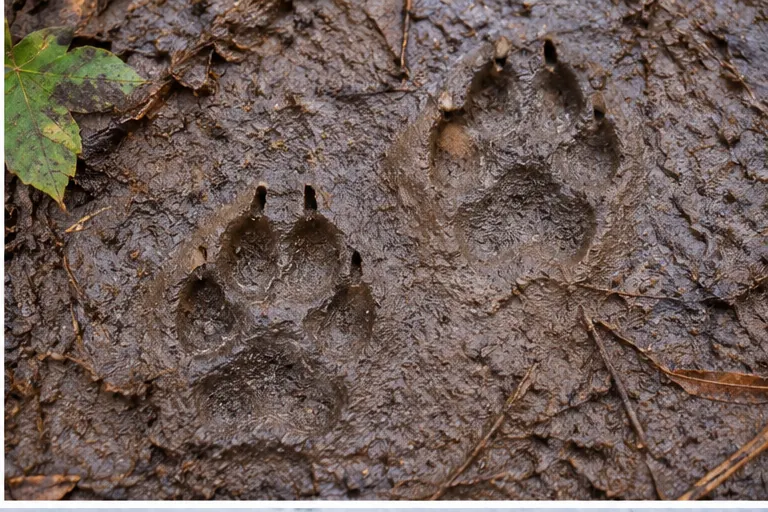
Both usually leave four toe impressions, a central pad, and sometimes visible claws.
What Do Wolf Tracks Look Like?
Wolf tracks are generally large, although size overlaps with some large dog breeds.
They are often oval in shape.
The toes may appear close together, and the overall print can look compact.
A wolf traveling steadily may leave a fairly straight trail.
Wolf Tracks vs Dog Tracks
It can be difficult to distinguish wolf tracks from large dog tracks.
Dogs may move in changing directions while exploring an area.
Wolves often travel more directly over long distances.
However, these patterns are not reliable enough to identify an animal on their own.
Track size, habitat, location, and several clear footprints should all be considered.
If you find large canine tracks in wolf habitat, avoid following the trail toward the animal.
Rabbit and Hare Tracks: Recognizing Hopping Footprints
Rabbit and hare tracks have a very different pattern from deer or fox tracks.
These animals move by hopping and bounding.
Their long hind legs provide much of the power for each jump.
What Do Rabbit Tracks Look Like?
Rabbit tracks often appear in groups of four.
The two larger hind footprints usually land ahead of the smaller front footprints.
This may look confusing at first.
You might expect the front feet to leave the first marks in the direction of travel.
However, rabbits bring their hind feet forward during a jump.
This creates the familiar four-print pattern.
Rabbit Tracks in Snow
Fresh snow is one of the best places to see rabbit tracks.
Look for two larger, elongated prints ahead of two smaller marks.
The tracks may cross open ground or move between bushes.
Deep snow can hide the exact toe shapes, but the hopping pattern may remain visible.
Rabbit Tracks vs Hare Tracks
Hares generally have larger feet than many rabbit species.
Their footprints may appear longer and more widely spaced.
However, the size of the animal and the speed of movement can affect the pattern.
Both animals can leave similar groups of four prints.
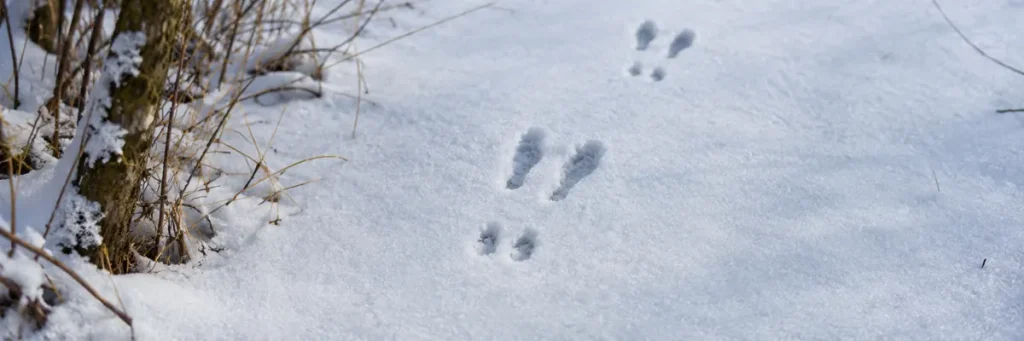
Caption: A bounding trail in snow shows the larger hind prints and smaller front prints associated with rabbits and hares.
Squirrel Tracks: Small Footprints Near Trees
Squirrels are common in many wooded areas and parks.
They move quickly across the ground and often climb trees.
Their tracks are usually small.
What Do Squirrel Tracks Look Like?
Squirrels commonly leave groups of four footprints.
Their hind feet are larger than their front feet.
When bounding, the hind feet may land ahead of the front feet.
This can make squirrel tracks look similar to rabbit tracks.
How to Tell Squirrel Tracks from Rabbit Tracks
Squirrel tracks are often smaller.
The arrangement of the feet can also differ.
Squirrels may leave their front prints side by side, while rabbits often leave the front prints in a staggered arrangement.
Look for tracks leading toward tree trunks, fallen logs, or feeding areas.
Bear Tracks: Large Footprints with Five Toes
Bear tracks are among the largest footprints you may find in some forests.
Bears have five toes on each foot.
Their hind footprints can look surprisingly similar to human footprints.
What Do Bear Tracks Look Like?
A bear footprint is usually broad.
The toes form a curved row near the front of the print.
Claw marks may appear beyond the toes.
The hind foot often leaves a longer impression than the front foot.
Brown Bear Tracks vs Black Bear Tracks
Brown bears and American black bears can leave similar footprints.
Brown bears generally have larger tracks, but size alone is not a reliable way to identify the species.
The shape of the foot, claw placement, and local wildlife population may help.
If you find fresh bear tracks, do not follow them.
Give the animal plenty of space and follow local wildlife safety advice.
Moose Tracks: Large Hoofprints in Forests
Moose are among the largest members of the deer family.
They are found in northern forests, including parts of Norway, Sweden, Finland, and North America.
Their tracks can be much larger than those of smaller deer species.
What Do Moose Tracks Look Like?
Moose have two large hoof sections on each foot.
Their prints may look broad and heart-shaped.
In soft ground, dewclaw impressions can also appear.
Because moose are heavy animals, they may leave deep marks in mud or snow.
Moose Tracks vs Deer Tracks
The main difference is often size.
Moose tracks are generally much larger than those of roe deer or white-tailed deer.
However, large red deer and other hoofed animals may produce confusing prints.
Always compare several tracks and consider the local habitat.
Raccoon Tracks: Footprints That Look Like Hands
Raccoons are well known for their distinctive feet.
Their tracks often look like tiny human handprints.
Each foot has five toes.
What Do Raccoon Tracks Look Like?
The front footprints show long, narrow toes.
The hind footprints are usually longer.
Raccoons may leave paired tracks as they walk.
Their footprints are often found near streams, ponds, gardens, and wooded areas.
Can Raccoon Tracks Be Confused with Other Animals?
Yes.
Some mammals also leave five-toed prints.
However, the long finger-like toes of raccoons are a useful clue.
Raccoons are native to North America, although introduced populations exist in parts of Europe.
They are not a normal native wildlife species in Norway.
Otter Tracks: Footprints Near Water
Otters spend much of their time around rivers, lakes, wetlands, and coastal areas.
Their feet are adapted for swimming.
What Do Otter Tracks Look Like?
Otter footprints usually have five toes.
Webbing may be visible in clear impressions.
The prints can appear rounded or spread out.
Sometimes, only four toes show clearly.
Other Signs of Otter Activity
Otters may leave sliding marks on muddy banks or snowy slopes.
A tail mark can sometimes appear between footprints.
You may also find tracks moving between water and nearby vegetation.
Avoid approaching resting places or disturbing animals near the water.
Bird Tracks: How to Identify Footprints with Toes
Bird tracks look different from mammal footprints.
Many birds have three toes pointing forward.
Some have a fourth toe pointing backward.
Other birds have webbed feet.
Duck Tracks
Ducks have webbed feet.
Their footprints often show three forward toes joined by a broad web.
These tracks are common around wet ground and shallow water.
Crow Tracks
Crows generally leave three forward-facing toes and one backward-facing toe.
Their footprints may appear on mud, sand, or snow.
Small Songbird Tracks
Small birds leave tiny prints.
Some hop with both feet, creating paired impressions.
Others walk and leave alternating footprints.
Bird species can be difficult to identify from tracks alone.
Animal Tracks in Snow: What You Need to Know
Snow is one of the most useful surfaces for finding animal footprints.
It records movement across open ground and forest paths.
However, snow conditions can change the appearance of tracks.
Fresh Snow
Fresh, shallow snow often produces the clearest footprints.
You may see individual toes, claws, or hoof sections.
Deep Snow
Deep snow can hide fine details.
An animal may leave large holes instead of clear footprints.
The legs or body may also disturb the surrounding snow.
Melting Snow
As snow melts, footprints can become wider and less defined.
A small animal’s tracks may look much larger than the actual feet.
For this reason, track size in melting snow should be treated carefully.
Animal Tracks in Mud: Why They Can Be Easier to Identify
Soft mud often preserves more detail than snow.
You may be able to see toe pads, claws, and the shape of the main foot pad.
Best Places to Find Mud Tracks
Look around:
- Riverbanks
- Pond edges
- Woodland paths
- Damp fields
- Wet sand
- Puddles after rain
Stay on safe public paths and avoid unstable banks.
How to Photograph Mud Tracks
Take one photograph from directly above the footprint.
Place a ruler beside the track if possible.
Then photograph the wider trail pattern.
These images can help you compare the prints with identification guides later.
How to Tell Fresh Animal Tracks from Old Tracks
Fresh tracks may have sharp edges and clear details.
Older tracks often become damaged by rain, wind, melting snow, or other animals.
However, the age of a track is not always easy to determine.
Signs That a Track May Be Recent
A fresh print may have:
- Clear edges
- Visible toe marks
- Little windblown material inside
- Undisturbed surrounding ground
These signs are useful, but they are not proof of exactly when the animal passed.
Weather conditions can preserve old tracks or damage new ones.
Avoid assuming an animal is still nearby based only on the appearance of a footprint.
Animal Tracks vs Animal Droppings
Footprints are not the only clues animals leave behind.
Droppings, also called scat, can provide information about wildlife activity.
Deer often leave small pellets.
Fox droppings may contain hair, seeds, or other food remains.
Rabbits commonly leave small, round pellets.
However, scat identification can also be uncertain.
Never handle animal droppings with bare hands.
They may contain harmful organisms.
If you want to learn more about wildlife signs, explore the related guides in our wildlife section.
Where Can You Find Animal Tracks in the Wild?
You can find animal footprints in many different habitats.
Forest Trails
Forests are good places to look for deer, fox, squirrel, and other mammal tracks.
Soft soil and muddy paths often preserve footprints.
Riverbanks
Water attracts many animals.
You may find tracks from birds, otters, deer, and other wildlife near water.
Open Fields
Fields can reveal trails made by deer, rabbits, foxes, and birds.
Fresh snow makes these trails easier to notice.
Gardens and Backyards
Small mammals and birds may leave footprints in gardens.
Wet soil and light snow can reveal signs of overnight activity.
Wetlands
Wetlands are useful for observing waterbird tracks.
Look for webbed footprints and other signs near shallow water.
Always avoid disturbing nests or sensitive habitats.
Common Animal Tracking Mistakes
Beginners often make mistakes when identifying footprints.
The most common mistake is using only the size of a single print.
Another is assuming that every four-toed track belongs to a dog.
Some people also identify animals from unclear photographs without considering the location.
To improve your results, follow these simple rules.
- Study several footprints instead of one.
- Measure clear tracks when possible.
- Check the number of toes and claw marks.
- Look at the full trail pattern.
- Consider which animals live in the area.
- Remember that weather can change footprints.
- Accept that some tracks cannot be identified with certainty.
A careful identification is more useful than a confident guess.
How to Observe Animal Tracks Without Disturbing Wildlife
Animal tracking should be a respectful outdoor activity.
You do not need to follow an animal to learn from its footprints.
Take photographs from a safe distance and leave the area as you found it.
Avoid entering dens, nests, or resting areas.
Do not chase animals or use food to attract them.
If you encounter fresh signs of a large predator, keep your distance and follow local safety guidance.
The goal is to understand wildlife, not interfere with it.
Frequently Asked Questions About Animal Tracks
1. How can I identify animal tracks?
Start by checking the shape, size, toe count, and claw marks. Then study the trail pattern and consider which animals live nearby.
2. What animal leaves heart-shaped footprints?
Deer and other cloven-hoofed animals can leave heart-shaped footprints. The exact shape depends on the species and ground conditions.
3. What animal tracks have four toes?
Dogs, foxes, wolves, and cats commonly leave four-toed footprints. Other clues are needed to identify the animal.
4. What animal tracks have five toes?
Bears, raccoons, otters, and several other mammals can leave five-toed tracks.
5. How can I tell fox tracks from dog tracks?
Fox tracks are often smaller and may form a narrow, direct trail. However, some dog tracks look similar, so no single feature is conclusive.
6. What do rabbit tracks look like in snow?
Rabbit tracks often appear in groups of four. Two larger hind footprints usually land ahead of two smaller front footprints.
7. Are animal tracks easier to identify in snow or mud?
Both surfaces can be useful. Soft mud often preserves fine details, while shallow snow can make the full trail easier to follow.
8. Can animal footprints tell which direction an animal was moving?
Often, yes. Toe direction and the arrangement of the trail can provide clues about movement.
9. Can you identify an animal from one footprint?
Sometimes, but it is not always reliable. Several clear footprints and the surrounding habitat provide stronger evidence.
10. What should I do if I find fresh bear or wolf tracks?
Do not follow the tracks. Give wildlife space and follow local safety recommendations.
Conclusion
Animal tracks identification helps us understand wildlife without needing to see the animals themselves.
A split hoofprint may reveal where a deer crossed a trail. A line of paw prints may show where a fox traveled. A group of four marks in fresh snow may belong to a rabbit or squirrel.
Each footprint offers a small clue about the natural world.
The best way to improve your tracking skills is to observe carefully, compare several prints, and consider the surrounding habitat.
Remember that tracks are not always clear. Snow, mud, weather, and movement can change their appearance.
With patience and practice, you can become better at recognizing the signs animals leave behind.
Whether you are walking through a forest, exploring a riverbank, or looking at snow in your backyard, animal tracks can turn an ordinary outdoor visit into an opportunity to learn about wildlife.