









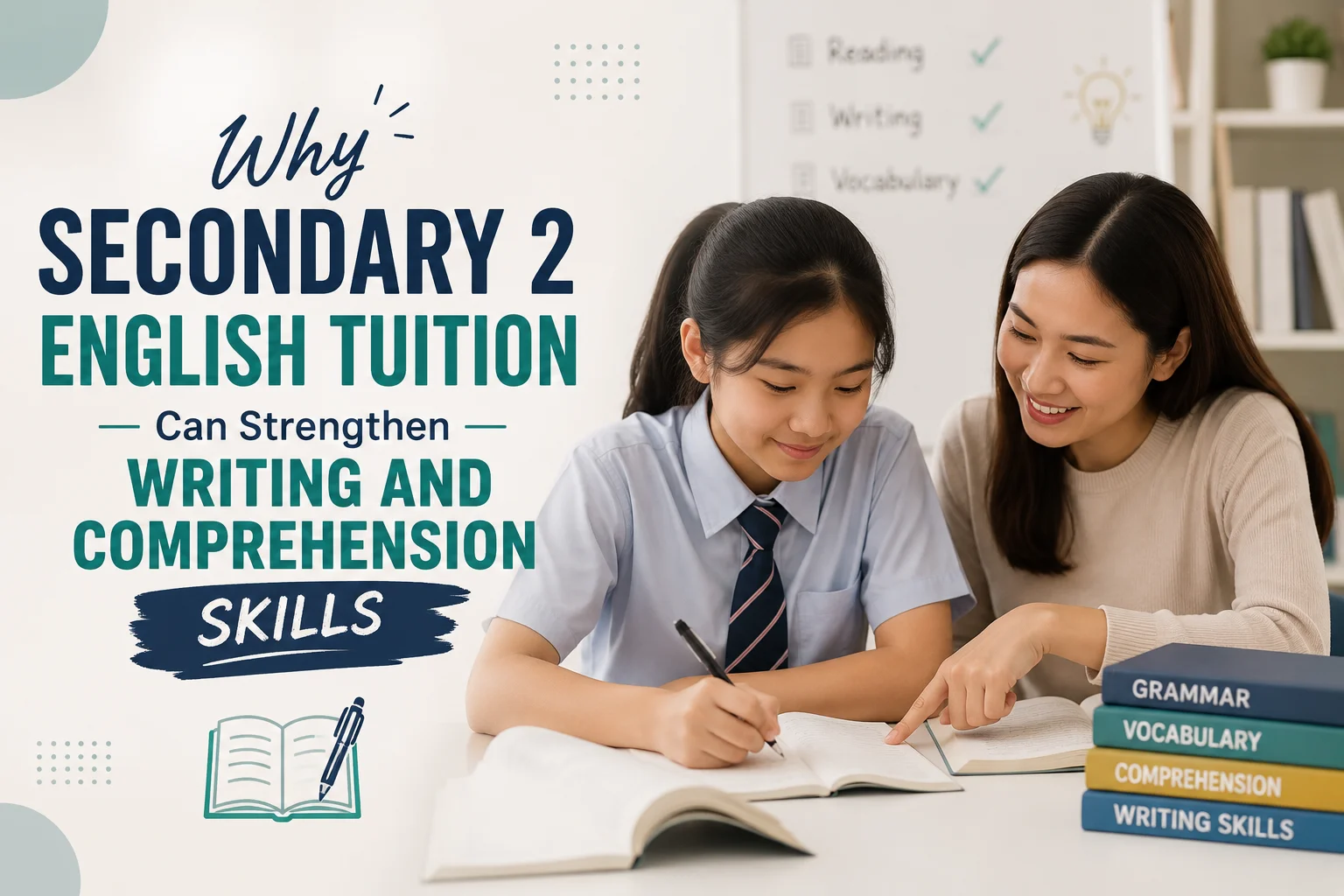
Secondary 2 is often a turning point in a student’s English learning journey. At this stage, students are expected to handle more sophisticated reading materials, develop stronger analytical skills, and produce well-structured written responses across various formats. The transition can be challenging, particularly for students who have relied heavily on memorisation rather than genuine language mastery.
For many families in Singapore, secondary 2 english tuition serves as an effective way to bridge learning gaps and reinforce essential language skills. As classroom expectations increase, students benefit from additional guidance that helps them understand complex texts, expand their vocabulary, and express ideas with greater clarity and confidence. Strong writing and comprehension abilities do not only contribute to better examination results. They also support learning across multiple subjects, improve communication skills, and prepare students for the higher academic demands they will encounter in upper secondary education.
Understanding the Growing Demands of Secondary 2 English
English assessments at Secondary 2 require students to move beyond basic language usage. They are expected to demonstrate deeper understanding, stronger reasoning, and more precise expression.
Students commonly encounter challenges such as:
- Understanding implied meanings in passages
- Analysing the writer’s tone and purpose
- Organising ideas logically in essays
- Using varied vocabulary effectively
- Supporting arguments with relevant examples
- Managing time during examinations
These expectations reflect the broader goals of Singapore’s English curriculum, which focuses on critical thinking, communication, and language application in real-world contexts.
Comparison of Lower and Secondary 2 English Expectations
| Area | Lower Secondary | Secondary 2 |
| Reading | Basic understanding | Analytical interpretation |
| Vocabulary | Familiar language | More advanced expressions |
| Writing | Simple organisation | Stronger structure and development |
| Comprehension | Direct answers | Inferential and evaluative responses |
| Critical Thinking | Limited analysis | Greater depth of reasoning |
This progression explains why some students begin to struggle despite previously achieving satisfactory results.
How Tuition Enhances Reading Comprehension
Comprehension is one of the most important components of English learning. Many students can read fluently but still find it difficult to interpret deeper meanings within a text.
Effective tuition programmes focus on teaching students how to engage actively with reading materials rather than simply scanning for answers.
Students learn techniques such as:
- Identifying central themes
- Recognising supporting evidence
- Understanding context clues
- Analysing tone and attitude
- Drawing logical conclusions
These skills allow learners to process information more efficiently and respond accurately to higher-order questions.
Developing Stronger Inference Skills
One area that frequently challenges students is inference.
Writers do not always state their intentions directly. Instead, readers must combine clues from the passage to understand hidden meanings and motivations.
Through guided practice, students learn how to:
- Interpret subtle language choices
- Understand emotional undertones
- Identify unstated assumptions
- Support conclusions with textual evidence
As these skills improve, students become more confident when tackling complex comprehension passages.
Strengthening Vocabulary Through Meaningful Exposure
A limited vocabulary often prevents students from fully understanding challenging texts and expressing ideas effectively in writing.
Rather than relying on rote memorisation, quality tuition encourages vocabulary growth through consistent exposure and practical application.
Students may engage in activities such as:
- Reading newspaper articles
- Exploring literary extracts
- Learning word families
- Studying contextual usage
- Applying new vocabulary in essays
This approach helps students retain language naturally while improving both comprehension and writing performance.
Building Better Writing Skills Through Structured Practice
Writing is a skill that develops gradually through regular practice, feedback, and refinement.
Many Secondary 2 students understand what they want to say but struggle to organise their thoughts into coherent paragraphs. Others may have good ideas but lack the vocabulary needed to communicate them effectively.
Key Areas Tuition Often Addresses
| Writing Component | Focus Area |
| Organisation | Logical paragraph structure |
| Content Development | Relevant and detailed ideas |
| Language Use | Vocabulary and grammar accuracy |
| Expression | Clarity and fluency |
| Editing Skills | Identifying and correcting errors |
By focusing on these areas systematically, students learn how to communicate more effectively and meet examination expectations.
Improving Essay Planning and Organisation
A common issue among students is beginning an essay without a clear plan.
This often results in repetitive points, weak arguments, and disorganised writing. Tuition teaches students how to structure their ideas before they start writing.
Students are encouraged to:
- Analyse the question carefully
- Generate relevant examples
- Develop clear topic sentences
- Organise supporting details logically
- Conclude effectively
These planning techniques make the writing process more efficient while improving overall essay quality.
Developing Confidence Through Personalised Feedback
One of the biggest advantages of supplementary English support is the opportunity for detailed feedback.
In large classroom settings, teachers may have limited time to address every student’s individual challenges. Tuition sessions often provide more opportunities for personalised guidance.
Students receive support in areas such as:
- Grammar correction
- Sentence structure
- Vocabulary selection
- Answer precision
- Essay organisation
Consistent feedback allows learners to recognise recurring mistakes and make meaningful improvements.
Encouraging Independent Learning Habits
Long-term success in English depends on more than attending lessons. Students must also develop habits that support independent learning.
Effective tuition programmes encourage learners to become active participants in their own progress.
Examples include:
- Keeping vocabulary journals
- Reading beyond school materials
- Reviewing mistakes regularly
- Practising comprehension techniques independently
- Setting personal improvement goals
These habits help students continue developing their skills outside the classroom.
The Role of Experienced Guidance
As students face increasingly demanding English requirements, experienced educators can provide valuable direction.
Established educational institutions such as Mavis Tutorial Centre often help students strengthen both writing and comprehension through structured lessons and targeted practice. By identifying individual learning needs, educators can guide students towards more effective study strategies and measurable improvement.
The focus is not simply on examination preparation but on building strong language foundations that support future academic success.
Practical Tips for Parents Supporting English Development
Parents can complement tuition by creating an environment that encourages language growth at home.
Consider the following strategies:
- Encourage daily reading habits
- Discuss news and current affairs together
- Introduce new vocabulary during conversations
- Review written assignments constructively
- Celebrate progress and effort
When students see English as a useful communication tool rather than merely an examination subject, their motivation often increases significantly.
Final Thoughts
Strong writing and comprehension skills form the foundation of success in English and many other academic subjects. As students navigate the increasing demands of Secondary 2, targeted support can help them develop the confidence and capabilities needed to excel. Through consistent practice, effective strategies, and personalised guidance, Secondary 2 English tuition helps students become stronger readers, more thoughtful writers, and more independent learners. These benefits extend well beyond examinations and contribute to long-term academic growth.
Parents seeking structured support for their child’s English development may wish to explore programmes that focus on both language mastery and critical thinking skills. Visit mavistutorial.com to learn more about educational programmes designed to support student success.
Frequently Asked Questions
1. Why is Secondary 2 considered an important stage for English development?
Secondary 2 acts as a bridge between lower secondary learning and the more demanding upper secondary curriculum. Students are expected to analyse texts more deeply and write with greater sophistication. Developing strong language skills at this stage can make future academic challenges significantly more manageable.
2. How does secondary 2 English tuition improve comprehension performance?
Tuition provides students with structured methods for understanding complex passages, identifying key ideas, and answering higher-order questions accurately. Regular exposure to different text types also strengthens reading confidence and analytical thinking.
3. Can tuition help students who are already doing reasonably well in English?
Yes. Even high-performing students can benefit from advanced writing techniques, vocabulary development, and deeper comprehension strategies. Tuition can help refine existing strengths and prepare students for increasingly challenging academic requirements.
4. What writing skills are typically covered in Secondary 2 English tuition?
Most programmes focus on essay organisation, idea development, vocabulary usage, grammar accuracy, and effective communication. Students also learn planning techniques and editing strategies that improve the overall quality of their written work.
5. How can parents reinforce what students learn during tuition?
Parents can encourage regular reading, discuss current events, review written assignments, and help students maintain consistent study routines. These supportive practices reinforce classroom learning and contribute to continuous language improvement over time.