
Animals that hibernate include groundhogs, hedgehogs, dormice, many bats and several ground squirrels. Black bears also hibernate, although their bodies behave differently from those of smaller mammals. In this guide from Viltnemnda, we look at which animals slow down for winter, where they shelter and what keeps them alive.
The familiar picture of an animal sleeping from autumn until spring misses much of the story. Many hibernators warm up and become briefly active during winter. Others rely on stored food as well as body fat. Meanwhile, some animals that disappear in cold weather use different survival methods altogether.
Knowing these differences helps explain what happens in a quiet garden, an empty-looking woodland or a snow-covered meadow.
What Is Hibernation?
Hibernation is a way of saving energy when staying active would be costly and food is hard to find. An animal lowers its metabolism, which means its body uses energy more slowly. Its breathing and heartbeat slow, and its body temperature usually falls.
However, hibernation is not simply a long sleep. In many mammals, it includes repeated periods of deep energy saving, called torpor, with warmer breaks between them.
The details depend on the species. A ground squirrel can become extremely cold. A bear stays much warmer. Both reduce the energy they need to survive a difficult season.
Nor does an animal need snow outside to hibernate. Seasonal food shortages also matter, including in places with relatively mild weather.
Animals That Hibernate: A Quick Comparison
This list brings together familiar examples and a few less obvious ones. It is not a complete list of every hibernating species. Timing varies with location, weather, food and the animal itself.
| Animal | Where it occurs | Typical shelter | Important distinction |
|---|---|---|---|
| Groundhog | North America | Underground burrow | Also called a woodchuck; spends part of winter in hibernation |
| Arctic ground squirrel | Northern North America and parts of Siberia | Underground nest chamber | Can remain in its seasonal hibernation period for roughly seven to eight months |
| Marmots | Mountain and other habitats across the Northern Hemisphere | Burrows | Hibernation patterns differ among species |
| European hedgehog | Europe | Sheltered nest of leaves and grass | May wake or change nests during winter |
| Hazel dormouse | Parts of Europe | Nest close to ground level | Winter shelter differs from its usual summer activity in vegetation |
| Little brown bat | North America | Suitable caves, mines and other protected sites | One of many bat species that hibernate |
| Eastern chipmunk | Eastern North America | Burrow with food stores | Wakes between torpor bouts and can eat stored food |
| American black bear | North America | Den | Body temperature falls less than in many small hibernators |
| Fat-tailed dwarf lemur | Madagascar | Tree cavity | Shows that hibernation is not limited to snowy climates |
| Short-beaked echidna | Australia and parts of New Guinea | Sheltered ground sites | Hibernation varies with location and reproductive condition |
Familiar Hibernators and How They Survive
Groundhogs
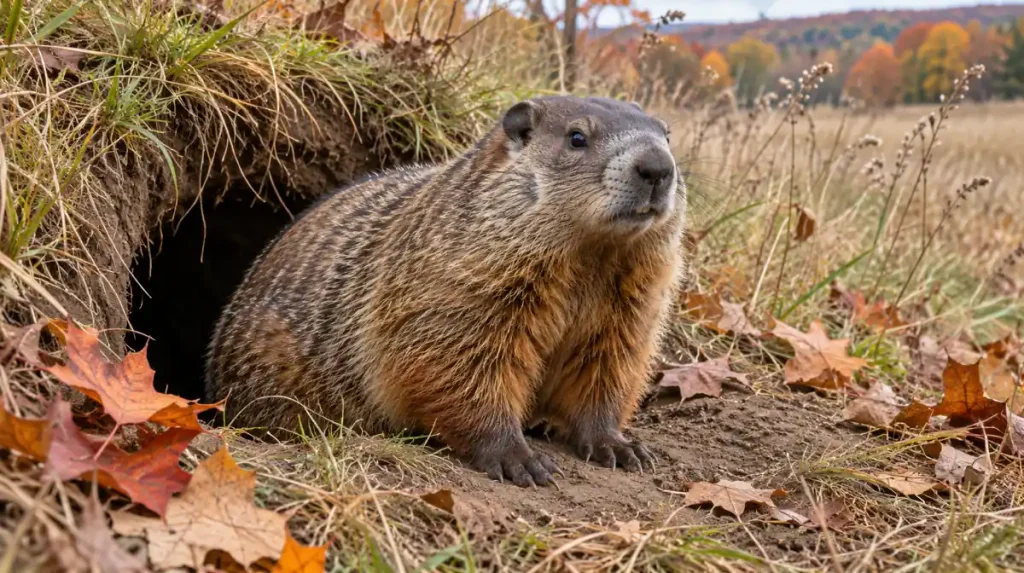
Groundhogs are large members of the squirrel family. You may also know them as woodchucks. They spend much of their active season feeding above ground, but a burrow gives them a protected place to spend winter.
Their bodies slow down deeply during hibernation. Rather than searching a frozen landscape for fresh plants, they reduce their energy needs and use stored reserves.
There is no single date when every groundhog wakes up. Local conditions affect the season, and males can emerge before females. A calendar celebration does not set the timetable for wild animals.
Arctic Ground Squirrels
Arctic ground squirrels face long winters and a short period for feeding and breeding. Their hibernation season can last roughly seven to eight months.
These squirrels are remarkable because their body temperature can fall below the freezing point of water without their bodies freezing in the way a wood frog’s body partly does. Researchers study the controls that make this possible.
Even so, a long hibernation season does not mean one unbroken cold spell. The squirrels periodically warm up before returning to torpor.
Marmots
Groundhogs are themselves marmots, but other marmot species also deserve attention. Yellow-bellied and hoary marmots, for example, hibernate in underground shelters.
Mountain habitats may offer plenty of food in summer, followed by a long period when fresh plants are unavailable. Building reserves during the growing season helps marmots survive that change.
Avoid giving every marmot the same winter schedule. Species, elevation and local weather all influence how long the inactive period lasts.
European Hedgehogs
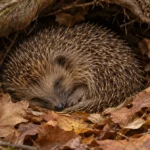
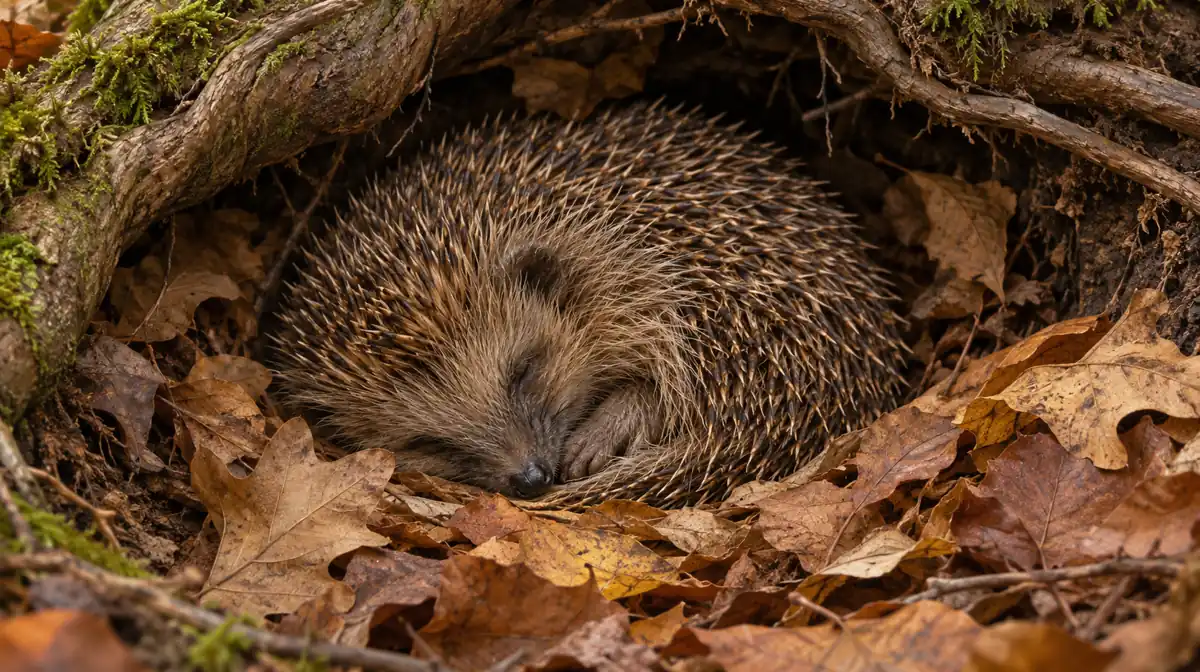
A European hedgehog builds a sheltered winter nest using dry vegetation. Leaf piles, dense cover and quiet garden corners can provide suitable places.
In the UK, its hibernation season often falls somewhere between autumn and spring. However, a mild spell may bring a hedgehog out temporarily, and individuals can move between nests.
That is why a single sighting does not tell you the full story. An animal’s condition, behaviour and surroundings matter more than the month alone. If a hedgehog appears injured or distressed, seek advice from a local wildlife rescue service.
Hazel Dormice
Hazel dormice spend much of their active season moving through shrubs and trees. For winter, they build a nest near ground level, where they can remain sheltered.
Their breathing, heartbeat and energy use fall during hibernation. Fat gained before winter helps support them when they are not feeding.
Despite the name, a dormouse is not just an ordinary house mouse with a different sleeping habit. Different rodent groups use different winter strategies, so one cannot stand in for all the others.
Hibernating Bats
Many insect-eating bats face a simple problem in winter: their usual food becomes scarce. Hibernation allows some species to survive until insects return.
Little brown bats are one example. A suitable winter roost needs the right conditions, not merely darkness. Temperature, moisture and protection from disturbance all matter.
Not every bat species hibernates. Some migrate, while others remain active where food is available. Nighttime activity is also a separate trait from seasonal hibernation. Our guide to nocturnal animals explains that daily pattern.
Eastern Chipmunks
Eastern chipmunks collect food and carry it in their cheek pouches. Their burrows include space for nesting and food storage.
During winter, they alternate between torpor and periods of waking. Those breaks allow them to use their food stores.
This is an important exception to the idea that every hibernating animal survives only on fat. It also shows why a brief period of activity does not necessarily mean hibernation has ended for the season.
Do Bears Really Hibernate?
Yes, black bears hibernate, although older guides sometimes reserve the term for animals whose body temperature drops much further.
The North Carolina Wildlife Resources Commission’s explanation of black bear hibernation directly addresses this confusion. Black bears lower their metabolism, breathing and heart rate while maintaining a higher body temperature than many small hibernators.
They can also respond to disturbance. Being able to wake does not, by itself, mean an animal cannot be a hibernator.
Bear behaviour varies with location and individual circumstances. A bear in a milder region may spend less time in its den than one farther north. Food availability and reproductive condition can also affect the pattern.
For readers, the useful distinction is how the animal saves energy. Calling every winter state exactly the same thing hides those differences; declaring that bears never hibernate is misleading too.
Surprising Animals That Hibernate
Fat-Tailed Dwarf Lemurs
These small primates live in Madagascar. Before hibernation, they build fat reserves, including in their tails. They can then spend months sheltering in tree cavities through a season when resources are limited.
Their example changes the usual picture of hibernation. A snowy forest is not essential. An animal can benefit from reducing its energy use in a seasonal tropical habitat too.
Dwarf lemurs also have periods of arousal during hibernation. Their bodies do not remain in one unchanged state throughout the season.
Short-Beaked Echidnas
Short-beaked echidnas are egg-laying mammals. They can use torpor and hibernation, sheltering in ground-level sites and reducing their body temperature and energy use.
Their timing is flexible. Location, sex and breeding condition influence the pattern, so a single winter-month range would give readers a false sense of certainty.
Common Poorwills
Most people associate hibernation with mammals. The common poorwill, a small North American nightjar, is an unusual bird that can use prolonged torpor.
During cold or food-poor periods, it can lower its temperature and metabolism for extended spells. Descriptions often call this hibernation or a hibernation-like state.
It should not become a rule for all birds. Many birds migrate or remain active, and brief overnight torpor is different from a long seasonal inactive period.
Hibernation, Torpor and Brumation: What Is the Difference?
The terms overlap in everyday writing, which explains why animal lists sometimes disagree.
| Term | Simple meaning | Example |
|---|---|---|
| Torpor | A controlled reduction in energy use and usually body temperature | A bat lowering its energy needs |
| Hibernation | A longer seasonal strategy involving extended torpor, often with warmer breaks | A groundhog spending winter underground |
| Brumation | A term commonly used for cold-season dormancy in reptiles | A snake sheltering through cold weather |
| Diapause | A pause in development associated with an unfavourable season, common in insects | Some insects overwintering at a particular life stage |
| Estivation | Dormancy associated with hot or dry conditions | Some animals sheltering through drought |
Torpor and hibernation are not simply competing labels. In many mammals, torpor is part of the hibernation process.
Likewise, an animal that rests through winter is not necessarily following the same process as a mammal in deep torpor. The species and its body functions matter.
Do Frogs, Snakes and Turtles Hibernate?
People often use “hibernate” for these animals in ordinary conversation. More precise descriptions explain the kind of winter dormancy involved.
Frogs
Frog species survive winter in different places and ways. Some shelter underwater; others stay on land under protective cover.
Wood frogs offer a striking example. They can survive ice forming in parts of their bodies while protective changes help prevent damage to their cells. This does not mean every frog can freeze safely.
A frog under leaf litter and a mammal in a burrow may both be inactive, but the body processes behind that inactivity are not identical.
Snakes and Turtles
Brumation is a common term for winter dormancy in reptiles. Snakes may shelter underground or in rock crevices. Depending on the species, turtles may spend the cold season in water or protected places on land.
Their surroundings strongly affect body temperature and activity. A warmer spell can allow movement without signalling the end of winter dormancy.
Wild behaviour should never become a do-it-yourself care plan for a pet reptile. Captive animals need species-specific husbandry advice.
Which Animals Hibernate in the UK, US and Canada?
For a UK reader, hedgehogs, dormice and bats are useful starting points. These are the familiar groups highlighted in British mammal hibernation guides.
In the US and Canada, examples include groundhogs, several ground squirrels, chipmunks, hibernating bats and bears. However, a species found in one part of a country may be absent from another.
Climate matters within countries too. A northern mountain habitat has different winter conditions from a sheltered southern valley.
Instead of asking only, “Does this animal hibernate?”, also ask:
- Which species is it?
- Where does it live?
- What food remains available?
- What kind of winter shelter can it use?
Those details produce a more useful answer than one timetable for an entire continent.
Where and How Long Do Animals Hibernate?
Winter shelters include burrows, dens, tree cavities, leaf nests, caves and suitable parts of buildings. Scientists call a hibernation shelter a hibernaculum; the plural is hibernacula.
A shelter helps limit exposure and disturbance. However, different animals need different conditions. A damp cave that suits a bat is not a general-purpose winter home for every species.
The season can last several months, but exact durations vary. Some animals begin earlier or emerge later than others of the same species. Brief warm periods within hibernation also make “months asleep” a poor description.
For this reason, the longest-hibernating animal is not a simple universal record. Arctic ground squirrels are a well-known long-duration example, but comparisons depend on species, conditions and what researchers measure.
How to Avoid Disturbing Hibernating Wildlife
You do not need to find a sleeping animal to appreciate how it survives winter. Watching active wildlife from a distance is usually more useful than searching through nests and dens.
Leave suspected winter shelters alone. Avoid pulling apart leaf piles, reaching into burrows or entering closed caves. Never wake an animal to check whether it is alive or to take a photograph.
Before moving garden debris or doing work near a suspected roost, seek local wildlife advice. An occupied shelter may need specialist attention.
Our guide to responsible wildlife watching explains why giving animals space matters. The same principle applies when an animal is hidden and inactive.
Frequently Asked Questions
Do squirrels hibernate?
Some do. Several ground squirrel species hibernate, while familiar tree squirrels generally remain active through winter. Identify the species before applying one answer to the whole squirrel family.
Do animals wake up during hibernation?
Yes. Many hibernating mammals periodically warm up and become briefly active. These breaks form part of their normal seasonal pattern.
Do hibernating animals eat?
It depends on the species. Many rely mainly on stored body fat. Eastern chipmunks can eat stored food during breaks between torpor bouts.
Is hibernation the same as sleeping?
No. Hibernation involves a much larger change in energy use than ordinary sleep. Many species also alternate between cold torpor and warmer periods during the season.
Do all bats hibernate?
No. Winter behaviour varies by species and location. Some hibernate, some migrate, and others stay active where conditions allow.
Can animals hibernate somewhere warm?
Yes. Cold is not the only reason for seasonal energy saving. Fat-tailed dwarf lemurs show that hibernation can occur in tropical habitats with seasonal shortages.
What should I do if I find a hibernating animal?
Keep your distance and leave its shelter undisturbed. If the animal appears injured, exposed or at immediate risk, contact a local wildlife rescue organisation for advice.
A Quieter Season Does Not Mean an Empty Habitat
Winter changes where animals spend their time and how much energy they use. Under a leaf pile, inside a tree or beneath a field, wildlife may be surviving on a carefully reduced energy budget.
The key is to look beyond the word “sleep.” Species, shelter, food and climate explain why different animals follow different winter routines. Explore our wildlife guides for more ways to understand the animals around you.