
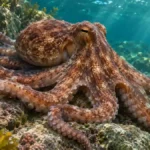


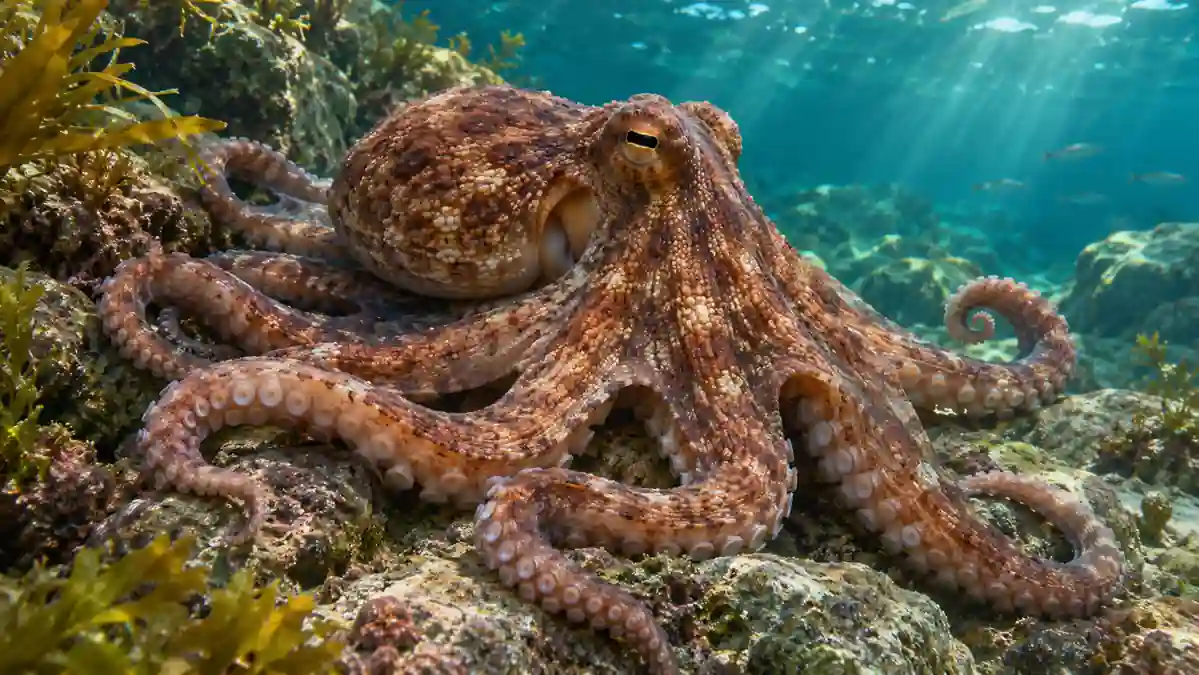
An octopus can change the appearance of its skin, squeeze into a small hiding place and explore objects with its arms. Yet one of its strangest features stays out of sight: its blood is blue when it carries oxygen.
It is not the only animal with this unusual trait. Horseshoe crabs, squid and several other invertebrates use a different oxygen-carrying protein from the one in human blood.
Animals with blue blood use a copper-containing protein called hemocyanin. When this protein binds oxygen, it turns blue. Human blood uses iron-containing hemoglobin, which gives it a red colour.
The explanation is chemistry, but you do not need a science degree to understand it. This guide from Viltnemnda introduces seven examples and explains what their blood colour does—and does not—tell us.
Which Animals Have Blue Blood?
The examples below include individual animal groups rather than seven separate species. Where a group contains exceptions, the wording matters: “many snails” does not mean every snail.
| Animal or group | Oxygen carrier | Useful distinction |
|---|---|---|
| Octopuses | Hemocyanin | Blue blood does not mean blue skin |
| Squid | Hemocyanin | Their blood colour is separate from their ink |
| Cuttlefish | Hemocyanin | They are molluscs, despite “fish” in the name |
| Horseshoe crabs | Hemocyanin | They are not true crabs |
| Many spiders | Hemocyanin | Their circulating fluid is called hemolymph |
| Lobsters | Hemocyanin | Shell colour and blood colour have different causes |
| Many snails | Hemocyanin | Blood chemistry varies between snail groups |
The blue colour is associated with oxygenated hemocyanin. It should not be understood as a fixed, bright shade that looks identical in every animal or every sample.
Why Do Some Animals Have Blue Blood?
Animals need ways to move oxygen to their tissues. In many species, specialised proteins help carry it.
Humans use hemoglobin, which contains iron. Octopuses and various other invertebrates use hemocyanin, which contains copper.
The copper is held within the protein. When oxygen binds at the protein’s active site, its chemical and optical properties change, producing a blue colour. Without bound oxygen, hemocyanin is colourless.
That does not necessarily make an entire sample of body fluid perfectly clear. Other substances and suspended cells can affect its appearance.
It also does not mean that copper itself is blue. A piece of copper metal looks very different from copper atoms held inside an oxygen-carrying protein. The arrangement of the atoms and their interaction with oxygen matter.
1. Octopuses
Octopuses are among the best-known animals with blue blood. They use hemocyanin to transport oxygen through a closed circulatory system, in which blood travels through vessels.
They also have three hearts. Two pump blood through the gills, while the third sends it around the body.
These features belong to the animal’s internal transport system. They are separate from its ability to change skin colour and pattern.
An octopus resting against a rock may look brown, reddish or pale. None of those appearances tells you what colour its oxygenated blood is.
The same applies to a blue-ringed octopus. Its visible blue markings are not a window into its bloodstream.
For a broader introduction to these animals, the Natural History Museum’s octopus guide explains their hearts, blood and other unusual features.
2. Squid
Squid also use hemocyanin. Like octopuses, they belong to the cephalopods, a group of marine molluscs.
Their blue blood is sometimes confused with the dark ink that many squid release. These are different substances with different jobs.
Blood transports oxygen and other materials around the body. Ink is part of a defensive response that can interfere with a predator’s attempt to catch the animal.
A squid’s skin appearance is another separate feature. Colour patterns on the outside do not provide a reliable guide to blood colour.
When reading an animal fact, it helps to ask which part of the body the claim describes. “Blue blood,” “dark ink” and “changing skin colours” can all apply to one animal without describing the same process.
3. Cuttlefish
Cuttlefish are another group of cephalopods with hemocyanin-based oxygen transport.
Despite their name, they are not fish. They are molluscs related to squid and octopuses.
Their shifting skin patterns often attract more attention than their internal biology. However, the ability to change their outward appearance should not be confused with the colour of their blood.
A cuttlefish can display a pattern that helps it blend into its surroundings while its blood continues to perform the ordinary task of carrying oxygen.
This is a useful reminder that an animal’s most visible feature may have little connection to what is happening inside its body.
4. Horseshoe Crabs
Horseshoe crabs are famous for their blue blood, but their name creates another misunderstanding. They are more closely related to spiders and scorpions than to true crabs.
Their copper-containing hemocyanin gives their circulating fluid a blue colour when oxygenated.
They also have specialised immune cells called amebocytes. Components obtained from these cells have been used in tests that detect bacterial endotoxins in pharmaceutical products and medical devices.
Two different biological functions are involved:
- Hemocyanin carries oxygen and explains the blue colour.
- Amebocytes participate in the immune response and underpin the traditional testing method.
The colour itself is not what makes the test work.
Horseshoe crabs also matter outside laboratories. Their eggs provide food for shorebirds, linking these coastal animals to wider food webs.
5. Spiders
Many spiders have hemocyanin in their circulating fluid. That fluid is called hemolymph, and oxygenated hemocyanin can give it a bluish appearance.
Spiders have an open circulatory system. Their hemolymph moves through internal spaces and comes into direct contact with tissues, rather than remaining entirely within a closed network of blood vessels.
“Open” does not mean the fluid is exposed to the outside air. It describes how circulation is arranged inside the body.
A spider’s hair, markings and outer covering can hide the appearance of its internal fluid. You cannot identify its blood colour simply by looking at its legs or abdomen.
For more about the differences between spider groups, explore our guide to the biggest spiders in the world.
6. Lobsters
Lobsters use hemocyanin too. However, a blue lobster and a lobster with blue blood are not the same kind of fact.
A visibly blue lobster has an unusual shell colour. The shell’s pigments and associated proteins explain that appearance.
Hemocyanin works inside the animal, carrying oxygen in its hemolymph. A lobster does not need a bright blue shell to use this protein.
The appearance of lobster hemolymph can also vary. Research has documented differences in colour associated with other components, as well as the amount and oxygenation of hemocyanin.
For that reason, “lobster blood is always bright blue” is too simple. The more accurate statement is that lobsters use an oxygen-carrying protein whose oxygenated form is blue.
7. Many Snails
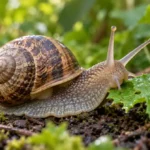
Blue-blooded animals are not limited to large marine creatures. Many snails also use hemocyanin.
Snails belong to the molluscs, the same large animal group that includes octopuses and squid. Their bodies and ways of moving may look very different, but some of their oxygen-transport chemistry is related.
However, avoid turning this into a claim about every snail. Molluscs are a varied group, and not all species use the same respiratory pigments.
A shell’s colour is not a useful test either. Brown, striped or pale shells do not reveal which protein carries oxygen inside the animal.
The reliable way to check a claim is to identify the species or group and consult a biological reference—not to judge by its appearance.
Hemocyanin vs Hemoglobin
The names are similar because both proteins are involved in oxygen transport. Their chemistry and location differ.
| Feature | Hemocyanin | Human hemoglobin |
|---|---|---|
| Metal involved in oxygen binding | Copper | Iron |
| Colour when carrying oxygen | Blue | Red |
| Typical location | Dissolved in circulating fluid | Inside red blood cells |
| Examples | Octopuses, horseshoe crabs, lobsters | Humans |
| Appearance without oxygen | The protein is colourless | Darker red |
Neither system should be described as universally “better.”
Different animals have different oxygen demands, body structures and environmental conditions. Temperature and other factors affect how respiratory proteins bind and release oxygen.
It is tempting to reduce the explanation to “blue blood is for cold water.” That misses the wider picture. Hemocyanin occurs in animals living in different environments, including spiders and snails on land.
Is Blue Blood Really Blood?
In everyday writing, “blue blood” is a convenient description. In biology, the more precise term depends on the animal.
Octopuses and squid have blood moving through a closed circulatory system.
Horseshoe crabs, lobsters and spiders have hemolymph in an open circulatory system. Hemolymph performs transport functions, but it is not organised exactly like human blood.
This distinction prevents a common mistake: assuming that every animal with an oxygen-carrying fluid has human-style red blood cells, veins and arteries.
The shared job—transporting materials—does not require every animal to use the same design.
Does Blue Blood Glow?
Not because it is blue.
Colour and light production are different things. A blue substance can look blue because of how it interacts with light falling on it. Bioluminescence involves producing light through a chemical reaction.
An animal can have unusual blood chemistry without glowing at all. Likewise, an animal that produces light does not automatically have blue blood.
For examples of light-producing wildlife, see the other guides in our wildlife section.
Common Misunderstandings About Blue Blood
“All invertebrates have blue blood”
They do not. Invertebrates include many different groups, with varied circulatory and respiratory systems.
Finding hemocyanin in an octopus does not establish the blood colour of an earthworm, butterfly or jellyfish.
“The blue colour comes from the sea”
It does not. The key explanation is oxygenated hemocyanin, not the colour of the water around the animal.
Land-dwelling examples also show why that explanation fails.
“A blue animal must have blue blood”
Skin, feathers, scales and shells can get their colours in several ways. Their appearance is not a dependable guide to blood chemistry.
“Blue blood is always visibly bright blue”
Its appearance depends on oxygenation, concentration and other components of the fluid. A simple fact sheet cannot capture every possible sample.
Frequently Asked Questions
What animals have blue blood?
Examples include octopuses, squid, cuttlefish, horseshoe crabs, lobsters, many spiders and many snails. Their blue colour is linked to oxygenated hemocyanin.
Why do octopuses have blue blood?
Their oxygen-carrying protein, hemocyanin, contains copper. It becomes blue when it binds oxygen. This differs from the iron-containing hemoglobin used by humans.
What colour is horseshoe crab blood?
It is blue when its hemocyanin carries oxygen. The colour comes from the respiratory protein, not from the animal’s shell.
Do spiders have blood?
Spiders have a circulating fluid called hemolymph. Many use hemocyanin to help transport oxygen, which can give this fluid a bluish colour.
Do all snails have blue blood?
No single statement covers every snail species. Many use hemocyanin, but blood chemistry varies between groups.
Is squid ink its blood?
No. Ink and blood are different substances. Ink is associated with defence, while blood carries oxygen and other materials through the body.
Is human blood blue before it reaches the air?
No. Normal human blood is red, including inside veins. Blood carrying less oxygen is darker red. Veins can look blue through the skin because of how light interacts with tissue.
Why is horseshoe crab blood used in testing?
The traditional test uses material derived from immune cells that responds to bacterial endotoxins. Hemocyanin explains the blue colour, but the colour is not responsible for detecting contamination.
A Different Way to Carry Oxygen
Blue blood is not a fantasy feature. It is one of the ways animals transport oxygen through their bodies.
The important connection is between hemocyanin, copper and oxygen. Once that is clear, the examples make more sense—from an octopus on a rocky seabed to a spider hidden near your home.
Their blood chemistry also offers a useful lesson: animals can carry out the same basic job using very different biological systems.