







“The Colonoscopy Procedure in Los Angeles is Explained Step-By-Step and Provides An Overview of Everything From Preparation and Sedation to Post-Procedure Recovery. This Complete Guide Will Help Patients Reduce Their Anxiety and Understand That a Colonoscopy Is a Short, Simple, and Painless Way to Detect and Prevent Colorectal Cancer.”
Let’s face it; nobody likes getting a colonoscopy. This often inspires the jokes, shifty eyes and a lot of procrastination. But delaying this vital screening puts you at unnecessary risk. A colonoscopy is still the gold standard for colorectal cancer screening and prevention and if caught early enough is one of the easiest cancers to treat.
Many of the nerves related to the procedure come from the unknown. We hear horror stories about the preparation before the procedure, or about how vulnerable we feel during the exam. By replacing those stories with real facts that are clearly laid out step by step, the whole process can become completely manageable. If you are scheduling a colonoscopy in Los Angeles, knowing what happens from the night before until you get back home will provide you with the confidence and peace of mind that you should enjoy.
Before the Appointment: A Quick Word on Prep
One of the most notorious elements of this particular procedure is the preparation process that must take place on the evening prior to. Your gastroenterologist requires a completely clean surface so they can obtain the best possible view of your intestinal lining. This means you will need to refrain from using your routine for one evening before your scheduled exam.
You will begin a strict and transparent liquid diet for 24 hours before your appointment which allows your gastroenterologist to perform their examination effectively. Your liquid choices will consist of: apple juice, bone broth, black coffee and/or gelatin. To ensure your prep day goes perfectly without any guesswork, check out our Complete Preparation Guide for Colonoscopy.
Additionally, you will drink a prescription liquid laxative before going to bed. Stay near a restroom to prepare. Use these tips to make the experience more bearable: Before drinking, chill the liquid and use a straw to reduce taste. Have soothing wipes available for use during and after the experience. Although this evening is uncomfortable, it should be an experience that you have conquered compared to other aspects of the procedure to follow.
Step 1: Arriving at Your Los Angeles Colonoscopy Center
You must attend the operation or medical office on surgery day. You cannot take a ridesharing home alone to obtain sedation before surgery. You will need a caring adult. You must bring trusted family or friends with you to your treatment because hospitals won’t let patients rideshare.
You’ll start by arriving at the medical center and checking the paperwork for your procedure (including signing forms). Once you have completed the necessary paperwork, the nursing staff will come to get you and take you back into the pre op area of the hospital. The nursing staff will then provide you with a standard hospital gown and take your vitals along with reviewing your medical history with you to ensure it is accurate.
After this is done, the nurse caring for you will start an IV in your hand or arm through which they will administer fluids and medications necessary to keep you comfortable while you undergo your procedure. You will also meet the members of your care team (the gastroenterologist and anesthesiologist) and they will come to your bedside to see if you have any remaining questions about your upcoming procedure, explain their responsibilities in the surgery and help ensure that you are ready for your surgery. Choosing a top notch facility like ours to perform your colonoscopy will ensure that you have access to all of the expertly trained and caring personnel you need to have an easygoing experience during what is normally considered a very routine procedure.
Step 2: What Happens During the Colonoscopy?
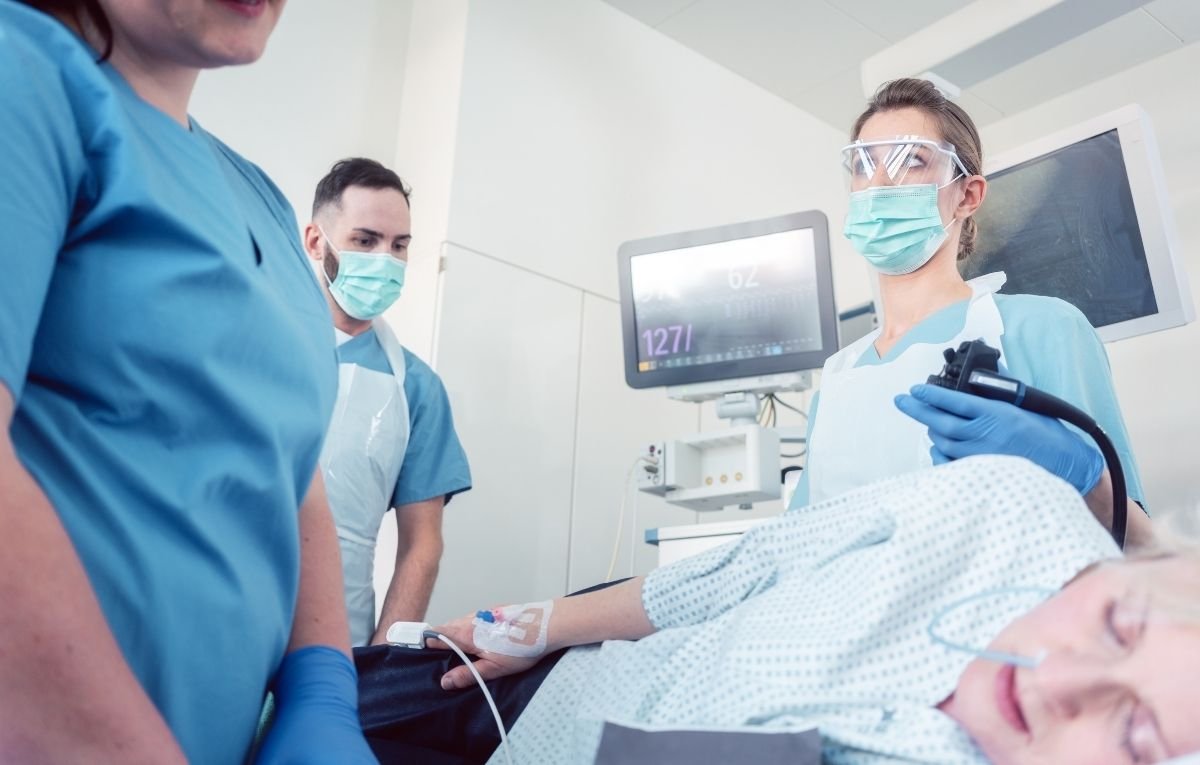
Your care team will relocate your bed into a GI suite for the procedure. The space is silent, tidy and has dedicated monitors. The nurse will link you to breathing and heart rate sensors while you rest comfortably on your left side.
Your anesthesiologist will give you an IV sedative. Most LA colonoscopy centers use heavy sedation or twilight sleep. Relaxation will occur in seconds. You will not feel pain, discomfort or consciousness and most patients wake up feeling like nothing has happened.
After you fall asleep, the gastroenterologist examines you. A colonoscope, a thin, flexible tube about a finger wide, is gently inserted into the rectum. A high definition camera and bright light at its tip relay real time video to a room monitor.
The doctor uses a tiny bit of carbon dioxide or air via the scope to gain a precise view. This gently inflates colon folds, allowing the doctor to notice even slight anomalies. The doctor gently directs the scope through the big intestine to check for inflammation, ulcers and polyps.
Small colon polyps might become malignant. If your doctor detects one, they will promptly remove it using a tiny loop tool through the scope. This removal is painless. Pathology labs evaluate the tissue. The main way a colonoscopy prevents cancer is by removing these growths. The viewing process usually takes 15–30 minutes.
Step 3: Waking Up and Recovery
After colonoscope is removed, the anesthesiologist stops drug and you wake up soon. After surgery, nurses will monitor you in recovery bay until the anesthesia wears off. This normally takes 30 minutes.
Bloating or gas may occur when you awaken. This is typical. Inflating your colon requires an exit strategy for the air. Medical professionals are used to this and will advise you to pass gas to relieve moderate pressure.
A preliminary report from your gastroenterologist will be delivered to your bedside before discharge. They will explain what they saw, if tissue was taken and when lab findings will be available. After stabilizing, your driver will help you to the car.
Life After the Procedure: Your Reward
Your only job at home is to relax. Avoid working, driving, or making critical decisions until morning due to sedation’s residual effects.
The absolute best part of the post procedure routine is returning to real food. Since your digestive tract is empty, you can treat yourself to whatever meal you have been craving during fast. Unless your doctor gives specific dietary restrictions due to polyp removal, you are free to enjoy hearty lunch or dinner. Any minor bloating usually dissipates within a few hours of eating and moving around.
Conclusion
It’s easy to put off colorectal exams, yet an afternoon can provide a decade of health and protection. Southern California’s advanced medical communities have skilled doctors who value your comfort, privacy and safety.
Take charge of your health if you’re 45 or older or have a colorectal history. Contact a reliable GI specialist in Los Angeles immediately to arrange a colonoscopy and complete this important preventative measure.
Disclaimer
The article provides general knowledge on medical conditions. It is not intended to replace the services of qualified professionals who diagnose diseases, prescribe treatments and provide preventative care for gastrointestinal issues and you should always consult a licensed physician before receiving any form of medical treatment.