






Many people discover small pellets in their yard and wonder, “What animal left this poop?” Rabbit poop is actually one of the most common animal droppings found in gardens and parks.
Learning how to perform an accurate rabbit poop identification helps you understand your local wildlife. Additionally, this knowledge protects your plants and helps you tell the difference between rabbits and dangerous pests like rats. This easy animal scat identification guide will teach you exactly what does rabbit poop look like and how to decode the clues in your yard.
What Does Rabbit Poop Look Like?
Identifying rabbit feces is very straightforward if you know what specific details to look for. Because rabbits have a unique diet, their waste looks different from other backyard animals.
Size and Shape
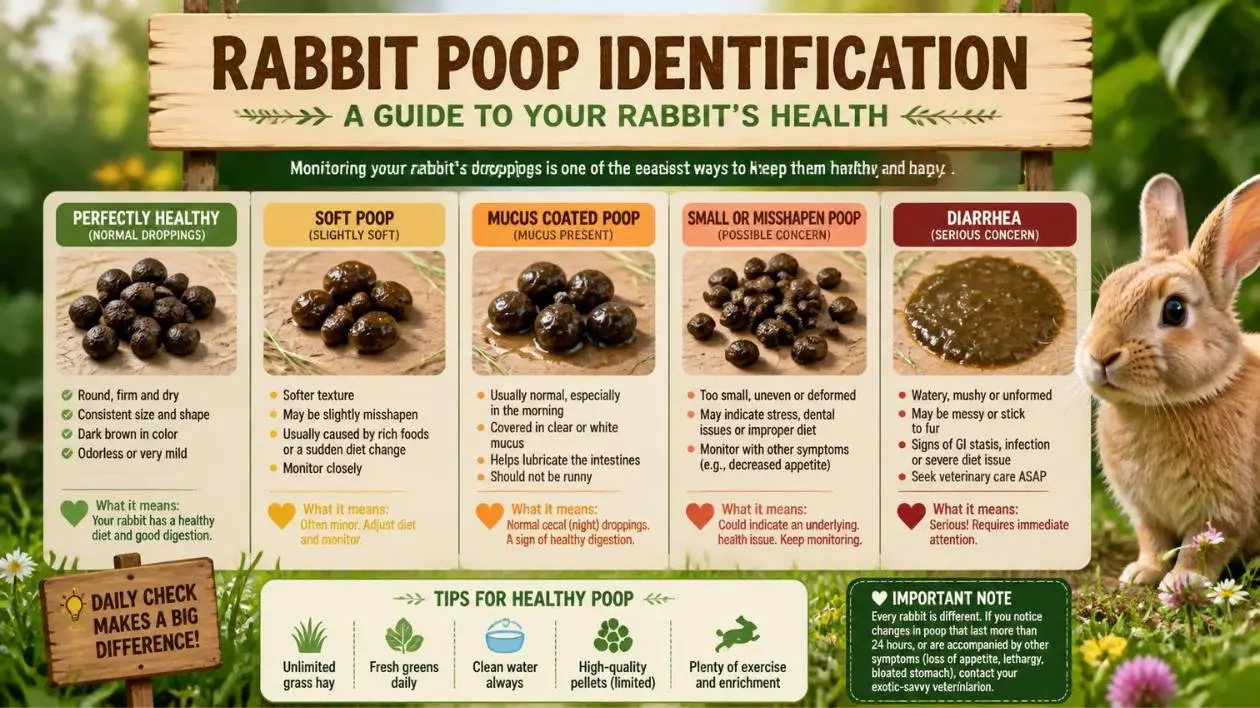
- Small, round pellets: Unlike many other animals, rabbits leave distinct, circular rabbit pellets.
- Uniform dimensions: They are typically $6\text{–}10\text{ mm}$ in diameter, which is about the size of a chickpea or a small blueberry.
- Dry and firm texture: They maintain a distinct shape and do not smudge easily because they contain very little moisture.
Color
- Fresh pellets: These are usually a dark brown or dark green-brown color.
- Older pellets: As they sit in the sun, they dry out completely and turn a lighter tan or grayish-brown color.
Texture
- High fiber content: Because of what they eat, the pellets are packed with tightly squeezed, undigested grass and plant material.
- Crumbly when old: If you break an old pellet apart with a stick, it looks just like tightly packed sawdust.
Why Do Rabbits Produce Pellet-Shaped Droppings?
The unique shape and consistency of wildlife droppings depend entirely on the animal’s internal biology.
A High-Fiber Diet
Rabbits are strict herbivores, meaning they only eat plants. For example, they spend their days munching on grass, leaves, twigs, weeds, and garden vegetables. These foods are very rich in fiber.
Efficient Digestion
A rabbit’s digestive system works like a machine to extract every bit of nutrition from tough plants. Their stomach and intestines squeeze out moisture and quickly compact the leftover fiber into neat, uniform spheres.
Two Types of Rabbit Droppings
Rabbits actually produce two distinct types of waste, which surprises many homeowners:
- Hard Pellets: These are the common, dry, odorless round spheres that you find scattered in the grass.
- Cecotropes: These are soft, shiny, grape-like clusters of droppings. However, you will rarely see them because rabbits typically eat them again immediately to absorb essential B vitamins.
Rabbit Poop vs. Deer Poop
When people look for garden animal droppings, they frequently confuse deer and rabbits. However, you can easily tell them apart by looking at the details:
| Feature | Rabbit Poop | Deer Poop |
| Shape | Perfectly round, spherical pellets | Oval, capsule, or acorn-shaped pellets |
| Size | Small ($6\text{–}10\text{ mm}$) | Larger ($10\text{–}20\text{ mm}$) |
| Texture | Dry, fibrous, and crumbly | Firmer and smoother |
| Piles | Scattered around randomly | Deposited in large, concentrated piles |
| Found In | Gardens, open lawns, and flower beds | Forests, fields, and near tree lines |
Rabbit Poop vs. Rat Droppings
It is highly important to separate harmless outdoor wildlife from a dangerous household pest infestation. Use this table to clear up any confusion:
| Feature | Rabbit Poop | Rat Droppings |
| Shape | Round, spherical pellets | Cylindrical, sausage-like shape |
| Ends | Completely rounded | Pointed or tapered ends |
| Diet | Strictly plant-based | Omnivorous (garbage and meat) |
| Health Risk | Very low | High (can carry dangerous diseases) |
Rabbit Droppings in the Garden: What Do They Mean?
Finding rabbit droppings in the garden is a definitive sign that wild rabbits are using your yard as a restaurant.
Signs That Rabbits Visit Your Garden
Aside from finding the pellets themselves, you should look out for these classic clues:
- Cleanly chewed plants: Rabbits cut stems at a clean, sharp $45^\circ$ angle, looking like scissors cut them.
- Damaged vegetables: You will notice nibbled lettuce, clover, carrots, and hosta leaves.
- Small pathways: Look for tiny “runways” pressed gently into tall grass or under fences.
- Latrines: Rabbits often use the same spot as a bathroom, creating piles of pellets near flower beds.
Is Rabbit Poop Good for Soil?
Yes! Gardeners love rabbit poop because it serves as an excellent natural fertilizer. Unlike cow or horse manure, rabbit manure is a “cold” fertilizer. Therefore, it will not burn your plants if you apply it directly to the soil. It contains rich amounts of nitrogen, phosphorus, and potassium to help your garden grow.
Where Are Rabbit Droppings Usually Found?
Rabbits prefer areas where they can quickly hide from danger. Consequently, you will most frequently spot their droppings in these locations:
- Open green lawns and manicured grass patches.
- Vegetable gardens and around valuable flower beds.
- Public parks and the edges of woodlands.
- Directly underneath or next to low-hanging bushes and shrubs.
- Near the hidden entrances of rabbit burrows and holes.
Is Rabbit Poop Dangerous?
While rabbit feces are generally safe and low-risk to humans, you should always handle any animal waste with care. Wild rabbits can occasionally carry rare parasites or bacteria.
Therefore, you should always follow these safety steps:
- Wear thick gloves whenever you work with soil mixed with animal waste.
- Wash your hands thoroughly with soap and warm water after gardening.
- Keep children and pets away from fresh droppings so they do not accidentally swallow them.
How to Identify Rabbit Poop in Your Yard
If you spot mysterious animal droppings, simply follow these four easy steps:
Step 1: Check the Shape
Look closely at the droppings. Are they perfectly round like small marbles? If they are elongated or oval, another animal left them.
Step 2: Examine the Color and Material
Look for a dull, earthy brown color. If you see tiny, compressed bits of dried grass inside the pellet, it is almost certainly a rabbit.
Step 3: Look for Secondary Signs
Scan the surrounding area for clues. Can you find clover with clipped leaves or small animal footprints in the dirt?
Step 4: Compare With Other Animal Droppings
Use our quick-reference animal droppings identification chart below to rule out other backyard visitors.
Common Animals Whose Poop Is Mistaken for Rabbit Droppings
Before making your final decision, check this list of common animals that leave similar droppings:
- Deer: People confuse them most often, but deer pellets are larger and shaped like acorns.
- Rats & Mice: Their droppings look dark black, small, and distinctly cylindrical with pointed ends.
- Squirrels: Their waste has a longer sausage-shape and usually sits near the bases of large trees.
- Goats & Sheep: They produce round pellets that look like rabbit poop, but they drop them in massive, stuck-together clumps.
- Hares: Their droppings look virtually identical to rabbit poop, but they are slightly larger.
Rabbit Poop Identification Chart
| Animal | Shape | Size | Color |
| Rabbit | Round pellets | Small ($6\text{–}10\text{ mm}$) | Light to dark brown |
| Deer | Oval, acorn-shaped | Medium ($10\text{–}20\text{ mm}$) | Dark brown to black |
| Rat | Cylindrical | Small ($10\text{–}15\text{ mm}$) | Dark black |
| Squirrel | Oblong / Sausage-shape | Small ($5\text{–}8\text{ mm}$) | Brown to black |
Frequently Asked Questions
What does rabbit poop look like?
Rabbit poop looks like small, dry, perfectly round brown spheres. They closely resemble a small pile of chocolate ball cereal and contain packed bits of grass.
Is rabbit poop harmful?
For the average homeowner, it is very low risk. It does not carry the same heavy bacterial risks as dog or cat poop. However, you should still wash your hands after touching it.
Can rabbit poop be used as fertilizer?
Yes, it makes an incredible organic fertilizer. You can drop it directly onto your garden beds or mix it into your compost pile to create rich soil.
How can I tell rabbit poop from deer poop?
You must look at the shape and size. Rabbit pellets are small and perfectly circular, while deer pellets are larger and oval-shaped.
Why is there rabbit poop in my garden?
Your garden provides an ideal habitat. It means rabbits have found a reliable food source like your grass or vegetables, along with safe places to hide.
Conclusion
Identifying rabbit poop is very easy once you know its signature round shape, dry texture, and small size. Recognizing these pellets allows you to track the wildlife activity in your yard. As a result, you can take quick measures to protect your vegetables, or you can safely collect the pellets to use as a great source of free, natural garden fertilizer.
Disclaimer
This disclaimer applies to the discussion of rabbit droppings identification. This article is for general educational purposes. Species identification, distribution, behaviour, and population information can vary by location and change as research develops. It is not a substitute for professional wildlife, veterinary, or field-safety advice. Verify current guidance with relevant conservation authorities and observe wildlife without disturbing or handling it.



One thought on “Rabbit Poop Identification Guide: How to Recognize Rabbit Droppings”