








Introduction
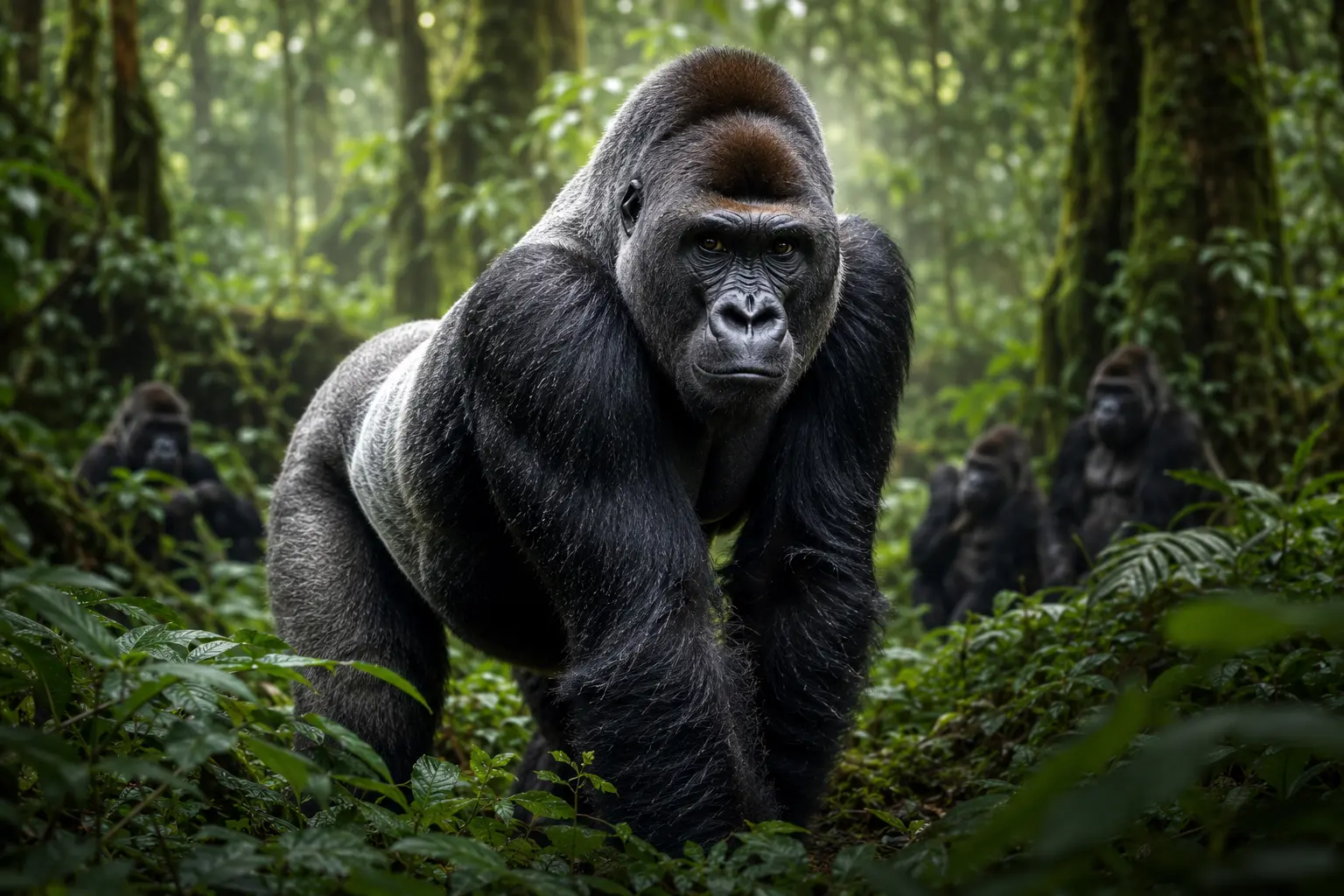
Gorillas are among the most fascinating animals on Earth. They are the largest living primates and are known for their intelligence, strength, and close family bonds. Even though they look powerful and sometimes scary, gorillas are usually peaceful and gentle animals.
Many people know gorillas because of the famous silverback gorilla, the strong leader of a gorilla family. These amazing animals live in the forests of Africa and share about 98% of their DNA with humans.
In this guide from Viltnemnda.net, you will discover incredible gorilla facts, learn about different gorilla species, find out what they eat, understand how they communicate, and explore why protecting these great apes is so important.
What Is a Gorilla?
A gorilla is a large ape that belongs to the primate family. Gorillas are not monkeys because they do not have tails. Instead, they belong to a special group called great apes, which also includes humans, chimpanzees, bonobos, and orangutans.
Gorilla Classification
- Kingdom: Animalia
- Class: Mammalia
- Order: Primates
- Family: Hominidae
- Genus: Gorilla
Gorillas are intelligent mammals that can learn, solve problems, and even use simple tools.
Gorilla Species and Types
There are two main species of gorillas and four subspecies.
1. Eastern Gorilla
The eastern gorilla is the largest living primate in the world. It lives in the forests of Central Africa.
Subspecies:
- Mountain Gorilla
- Eastern Lowland Gorilla
2. Western Gorilla
Western gorillas are smaller than eastern gorillas and are the most common type of gorilla.
Subspecies:
- Western Lowland Gorilla
- Cross River Gorilla
Each type of gorilla has adapted to its own environment and plays an important role in its ecosystem.
Mountain Gorilla Facts
Mountain gorillas are one of the world’s most famous endangered animals.
Quick Facts:
- Live in high mountain forests.
- Found in Uganda, Rwanda, and the Democratic Republic of Congo.
- Have thicker fur than other gorillas.
- Spend most of their day eating and resting.
Today, there are just over one thousand mountain gorillas left in the wild, making conservation efforts extremely important.
Where Do Gorillas Live?
One of the most interesting gorilla facts is that all wild gorillas live in Africa.
Countries Where Gorillas Are Found
- Uganda
- Rwanda
- Democratic Republic of Congo
- Cameroon
- Nigeria
- Equatorial Guinea
- Central African Republic
- Gabon
Gorilla Habitat
Gorillas live in:
- Tropical rainforests
- Mountain forests
- Swamps
- Bamboo forests
- Dense jungle areas
These habitats provide the food and shelter gorillas need to survive.
Physical Characteristics of Gorillas
Gorillas are huge animals with broad chests, long arms, and powerful muscles.
Gorilla Size
- Height: 4 to 6 feet when standing.
- Weight: 220 to 500 pounds.
- Arm span: Up to 8 feet.
Eastern gorillas are generally larger than western gorillas.
Gorilla Strength
A gorilla is much stronger than an average human. Scientists estimate that a gorilla may be several times stronger than an adult man.
This incredible strength helps gorillas climb, defend their families, and move through dense forests.
What Is a Silverback Gorilla?
A silverback gorilla is an adult male gorilla that develops silver-colored hair on its back as it grows older.
Most male gorillas become silverbacks at around 12 years of age.
Why Is It Called a Silverback?
As male gorillas mature, the hair on their backs changes from black to silver-gray. This silver patch gives them the name “silverback.”
The Role of the Silverback Gorilla
The silverback is the leader of the family group.
Its responsibilities include:
- Protecting the group
- Making decisions
- Finding food
- Settling conflicts
- Caring for young gorillas
A silverback is brave and will defend its family against danger.
How Strong Is a Silverback Gorilla?
The silverback gorilla is one of the strongest animals on Earth.
Silverback Gorilla Facts
- Can lift several times its own body weight.
- Has an extremely powerful bite.
- Can break thick branches with ease.
- Has enormous arm strength.
Despite their strength, silverbacks are usually calm and avoid fighting whenever possible.
What Do Gorillas Eat?
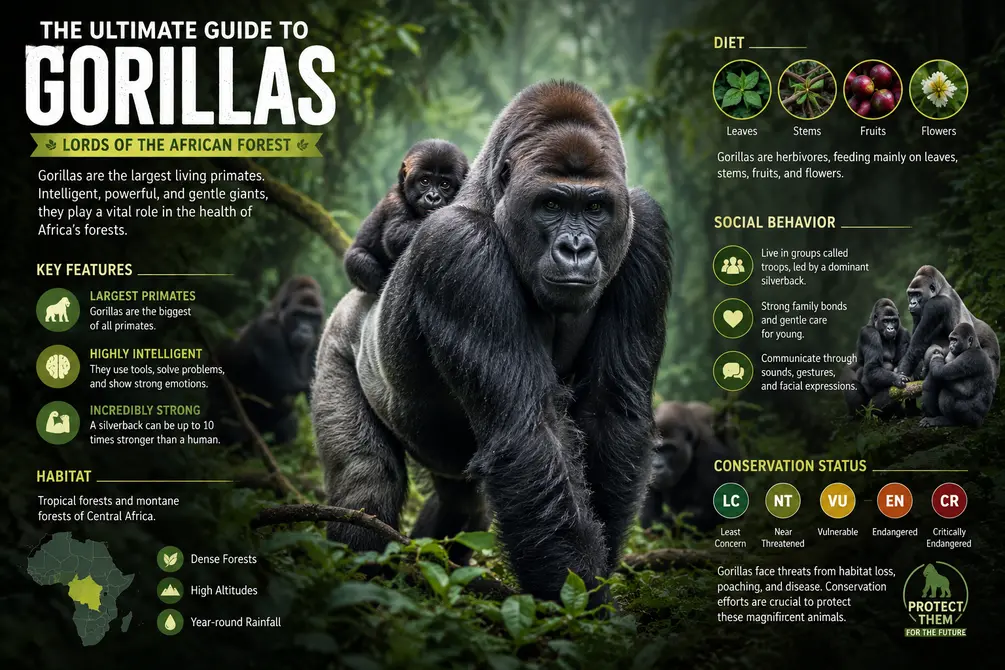
Many people think gorillas eat meat, but most gorillas are herbivores.
Gorilla Diet
Gorillas mainly eat:
- Leaves
- Fruits
- Stems
- Shoots
- Bark
- Flowers
- Roots
Some gorillas also eat insects such as ants and termites.
An adult gorilla can eat many pounds of food every day.
Gorilla Daily Life
A gorilla’s day is usually simple.
Morning
Eating and searching for food.
Afternoon
Resting and grooming.
Evening
More feeding and preparing sleeping nests.
Every night, gorillas build new nests using leaves and branches.
Gorilla Behavior and Social Structure
Gorillas live in family groups called troops.
A troop usually includes:
- One silverback male
- Several females
- Young gorillas
- Babies
Gorillas are social animals and enjoy spending time together.
How Do Gorillas Communicate?
Gorillas communicate in many ways.
Chest Beating
One of the most famous gorilla behaviors is chest beating.
They beat their chests to:
- Show strength
- Warn rivals
- Attract females
- Communicate with their group
Other Ways Gorillas Communicate
- Grunts
- Hoots
- Facial expressions
- Body movements
- Eye contact
Scientists believe gorillas can make more than twenty different sounds.
Are Gorillas Intelligent?
Yes, gorillas are highly intelligent animals.
Amazing Gorilla Intelligence Facts
- They can learn sign language.
- They can recognize themselves in mirrors.
- They use simple tools.
- They solve problems.
- They remember family members.
Because humans and gorillas share about 98% of their DNA, scientists study gorillas to learn more about human evolution.
Gorilla Reproduction and Baby Gorillas
Female gorillas usually give birth to one baby at a time.
Baby Gorilla Facts
- Babies weigh around 4 pounds at birth.
- They stay close to their mothers.
- They ride on their mother’s back.
- They learn by watching adults.
Baby gorillas are playful and love climbing and wrestling.
How Long Do Gorillas Live?
Lifespan in the Wild
35 to 40 years.
Lifespan in Zoos
Up to 50 years or more.
Proper care and medical treatment help captive gorillas live longer lives.
Are Gorillas Dangerous?
Gorillas are usually gentle animals.
However, they can become dangerous when:
- Protecting their babies.
- Defending their group.
- Feeling threatened.
Most encounters between humans and gorillas are peaceful.
Gorilla vs Human
Strength
Gorillas are much stronger.
Intelligence
Humans are more advanced, but gorillas are highly intelligent.
Communication
Humans have complex languages, while gorillas use sounds and body language.
Family Bonds
Both species form strong family relationships.
Why Are Gorillas Endangered?
Unfortunately, gorillas face many threats.
Main Threats
- Habitat loss
- Illegal hunting
- Diseases
- Climate change
- Human activities
Several gorilla species are listed as endangered.
Gorilla Conservation Efforts
Conservation groups around the world are working hard to protect gorillas.
How People Help Gorillas
- Creating national parks.
- Stopping poaching.
- Supporting eco-tourism.
- Educating local communities.
- Protecting forests.
Thanks to these efforts, some gorilla populations are slowly increasing.
15 Amazing Gorilla Facts
- Gorillas are the largest living primates.
- Gorillas share about 98% of their DNA with humans.
- Every gorilla has a unique nose print.
- Gorillas build a new nest almost every night.
- Gorillas can laugh and show emotions.
- Silverback gorillas lead family groups.
- Gorillas can use tools.
- Gorillas communicate with more than twenty sounds.
- Mountain gorillas have thick fur.
- Baby gorillas love to play.
- Gorillas spend much of the day eating.
- Gorillas are mostly herbivores.
- Gorillas are excellent climbers.
- Some gorillas can live for more than 50 years.
- Gorillas are among the smartest animals on Earth.
Frequently Asked Questions
Can gorillas swim?
No. Gorillas generally avoid deep water and cannot swim well.
How fast can gorillas run?
They can run up to 25 miles per hour for short distances.
Do gorillas have tails?
No. Gorillas are apes, and apes do not have tails.
How many gorillas are left in the world?
There are over 300,000 western lowland gorillas, but some species remain critically endangered.
Why do gorillas beat their chests?
To communicate, show strength, and warn rivals.
Conclusion
Gorillas are powerful, intelligent, and gentle giants of the African forests. From the mighty silverback gorilla to playful baby gorillas, these animals continue to amaze scientists and wildlife lovers around the world.
Learning more gorilla facts helps us understand why these incredible great apes deserve protection. By supporting conservation efforts and protecting forests, we can help ensure that future generations will continue to see gorillas thriving in the wild.
At Viltnemnda.net, we believe that every animal has an important place in nature, and gorillas are truly among the most remarkable creatures on Earth.