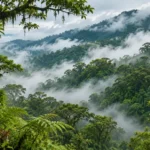






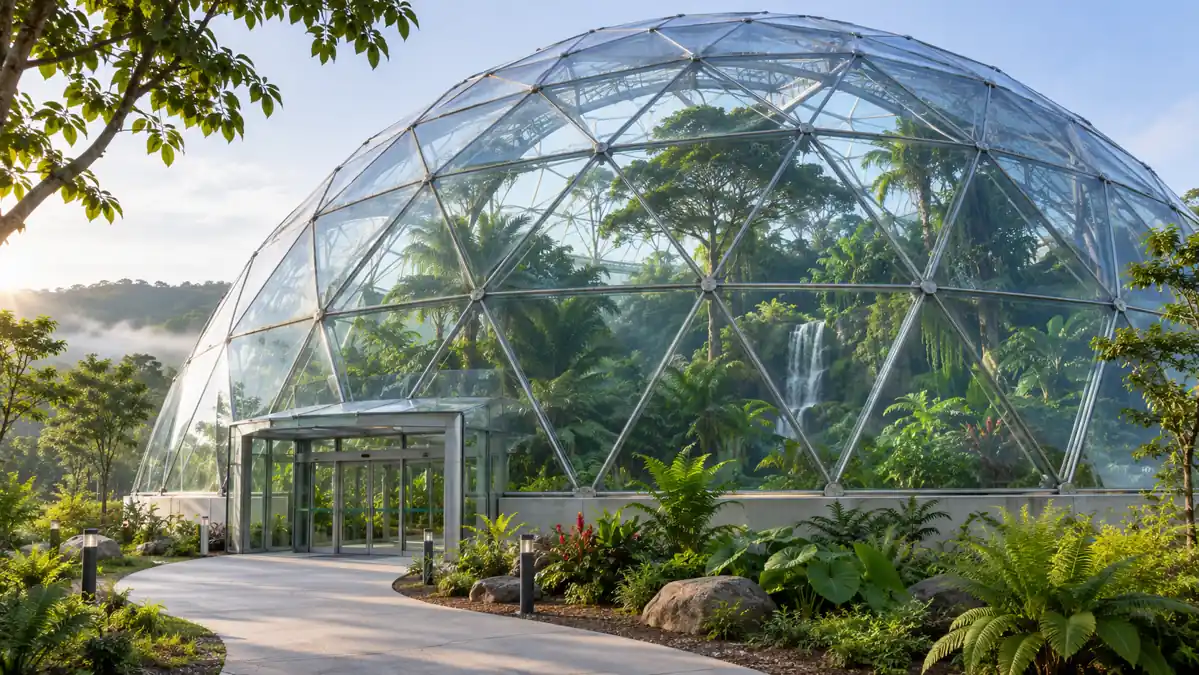
Imagine walking into a warm forest while cold rain falls outside. Tall plants rise above a path. Water gathers on leaves, and the air feels damp.
A biodome can create this kind of experience.
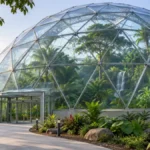
A biodome is a human-made enclosure that supports or recreates an ecosystem. Inside, plants and other living things interact with water, soil and air. Staff manage the conditions to suit the habitat.
Some facilities welcome visitors. Others help scientists study nature. Certain research projects also explore how people might live within a largely closed system.
However, a roof does not make an ecosystem self-sustaining. Most large facilities still need staff, energy and regular care.
This guide explains what biodomes contain, how they work and what they can teach us.
What Does Biodome Mean?
“Bio” refers to life, while “dome” describes a curved structure. Together, the words suggest a living environment beneath a protective roof.
In practice, people use the term for several kinds of enclosed habitats. Some buildings form one large dome. Others use connected structures or a different roof shape.
The environment inside matters more than the outline of the building.
For example, a rainforest biodome may contain tall trees, climbing plants and damp soil. A desert display needs a different mix of plants, moisture and temperature.
Both aim to support a particular environment. However, neither can reproduce every part of a vast natural landscape.
What Is an Ecosystem?
An ecosystem includes living things and the nonliving surroundings they interact with.
Plants, animals, fungi and bacteria form its living parts. Meanwhile, water, air, sunlight and minerals help shape the conditions.
These parts affect one another. A tree creates shade, which changes the ground below it. Fallen leaves provide material for fungi and other organisms to break down.
As a result, an ecosystem involves more than a collection of species. It also includes the relationships that help those species survive.
A biodome brings selected parts of this system into a space that people can manage and study.
What Is Inside a Biodome?
The contents depend on the facility’s purpose. A public habitat display may look very different from a research enclosure.
Still, several basic parts appear in many biodomes.
Plants
Plants often form the most visible layer. Depending on the habitat, they may include trees, ferns, grasses or climbing vines.
Their position matters. For instance, tall plants can shade smaller ones. Some species grow well beneath that cover, while others need more light.
As plants grow, they also change the space. Roots spread through the soil, and leaves release moisture into the air.
Therefore, staff must consider how the planting will develop over time.
Soil and Tiny Organisms
Soil anchors roots and holds water. It also contains air spaces, minerals and living organisms.
Bacteria and fungi help break down dead leaves and other material. Through this process, they return some nutrients to the soil.
However, healthy soil needs suitable conditions. Too much water can leave roots short of oxygen. Poor drainage can also create problems beneath plants that initially look healthy.
For this reason, soil care is a major part of managing a biodome.
Water
Water supports plant growth and shapes the indoor habitat. It may appear in ponds, streams, irrigation systems or moisture in the air.
In aquatic areas, staff must also consider water quality. Temperature, oxygen and waste levels affect the organisms living there.
A clear pond can still have problems that visitors cannot see. Therefore, appearance alone does not show whether the water supports a healthy habitat.
Animals
Some biodomes contain fish, birds, reptiles or amphibians. Others focus mainly on plants and soil.
Each animal needs suitable food, space and living conditions. In addition, staff must consider social behavior and veterinary care.
Adding an animal does not automatically improve the ecosystem. The species must suit the environment and the care available.
Our guide to wildlife and natural habitats explains the same principle outdoors: an animal depends on much more than the place where you happen to see it.
How Does a Biodome Work?
A biodome combines natural processes with human management.
Plants grow, organisms use resources, and dead material breaks down. Meanwhile, the building helps staff control conditions around those processes.
Light Supports Plant Growth
Plants use light to make sugars through photosynthesis. For this reason, many biodomes have transparent roofs or walls.
However, indoor light differs from light in an open landscape. Roof materials, support beams and nearby plants affect how much reaches each leaf.
Seasonal changes also matter. A plant may receive plenty of light in summer but much less in winter.
Some facilities use extra lighting. Others select plants that suit the daylight available.
Temperature Shapes the Habitat
Sunlight can warm the inside of a transparent enclosure. This helps create warm conditions in a cooler location.
However, the same effect can cause overheating. Staff may need shading, ventilation or cooling to keep temperatures suitable.
Cold weather creates a different challenge. Heating may be necessary to protect plants that cannot tolerate low temperatures.
As a result, temperature control depends on both the indoor habitat and the weather outside.
Humidity Affects Plants and Animals
Humidity describes how much water vapor the air contains.
Water evaporates from soil and ponds. Plants also release moisture through their leaves. Together, these processes can make enclosed air very damp.
Some species thrive in humid conditions. Others need drier air.
Therefore, staff manage humidity to suit the habitat rather than simply keeping everything wet.
Airflow Helps Control Conditions
Air movement helps distribute heat and moisture. Without enough circulation, different parts of a building can develop very different conditions.
Fans or ventilation systems may help move air through the enclosure.
However, airflow needs care too. Strong, dry air can harm plants that prefer sheltered conditions.
The aim is a suitable environment, not the highest possible fan speed.
Water Moves Through a Cycle
Roots take up water from the soil. Leaves then release some of that water into the air.
Meanwhile, moisture can condense on cooler surfaces and return as droplets.
These processes show parts of a water cycle. However, they do not prove that a biodome supplies all its own water.
Many facilities still need irrigation, drainage or water treatment. Some also replace water that leaves the system.
Nutrients Return to the Soil
Leaves fall, roots die and organisms produce waste. Fungi and other decomposers break down some of this material.
In turn, the process makes nutrients available for further growth.
Yet the cycle does not always remain balanced. Certain nutrients may become scarce, while others collect in unsuitable amounts.
Staff may therefore adjust the soil, remove material or provide additional nutrients.
Staff Track Changes
Large facilities often use sensors to track temperature, humidity and soil moisture. Depending on the project, they may also measure water quality or gases in the air.
These readings help staff spot changes before serious damage occurs.
For example, a drop in soil moisture may reveal a watering problem before leaves wilt. Similarly, a temperature warning can help staff respond to equipment failure.
A biodome therefore depends on both living processes and practical maintenance.
Are Biodomes Closed Ecosystems?
Not all biodomes are closed ecosystems.
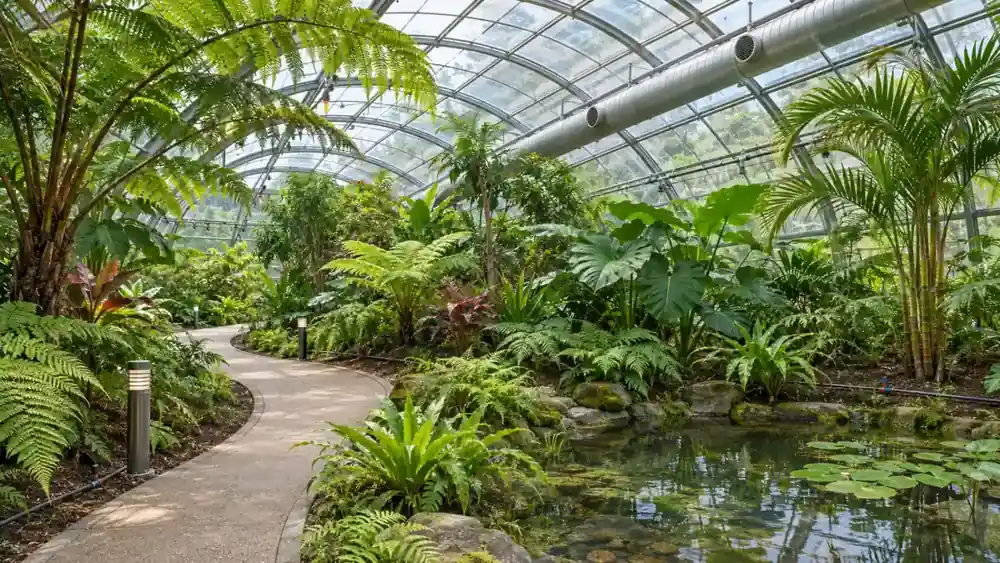
An enclosed habitat has a physical boundary, such as walls and a roof. However, air, water and other materials may still move through that boundary.
A closed-system experiment aims to limit the movement of matter between the inside and outside.
Even then, energy can enter. Sunlight may pass through the roof, while electricity powers equipment.
This difference explains why an enclosed rainforest can still need outside support.
For instance, staff may bring in water, animal food or new plants. Ventilation may exchange indoor air with outdoor air.
Therefore, “enclosed,” “closed” and “self-sustaining” should not serve as interchangeable descriptions.
Biodome vs Greenhouse vs Biome
These terms describe related ideas, but they do not mean the same thing.
| Term | Simple meaning | Main focus |
|---|---|---|
| Biodome | A human-made enclosure that supports a recreated or experimental ecosystem | Living things and their environment |
| Greenhouse | A structure that provides suitable conditions for growing plants | Plant cultivation |
| Biome | A broad ecological region with a characteristic climate and living communities | Large natural patterns |
| Biosphere | The parts of Earth where life exists, considered together | Life across the planet |
| Terrarium | A small container that supports plants or a miniature habitat | Small-scale growing and observation |
A greenhouse can support a complex living system. Likewise, a biodome may use greenhouse technology.
The distinction often comes down to purpose. A greenhouse may focus on growing crops, while a biodome may focus on habitat displays or research.
Also, a building called a “Biome” represents only selected parts of a natural biome. It does not contain the full complexity of an entire rainforest or desert region.
Well-Known Biodome Examples
Real facilities show how enclosed environments can serve different purposes.
Montréal Biodôme
The Montréal Biodôme presents five ecosystems from the Americas under one roof.
Visitors can explore recreated environments containing plants and animals. As they move between areas, they encounter different habitat conditions.
This makes the facility a useful example of ecosystem-based public education.
However, Montréal’s Biodôme and Biosphère are separate attractions. Their similar names can cause confusion.
Biosphere 2
Biosphere 2 is a research facility associated with the University of Arizona.
It became widely known for experiments involving people living within a largely closed system. Later, its work developed into broader environmental research.
Today, researchers use the facility to investigate processes within managed ecosystems.
The official Biosphere 2 overview explains its purpose and history.
The site also shows why enclosed environments need substantial support. Equipment, power and trained staff help maintain conditions and run experiments.
Eden Project
The Eden Project in England contains large interconnected structures called Biomes.
Its Rainforest and Mediterranean Biomes support plants from environments with different growing conditions.
The transparent covering uses ETFE, a lightweight polymer material. This helps create large covered spaces that admit daylight.
Together, the structures demonstrate how architecture can support plants that would not thrive outdoors in the same location throughout the year.
These three examples share an interest in living environments. Nevertheless, their designs, activities and operating needs differ.
Why Do Scientists Study Biodomes?
Natural ecosystems contain many factors that change at once.
Rainfall varies. Temperatures rise and fall. Animals move between places, and disturbances arrive from beyond the study area.
Inside a research enclosure, scientists can manage selected conditions more closely.
For example, a project may change the water supply and observe how plants respond. Researchers can then track effects on soil moisture and other parts of the system.
This approach helps reveal relationships that are difficult to isolate outdoors.
However, a biodome remains a model. Its size, boundaries and selected species differ from those of a natural landscape.
Scientists must therefore interpret the results carefully. Findings from one enclosure do not automatically describe every forest or grassland.
How Do Biodomes Help People Learn?
A well-designed habitat display makes environmental ideas easier to understand.
Visitors can feel warm, humid air instead of only reading about it. They can also see how plants grow at different heights and create shade below.
Where animals are present, the display may show how they use vegetation, water or shelter.
As a result, the focus can shift from naming an animal to understanding its needs.
This lesson also matters outside visitor attractions. Our guide to responsible wildlife watching explains how to observe animals while respecting their surroundings.
A useful visit should leave people curious about real habitats, not just impressed by the building.
Can Biodomes Support Conservation?
Biodomes can support some conservation activities. Their role depends on the facility, its staff and its programs.
For example, a site may maintain plant collections, support research or teach visitors about habitat loss.
Facilities with suitable expertise may also care for selected animal species.
However, an indoor environment cannot replace a complete natural ecosystem.
A forest includes soil communities, seasonal changes and links with surrounding land. It may also support migration routes that no building can reproduce.
Therefore, biodomes can complement conservation work, but they do not remove the need to protect natural habitats.
If you want to explore those habitats outdoors, our guide to the best places to see wildlife provides ideas for nature-focused trips.
What Challenges Do Biodomes Face?
A thriving indoor habitat needs more than an attractive design.
Energy Demand
Heating, cooling, lighting and water pumps can require considerable energy.
The amount depends on the local climate, building design and indoor conditions. For instance, maintaining a tropical habitat during a cold winter creates different demands from growing local plants.
A green interior does not automatically mean a low environmental impact. Energy sources and operating methods also matter.
Changes in the Living System
Plants grow taller and create more shade. Roots spread, while water demand can change.
Meanwhile, pests or diseases may affect the living collection.
For this reason, staff must adapt their care over time. A planting plan that works at the start may need changes several years later.
Limited Space
A building cannot provide every feature of a large landscape.
Some animals need extensive space or seasonal movement. Certain plants may eventually outgrow their surroundings.
Therefore, species selection must reflect the space and care available.
Maintenance Costs
Roofs, seals, paths and environmental equipment need regular attention.
In addition, gardeners and other specialists care for the living environment. Facilities with animals may need dedicated veterinary support.
These needs vary greatly. As a result, there is no useful single price for building or operating “a biodome” without details about its size and purpose.
Can Humans Live in a Biodome?
People have lived within experimental enclosed systems. However, supporting humans creates demands beyond maintaining a plant display.
Residents need safe air, drinking water, food and waste management. They also need reliable emergency procedures.
Plants alone do not guarantee a safe oxygen supply or enough food.
Moreover, people, soil organisms and plants all affect conditions inside the enclosure. Keeping those processes within suitable limits requires careful planning.
Such experiments help researchers explore closed life-support systems.
They may also inform work on remote habitats or space exploration. Nevertheless, a successful setup on Earth would not automatically work unchanged on another planet.
Can You Make a Small Biodome at Home?
A plant terrarium offers a simple way to explore related ideas.
You can observe moisture, growth and the breakdown of organic material within a small container. However, it is better to call this a terrarium than a complete replica of a large biodome.
Start by choosing plants that suit the container.
A closed, humid terrarium needs different plants from an open container with dry conditions. Avoid mixing species with very different watering needs.
Add water carefully. Too much can leave the soil soaked and harm roots.
Also, keep a closed glass container away from strong direct sunlight, which can cause overheating.
Use a plant-only setup rather than sealing wild animals inside. This avoids many welfare problems and makes the project easier to manage.
Finally, observe how the container changes. The purpose is to learn from the system, not to assume it will remain balanced forever.
Frequently Asked Questions
Does a biodome have to be round?
No. Many use curved structures, but people also apply the term to enclosed ecosystem facilities with other layouts.
Do all biodomes contain animals?
No. Some focus on plants, soil or research. Others include selected animals within managed habitats.
Is a biodome the same as a zoo?
No. A biodome describes an enclosed environment or structure. A zoo is an institution that keeps animals, although it may include a biodome-style exhibit.
Can a biodome produce oxygen?
Plants can release oxygen through photosynthesis. However, plants and other organisms also use oxygen through respiration. Therefore, plants alone do not guarantee safe oxygen levels.
Can a biodome work without electricity?
A small plant container may need no powered equipment. Large facilities, however, often rely on electricity for pumps, monitoring and environmental control.
Is Earth a biodome?
Earth has a biosphere. However, people normally use “biodome” for a human-made enclosure that recreates or studies parts of a living system.
Are biodomes self-sustaining?
Some recycle part of their water and nutrients. Nevertheless, many still need outside energy, materials and regular human care.
What makes a biodome successful?
A successful biodome meets its purpose while supporting suitable conditions for its organisms. Good design, skilled care and dependable maintenance all contribute.
Why Biodomes Matter
A biodome helps us see how different parts of a habitat connect.
Plants need water and light. Soil organisms break down fallen material. Meanwhile, changes in temperature or moisture affect the whole living community.
By bringing these processes into a managed space, biodomes support learning and research.
They also reveal the limits of human control. Even a carefully designed enclosure needs attention as its living parts grow and change.
The most valuable lesson reaches beyond the roof: healthy ecosystems depend on relationships, and protecting those relationships matters.

One thought on “What Is a Biodome? How It Works and Why It Matters”