



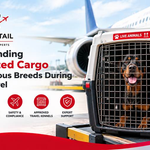






International and long-distance pet travel requires careful planning, particularly when a dog belongs to a breed that an airline or destination classifies as restricted or potentially dangerous. In these situations, pet owners may encounter terms such as manifested cargo dangerous breeds. Understanding what this terminology means can help owners prepare the appropriate documentation, transportation arrangements, and kennel requirements before booking a flight.
Air transportation rules are not the same for every animal. Airlines can have specific requirements based on breed, size, destination, aircraft type, temperature, and the way an animal is transported. Because of these differences, owners should confirm the current rules with the airline and work with an experienced pet transportation professional when necessary.
What Does Manifested Cargo Mean?
Manifested cargo generally refers to cargo that is formally booked and documented with an airline. When an animal travels as manifested cargo, the shipment is entered into the airline’s cargo system and handled according to applicable cargo procedures.
This can differ from pets traveling in the cabin with their owners or under other baggage arrangements.
For certain breeds, sizes, routes, or destinations, cargo transportation may be the only available option. However, whether a particular animal can travel as manifested cargo depends on the airline’s policies and applicable regulations.
The term dangerous breed can also be misleading because classifications vary between airlines, countries, insurers, and local authorities. A breed restricted by one carrier may be accepted by another under specific conditions.
Why Some Breeds Face Additional Restrictions
Airlines may impose additional requirements on certain dog breeds because of concerns relating to handling, physical characteristics, temperament classifications, or historical transportation incidents.
Restrictions can also apply to brachycephalic breeds, which have short or flattened facial structures. These breeds can have additional considerations during air transportation because of their respiratory characteristics.
Some airlines may therefore prohibit certain breeds from particular forms of transportation, while others may accept them subject to specific conditions.
Pet owners should never assume that a breed is automatically eligible for travel simply because another pet of the same breed has previously flown.
The Importance of Checking Airline Rules
One of the most important steps in transporting a restricted or potentially dangerous breed is checking the airline’s current requirements before making arrangements.
Requirements can include:
- Approved kennel specifications
- Kennel dimensions
- Reinforced construction
- Secure fasteners
- Ventilation requirements
- Breed restrictions
- Temperature limitations
- Documentation
- Health certificates
- Handling procedures
- Route restrictions
- Aircraft restrictions
Rules may also change depending on the departure and destination airports.
For this reason, professional pet transport planning should begin well before the intended departure date.
Choosing an Appropriate Travel Kennel
The kennel is an essential part of transporting an animal as manifested cargo.
A suitable kennel needs to provide enough room for the pet to stand, turn around, sit, and lie down naturally. It must also be strong enough to withstand normal handling throughout the transportation process.
For dogs subject to additional airline restrictions, the airline may require particular kennel specifications or construction features.
Owners should avoid purchasing a kennel based solely on generic claims such as “airline approved.” Instead, the kennel should be checked against the specific airline’s current requirements and the pet’s measurements.
An experienced pet transportation provider can help determine which kennel is appropriate for the intended route.
Documentation Is an Essential Part of the Process
Moving a pet as manifested cargo can require substantial documentation, especially for international travel.
Depending on the destination, requirements may include vaccination records, health certificates, identification or microchip information, import permits, and other government documentation.
Some countries have specific requirements that must be completed within certain timeframes. Missing a deadline can result in travel delays or additional costs.
Owners should therefore research destination requirements early and confirm that all documents are completed correctly.
Professional Pet Transport Can Simplify Complex Moves
When a pet belongs to a restricted breed or needs to travel as manifested cargo, arranging transportation independently can become complicated.
A professional pet relocation company can help coordinate different parts of the journey, including airline requirements, kennel selection, documentation, routing, and ground transportation.
Fly Your Tail provides pet transportation support for domestic and international relocations and can help owners evaluate transportation options based on the pet, airline, destination, and route.
This type of individualized planning can be particularly useful when a pet’s breed, size, or destination creates additional transportation considerations.
Temperature and Seasonal Restrictions
Temperature is another important factor in air transportation.
Airlines may restrict pet travel during periods of extreme heat or cold. These restrictions can apply to particular airports, routes, aircraft types, or transportation methods.
For breeds requiring additional consideration, seasonal planning can be especially important.
Choosing an appropriate travel date, flight schedule, and routing can help reduce exposure to extreme environmental conditions. However, owners should always follow the airline’s current policies rather than relying on general temperature guidelines.
Ground Transportation Is Part of the Journey
Pet travel does not begin when an aircraft takes off. Ground transportation before and after the flight is equally important.
A pet may need to travel from its home to the airport, be transferred between airport facilities, or be transported from the destination airport to its new home.
For restricted or large breeds, suitable ground transportation may require additional planning.
Professional pet relocation companies can coordinate these connections so that the animal’s journey is treated as one complete transportation plan rather than a series of unrelated bookings.
Planning Ahead Helps Avoid Last-Minute Problems
One of the biggest mistakes pet owners can make is waiting until the last minute.
International pet transportation can involve multiple agencies, airlines, veterinarians, and government authorities. If a breed is restricted or requires special handling, available options may be even more limited.
Starting several weeks or months in advance gives owners more time to:
- Confirm airline eligibility.
- Review destination requirements.
- Complete veterinary procedures.
- Obtain necessary documentation.
- Select an appropriate kennel.
- Confirm the flight route.
- Arrange ground transportation.
- Prepare the pet for travel.
Early planning also provides an opportunity to find an alternative route if the preferred airline cannot accept the animal.
Don’t Rely on Breed Labels Alone
The phrase “dangerous breed” should always be considered in context. There is no universal international list that determines how every airline and country treats every breed.
A dog’s acceptance can depend on the airline, destination, route, aircraft, local regulations, and transportation method.
Therefore, pet owners should obtain confirmation from the relevant airline and authorities rather than relying on information from social media, outdated websites, or assumptions based on previous travel experiences.
Final Thoughts
Transporting a restricted or potentially dangerous breed by air requires more planning than simply purchasing an airline ticket. Manifested cargo dangerous breeds may be subject to specific airline procedures, kennel requirements, documentation rules, and routing restrictions.
The safest approach is to begin planning early and verify every requirement for the specific pet, airline, route, and destination.
Professional pet transportation providers can also make the process easier by coordinating the different stages of the journey. Fly Your Tail offers pet transportation and relocation support, helping owners navigate complex domestic and international pet travel requirements.
Whether a dog is traveling across the country or moving internationally, careful preparation is essential. By confirming airline policies, preparing the right kennel, completing documentation, and arranging appropriate transportation from door to door, pet owners can create a more organized and reliable journey for their animals.
Disclaimer
This article is for informational purposes only and does not guarantee that any specific dog breed will be accepted for air transportation. Airline policies, destination regulations, documentation requirements, and kennel standards may vary and change over time. Always confirm current requirements directly with the airline and relevant authorities before booking. Consult a qualified pet transportation professional when necessary.