






Yes, deer eat pumpkins. They may feed on the fruit and browse parts of the plant, including leaves and flowers. However, a damaged pumpkin does not prove a deer visited: other animals also eat them. Check nearby signs before choosing a way to protect your patch or porch display. [1][2]
A missing chunk of pumpkin is frustrating when you have spent months growing it—or an evening carving it. This Viltnemnda guide helps you work out what happened, choose a practical response, and deal with leftover pumpkins without encouraging wildlife to gather around your home.
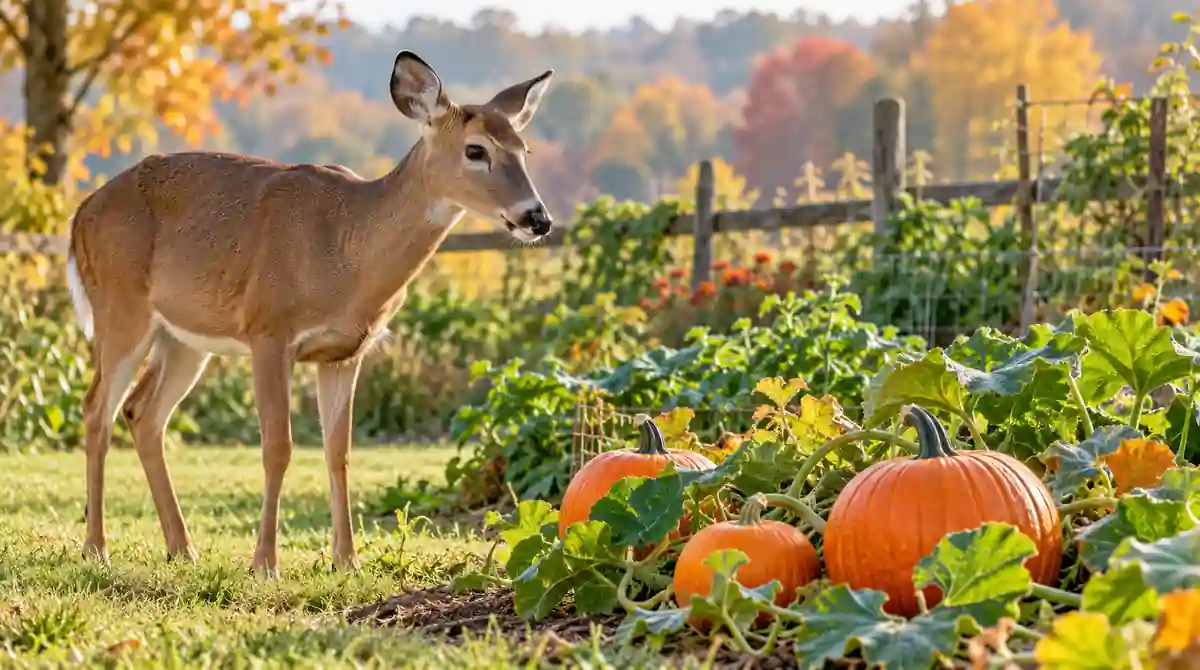
AI-generated illustration of a deer near pumpkins; not a photograph of an observed feeding event.
Do Deer Eat Pumpkins Growing in a Garden?
They can. A New Jersey crop profile identifies white-tailed deer as a source of damage to pumpkin production in some locations. That establishes pumpkins as a crop at risk, but it does not mean every pumpkin patch will be visited. [3]
For your own garden, start with the evidence on the ground. Has damage occurred once, or have you found new damage on several mornings? Are pumpkins affected, plants affected, or both? Photograph the same area each time so you can separate old damage from fresh changes.
The useful question is not simply whether deer can eat pumpkins. It is whether deer are reaching yours and what you can change to prevent another visit.
Which Parts of a Pumpkin Do Deer Eat?
Gardening guidance describes deer eating leaves, flowers, and pumpkin fruit. A deer may also consume exposed seeds and rind while feeding, although that does not establish a universal preference for one part. [1][2]
| Pumpkin part | What to consider |
|---|---|
| Flesh | Look for missing tissue, but do not identify the animal from the hole alone |
| Seeds and stringy interior | An opened pumpkin exposes these to several kinds of wildlife |
| Rind | Record damage to the skin and check for signs around the fruit |
| Leaves and flowers | Inspect the rest of the plant rather than examining only the pumpkins |
| Vines | Record broken or missing growth separately; damage can have several causes |
Do Deer Eat Pumpkin Seeds?
They may eat seeds while feeding on an opened pumpkin. Finding the interior disturbed is not enough to identify deer, however. Squirrels and other visitors may also investigate the fruit. [1][4]
There is no need to put out seeds to test which animal is responsible. Observation or an existing outdoor camera provides evidence without creating another food source.
Do Deer Eat Pumpkin Leaves?
Yes, pumpkin foliage can be affected by deer browsing. Examine several plants and look for accompanying signs before attributing every missing leaf to deer. [2]
Take one close photo of the damage and a wider photo of the plant. If you ask a gardening adviser for help, showing where the damage occurs is more useful than sending a detached leaf.
What Is Eating My Pumpkins at Night?
Several animals could be involved. The U.S. Fish and Wildlife Service lists deer, squirrels, raccoons, mice, and other wildlife among possible visitors to outdoor pumpkins. [4]
The size of a missing piece is a clue, not proof. Start with a short inspection around the damaged fruit.
Look for Footprints
Check soft ground near the bed, gate, and approach path. Our deer tracks identification guide explains how to compare hoof impressions in different surfaces.
Photograph prints before walking through them. Include a ruler if available and note where the marks were found. A clear sequence is more useful than one partly damaged impression.
Record Droppings Separately
If pellets are nearby, compare their features using our deer poop identification guide. Avoid handling them.
Keep your interpretation cautious. Footprints, droppings, and pumpkin damage may come from different visits. Finding all three makes the location worth watching, but it does not establish the full sequence of events.
Use a Camera if You Already Have One
Aim an existing garden or wildlife camera at the affected area. Avoid putting out extra pumpkins or food to attract the visitor.
If a camera is unavailable, a simple written record still helps. Note the date, which fruit or plant changed, and any signs beside it. Repeat observations are more useful than guessing from a single morning.
How to Keep Deer From Eating Pumpkins
Choose protection according to what you are trying to save. A porch decoration can be moved; a growing pumpkin patch needs a barrier or a broader garden plan.
Bring Porch Pumpkins Indoors When Practical
For a small display, removing access is straightforward. Bring pumpkins into a secure indoor space when they are not being displayed, especially if repeated damage is occurring.
Do not assume a porch is inaccessible merely because it is close to the house. Decide whether the decorative effect is worth leaving the pumpkins outside unattended.
An artificial pumpkin is another option for an exposed display. It avoids using edible fruit as outdoor decoration.
Protect the Patch With a Suitable Fence
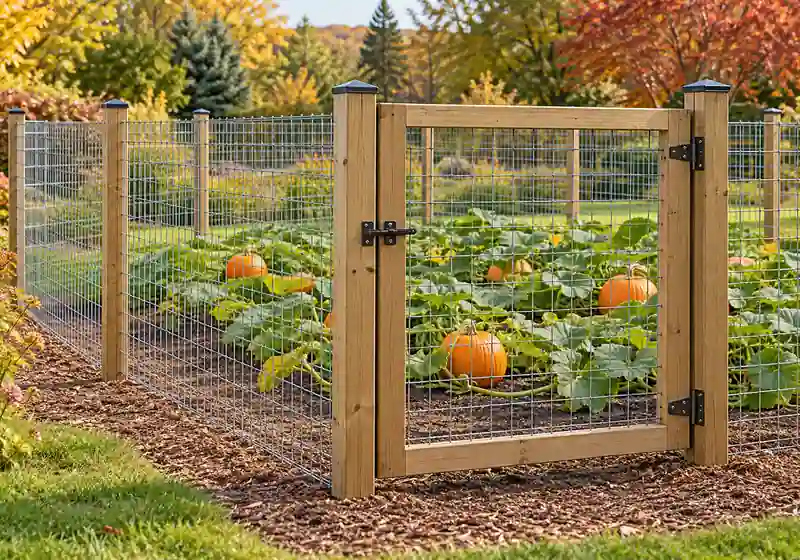
University of Minnesota Extension discusses fencing and small enclosures as approaches to protecting plants from deer. The appropriate arrangement depends on the size of the area and the pressure from visiting animals. [5]
Check the whole enclosure, not just its height:
- Does the gate close and latch?
- Are there gaps beside posts or along the ground?
- Is the material securely attached?
- Are pumpkin vines growing outside the protected area?
- Has damage created a new opening?
For a larger installation, ask a local extension service or wildlife adviser about a suitable design. A decorative boundary and a deer-exclusion fence are not necessarily the same thing.
Treat Repellents as a Supplement
University of Maryland Extension describes repellents as one part of deer-damage management, alongside barriers and other approaches. Results should be assessed rather than assumed. [6]
Before using a product, check that its label permits the intended use, including use around edible crops. Follow application and reapplication instructions. A treatment intended for ornamental plants should not automatically be applied to pumpkins grown for food.
If you try a repellent, record the application date and whether new damage appears. Do not keep repeating a method that is failing while the crop remains exposed.
Match the Response to the Problem
| Situation | Practical starting point |
|---|---|
| One porch pumpkin repeatedly damaged | Move it into secure storage when not displayed |
| New damage across a growing patch | Assess the enclosure and access points |
| Animal responsible is uncertain | Collect photographs and repeated observations |
| Damage continues behind a fence | Inspect the gate, gaps, and plants outside it |
| Leftover pumpkins are attracting visitors | Use an appropriate waste or composting route |
This approach keeps the response proportionate. You do not need an expensive installation to protect one portable decoration.
Should You Leave Pumpkins Out for Deer?
As general advice, do not deliberately create a deer-feeding spot. Michigan’s Department of Natural Resources discourages feeding deer because it can encourage familiarity with people and contribute to conflicts, vehicle collisions, and disease transmission. [7]
A deer choosing to eat a pumpkin does not establish that regularly providing pumpkins benefits it. Nor does an online video establish a safe amount to feed.
Wildlife advice varies by place, so follow your local wildlife agency’s guidance. For household leftovers, a managed disposal or composting option avoids turning waste reduction into intentional deer feeding.
What About Painted or Treated Pumpkins?
Keep painted pumpkins away from wildlife. The U.S. Fish and Wildlife Service warns that paint can be harmful if an animal eats the pumpkin. It also advises following the directions for products applied to decorations. [4]
Do not treat a pumpkin as safe to leave outdoors merely because it still looks fresh. If it contains paint, coatings, glue, or decorative pieces, tell the receiving waste service what was applied and follow its acceptance rules.
What Should You Do With Leftover Pumpkins?
Check whether your community accepts pumpkins through an organics collection or seasonal drop-off. For home composting, follow local guidance and keep the setup from becoming an easy feeding place for visiting wildlife.
Remove candles, lights, and other decorations first. Keep treated pumpkins separate while checking disposal instructions.
The U.S. Fish and Wildlife Service points readers toward community composting and recycling options. It also notes that some facilities may accept suitable pumpkins, so contact a destination before making a drop-off. [4]
Frequently Asked Questions
Will deer eat whole pumpkins?
Whole pumpkin fruit can be damaged by deer, so an uncarved pumpkin should not be considered protected simply because its skin is intact. [2][3]
Do deer eat carved pumpkins?
Yes. Deer are among the animals that may investigate outdoor jack-o’-lanterns. A porch display can attract wildlife even when you did not intend to provide food. [4]
Do deer eat pumpkin rind?
They may consume rind while feeding on the fruit. Rind damage alone cannot identify the visitor; look for tracks or direct observation. [1]
Are pumpkin plants deer-resistant?
Do not rely on pumpkins as a deer-proof crop. Deer damage is documented, and gardening guidance includes browsing of leaves and flowers. [2][3]
Can I put old pumpkins in the woods?
Do not assume that dumping pumpkins is an appropriate wildlife or waste-disposal practice. Use your local organics service, an accepted composting option, or another approved disposal route.
What is the simplest way to protect porch pumpkins?
Move them to a secure indoor location when they are not being displayed. For a permanent outdoor arrangement, consider decorations that are not edible.
Will a repellent stop every visit?
Do not assume complete protection. Use an appropriate labelled product, check for new damage, and reassess access if the problem continues. [6]
How can I confirm that deer ate my pumpkins?
A clear observation or camera recording provides stronger evidence than bite damage alone. Tracks and droppings can support your assessment, but signs found nearby may come from separate visits.