









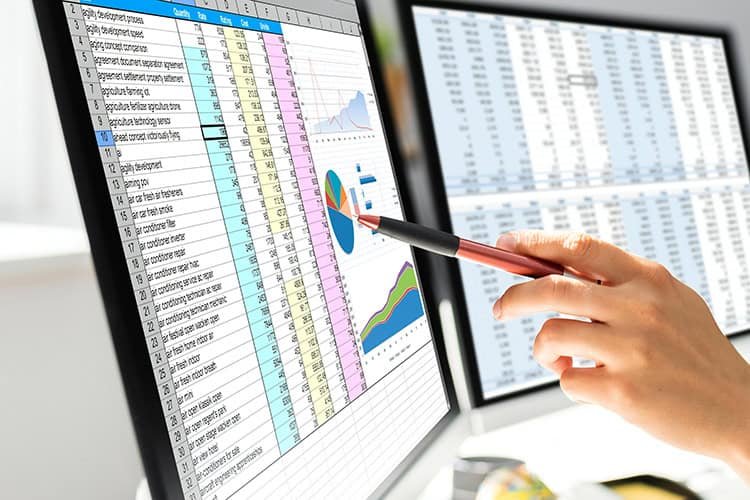
It’s 9pm on a Thursday, and your finance manager is still hunting for a broken formula in a spreadsheet that worked fine last month. If that scene feels a bit too close to home, you’re not alone. This is usually the first real clue that financial planning and analysis outsourcing is worth a proper look. Spreadsheets got you this far because they’re cheap, familiar, and easy to bend into whatever shape you need. But familiar isn’t the same as fit for purpose. Add more staff, another location, a new revenue line, and the same spreadsheets that once felt reliable start pulling against you rather than helping.
None of this is really Excel’s fault. The trouble starts when a business keeps leaning on it long after it’s stopped being the right tool. Nobody decides one morning that spreadsheets have failed them, either.it creeps up. Reports take a bit longer each month. Forecasts drift further from reality. And at some point, leadership just stops trusting the numbers. What hurts a business isn’t the tool. It’s decisions that arrive late, incomplete, or built on shaky data. Here are five signs worth paying attention to, along with what a smarter approach looks like.
Sign 1: More Time Updating Reports Than Reading Them
You know something’s off when manual admin starts eating the hours that should go toward actual thinking. Copying figures between tabs. Consolidating five different files that somehow never quite match. Checking the same formula for the fourth time this week. Chasing numbers at month-end that should have been ready days ago.
What does this actually cost you? Burnout, for one. Weekend reporting sessions nobody signed up for. Decisions that sit waiting because nobody’s had time to finish the analysis. And here’s the thing worth sitting with: your team gets no value from producing a report. The value comes from what the report tells them, and right now, they barely have time to look.
Sign 2: You Stop Trusting Your Own Numbers
This one stings more than slow reporting ever will. Version control turns into a guessing game. Two departments quote different figures for the same metric. Formulas break, links go missing, cells get hidden and forgotten, assumptions vanish without a trace.
Why do your reports never quite line up? Which version is the real one? Why does every finance meeting turn into an argument about whose spreadsheet is correct? Here’s a truth worth remembering: confidence in your numbers matters more than simply having numbers. Without that confidence, every call you make carries a bit more risk than it should.
Sign 3: Your Forecasts Keep Missing Reality
Looking backward stops being useful once the business gets more complicated. A static annual budget, assumptions nobody’s revisited since January, no rolling forecast, no scenario planning all of this leaves you blind to what’s coming next.
Cash shortages have a habit of catching out businesses that looked perfectly healthy on paper the month before. Hiring, inventory, pricing, expansion timing all of it suffers when the forecast underneath it can’t be trusted. Driver-based forecasting and scenario modelling exist to close that gap, but ask a spreadsheet to handle them at scale and it usually buckles.
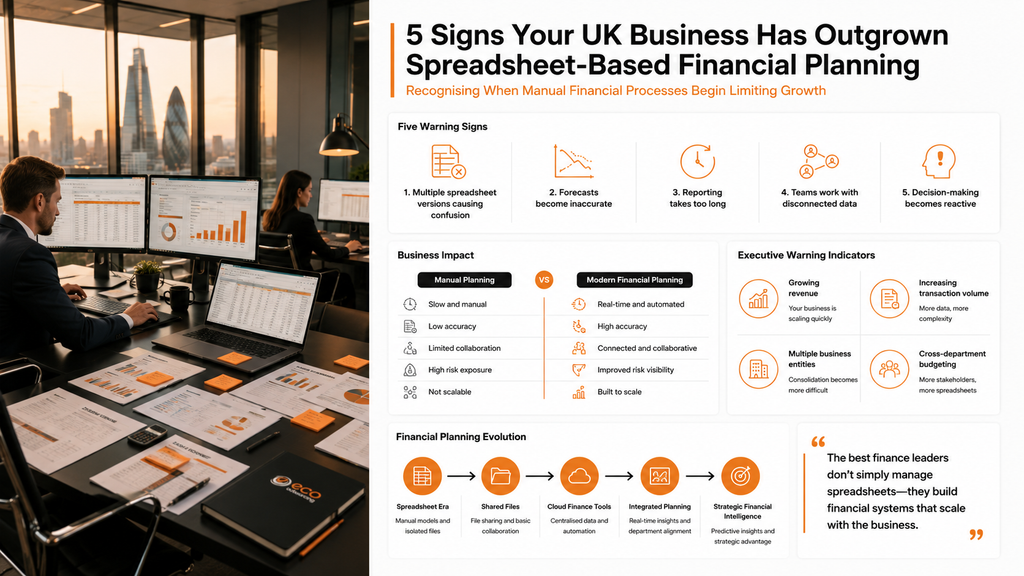
Sign 4: Growth Has Outpaced What Spreadsheets Can Handle
More locations. New departments. A subscription revenue stream that didn’t exist two years ago. A payroll that’s grown three times over. Investor reporting that expects a level of detail your old files were never built for. Each additional layer on complexity spreadsheets wasn’t designed to carry.
Ask yourself, honestly:
- Has reporting time roughly doubled over the past year?
- Are your spreadsheets stitched together in ways nobody fully understands anymore?
- Does tweaking one cell somehow break three unrelated reports?
- Are different teams still running their own separate files?
If a few of those sound uncomfortably familiar, complexity has already got ahead of your current setup.
Sign 5: Decisions Start to Feel Like Guesswork
This is the one that matters most, honestly. It’s not more reports you need. It’s better insight.
Can you actually afford another hire right now? Should prices go up, and by how much? Are margins genuinely improving, or does it just feel that way because nobody’s checked the real numbers lately? Without proper structure behind your planning, business owners end up leaning on gut feel instead of evidence and that’s an uncomfortable place to be running a growing company from.
The Cost You Don’t See on a Spreadsheet
Beyond the obvious frustration, there’s a cost that never shows up as a line item: missed opportunities, duplicated effort, resources allocated in the wrong place. One retail business held off on a stock investment for six weeks simply because nobody could confirm the real cash position. That hesitation cost them a supplier discount worth several thousand pounds.
People rarely go looking for help because Excel annoys them. They go looking because they can’t answer what actually matters: where’s the cash going, and why are profits climbing while the bank balance isn’t? Better planning fixes this. New software on its own usually doesn’t.
What Better Financial Planning Actually Looks Like?
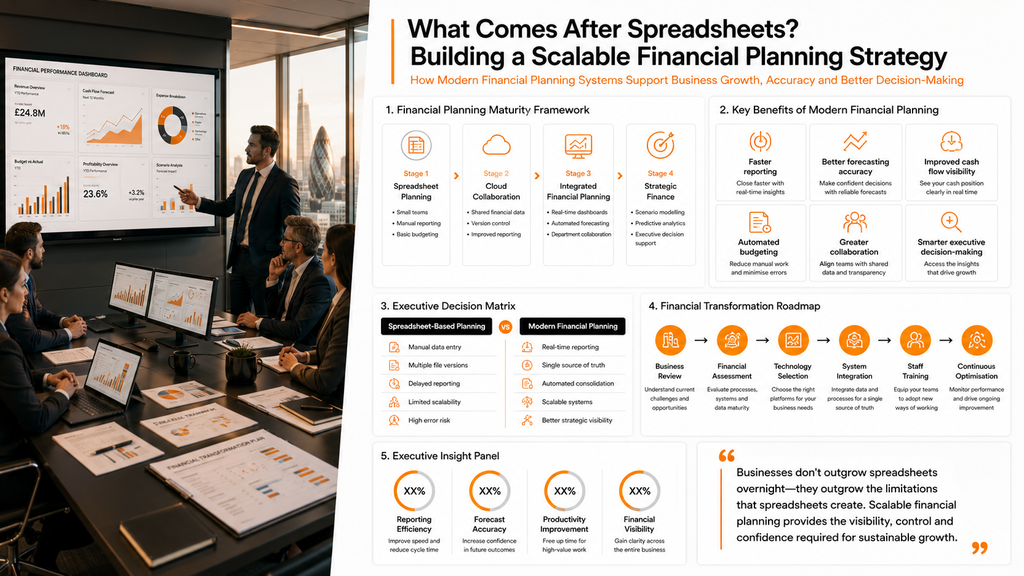
Real-time visibility. Rolling forecasts that update monthly rather than once a year. Scenario planning. KPI dashboards that mean something. Automated reporting. Proper cash flow forecasting. None of this is reserved for large corporations with big finance teams anymore.it’s well within reach for a growing SME.
A Roadmap, Not a Software Pitch
Start with an honest audit of every spreadsheet currently in use across the business. Find the repetitive manual work and flag it. Standardise the KPIs that actually matter to you. Fix data quality issues before you even think about automating anything. Bring in rolling forecasts. Automate the recurring reports wherever it makes sense. And somewhere along the way, it’s worth asking whether financial planning and analysis outsourcing could bring in the specialist expertise and flexible support you need before you commit to building out a bigger in-house team.
Frequently Asked Questions
How do I know if my business has actually outgrown spreadsheets, rather than just having a bad month?
Look for a pattern, not a one-off. If reporting has slowed down consistently over several months, if forecasts keep missing by a wide margin, or if two people in your finance team can’t agree on the same number that’s not a bad month, that’s a system that’s stopped keeping up. One rough quarter doesn’t mean much. Six months of the same complaints usually does.
Is Excel still a viable tool for financial planning at any stage of growth?
For a small, single-entity business with straightforward revenue, yes,Excel does the job fine. The trouble starts once you add complexity: multiple departments, several revenue streams, or a team spread across locations. At that point, Excel isn’t broken exactly, it’s just being asked to do a job it was never built for.
What’s the real difference between bookkeeping and financial planning and analysis?
Bookkeeping tells you what already happened, what came in, what went out, what’s owed. FP&A takes that same data and asks what it means for what’s coming next: can you afford to hire, where’s cash likely to be in three months, which product line is actually worth doubling down on. One looks backward, the other looks forward. Most growing businesses have the first covered and are missing the second.
Can outsourced FP&A work alongside an accountant we already use?
Yes, and honestly, it usually works better that way. Your accountant handles compliance, tax, and statutory reporting. FP&A support focuses on forecasting, decision-making, and strategic planning. They’re solving different problems, so there’s rarely any overlap or conflict, just a gap that gets filled.
Why do profitable businesses still run into cash flow problems?
Because profit and cash are two different things, and spreadsheets rarely make that distinction clear enough. A business can look profitable on paper while cash gets tied up in stock, unpaid invoices, or slow-paying customers. Without proper cash flow forecasting, that gap stays invisible until it’s suddenly a crisis, usually right when you need cash the most.
Conclusion
Spreadsheets were never really the enemy here. Growth just changes what your business needs from its financial planning, and catching these signs early saves you from mistakes that get expensive fast. That’s where Eco Outsourcing comes in flexible, experienced FP&A support that works alongside your existing accountant, without the cost of building an in-house team. If any of this sounded familiar, it might be worth a conversation about your next step.
Disclaimer
This disclaimer applies to the discussion of outsourced financial planning for UK businesses. This article is for general information only and does not provide personalised investment, financial, tax, or accounting advice. Costs, forecasts, and potential benefits can change and are not guaranteed. Verify figures and provider claims independently, assess the risks, and consult a qualified adviser before making financial decisions.