








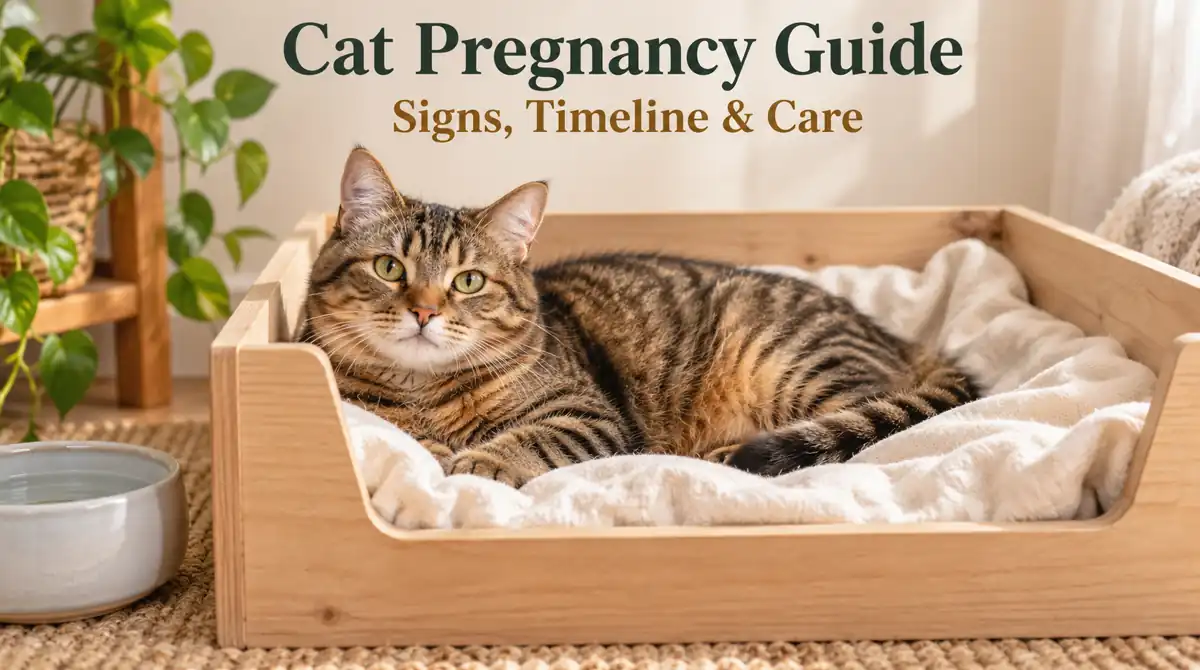
Cats are usually pregnant for about 63–65 days, or roughly nine weeks. The exact timing can vary, and a mating date does not always tell you precisely when conception happened. Your veterinarian can help confirm the pregnancy and estimate when the kittens may arrive.
You may notice that your cat is eating more, resting in unusual places, or developing a rounder belly. These changes can raise the possibility of pregnancy, but they cannot confirm it on their own. A veterinary appointment is the best next step.
This guide from Viltnemnda explains the cat gestation period, possible pregnancy signs, everyday care, and the changes that mean you should call a vet.
This article provides general information. Your veterinarian should guide care for your individual cat, including medicines, feeding, and delivery planning.
How Long Is the Cat Gestation Period?
The cat gestation period is the time the kittens develop before birth. Around nine weeks is a useful planning estimate, not an exact countdown.
If you know when mating occurred, share all possible dates with your vet. Cats may mate more than once, which makes a single date less reliable than it appears.
If you adopted a cat or found her outdoors, you may have no breeding history at all. Your vet can use an examination and appropriate imaging to assess the pregnancy.
Avoid estimating the due date from belly size alone. Body condition, litter size, and other factors affect how a cat looks.
Ask your vet for an expected delivery window and a date to call if labor has not started. If your cat seems unwell, contact the clinic immediately rather than waiting for that date.
How Can You Tell if a Cat Is Pregnant?
Early pregnancy can be difficult to notice. Some cats show few obvious changes until later.
Possible signs include:
- Nipples becoming pinker or more noticeable.
- Gradual weight gain and a growing abdomen.
- Changes in appetite.
- More resting or different social behavior.
- Searching for a quiet nesting place later in pregnancy.
Nipple changes may become noticeable around the third week. However, these signs are clues rather than a diagnosis.
A swollen belly can have causes other than pregnancy. In an unspayed cat, abdominal swelling combined with poor appetite, unusual thirst, discharge, or marked tiredness needs prompt veterinary assessment. A serious uterine infection called pyometra can cause some of these symptoms.
Do not press or squeeze your cat’s abdomen to look for kittens. Leave that examination to a veterinarian.
How a Vet Confirms Cat Pregnancy
Your vet will ask about possible mating dates, recent heat cycles, appetite, and any changes you have noticed.
An ultrasound can help confirm pregnancy from around three weeks after mating. It can also help assess the developing kittens, although it is not the most reliable way to count the litter.
Later in pregnancy, an X-ray may help estimate kitten numbers once their skeletons are visible. Your vet will decide whether imaging is useful and when to perform it.
A home observation, photograph, or online checklist cannot replace these checks.
Before the appointment, write down:
- When your cat might have been near an unneutered male.
- When you first noticed changes.
- Her current food and any medicines or supplements.
- Any vomiting, discharge, reduced appetite, or unusual behavior.
These notes help the vet assess the situation without relying on memory alone.
Cat Pregnancy Timeline: What You May Notice
This timeline is approximate. Cats do not all develop visible signs on the same day, and the table should not be used to diagnose pregnancy or predict an exact birth date.
| Approximate stage | Possible changes | Useful action |
|---|---|---|
| Weeks 1–2 | Few or no visible signs | Record possible mating dates |
| Weeks 3–4 | Nipple changes may appear; pregnancy may be confirmed by a vet | Arrange an appointment and discuss care |
| Weeks 5–6 | Weight gain and abdominal enlargement may become clearer | Review food intake and body condition |
| Weeks 7–8 | More nesting behavior and mammary development | Prepare a quiet birth area and emergency plan |
| Around week 9 | Restlessness, nesting, and other labor-related changes may appear | Observe calmly and follow the vet’s delivery advice |
A timeline helps you prepare. It does not explain every symptom.
For example, repeated vomiting or a cat refusing food should not simply be dismissed as a normal pregnancy stage.
What Should You Feed a Pregnant Cat?
Pregnancy and nursing increase the demands on your cat’s body. Ask your vet to recommend a complete diet suitable for growth, pregnancy, and lactation.
A suitable commercial kitten food is often used, but the feeding plan should account for your cat’s weight, body condition, and health.
Do not automatically double her food as soon as pregnancy is suspected. Both inadequate feeding and excessive weight gain can create problems.
As pregnancy advances, smaller meals offered more often may be easier for her to manage. Keep fresh water readily available.
Ask your vet:
- Which food is suitable?
- How should portions change?
- How should weight and body condition be monitored?
- What should she eat while nursing?
Avoid adding calcium, vitamins, or other supplements unless your vet recommends them. More nutrients are not always better when the main diet is already balanced.
Are Flea Treatments and Medicines Safe During Pregnancy?
Some products are suitable for pregnant cats, while others are not. Safety depends on the exact medicine, formulation, and circumstances.
Tell your vet about everything your cat receives, including flea treatments, wormers, prescription medicines, and supplements.
Do not start a new product or stop an essential prescribed medicine without advice. The vet can weigh the risks of treatment against the risks of leaving a condition untreated.
Vaccination decisions also need individual guidance. Ideally, vaccination status is reviewed before breeding. If the pregnancy is unexpected, ask your vet what is appropriate now.
Keep a written list of the products used and the dates they were given.
Preparing a Comfortable Nesting Area
Offer your cat a quiet, warm, draft-free space before the expected delivery window.
A sturdy box with an accessible entrance can work well. It should have room for her to lie comfortably and turn around. Use clean, absorbent bedding without loose threads.
Choose somewhere away from busy walkways, children, and other pets, while still allowing you to observe her without crowding her.
Introduce the space early. Your cat may explore several places before settling, so keep unsuitable hiding places safely closed.
Keep her indoors during the final two weeks to reduce the chance of her giving birth somewhere you cannot monitor.
Alongside the nesting area, prepare:
- Your regular vet’s number.
- The out-of-hours emergency number.
- A suitable carrier.
- Clean replacement bedding.
- A simple record for delivery times.
- Transport arrangements in case help is needed.
Signs a Cat Is Going Into Labor
As birth approaches, your cat may become restless, groom more, visit her nesting area repeatedly, or seek reassurance. Some cats prefer privacy.
These changes do not give an exact delivery time.
Early labor can involve behavior changes before obvious abdominal pushing begins. Later, visible contractions help deliver the kittens.
For a plain-language explanation of the stages, see the PDSA guide to cat labor.
Watch quietly and record when strong pushing starts and when each kitten arrives. Avoid repeatedly moving or handling the mother unless your vet advises it.
Resting between kittens and pushing hard without producing a kitten are different situations. The second needs much quicker attention.
When to Call a Vet During Birth
Call your vet or emergency clinic immediately if:
- Your cat has strong, persistent straining for around 20 minutes without producing a kitten.
- A kitten appears stuck or is visible without progressing.
- Your cat collapses, becomes extremely weak, has difficulty breathing, or appears in severe pain.
- There is heavy fresh bleeding.
- There is green or dark discharge before the first kitten, or foul-smelling discharge.
Do not wait for a time threshold if your cat is clearly distressed.
Cats can sometimes rest between kittens, but a long pause should be discussed with a vet if you think more kittens remain. Do not assume that a prolonged break is safe because you read that interrupted labor can occur.
Describe whether she is resting comfortably or actively straining, how many kittens have arrived, and the delivery times.
Do not give medicines to stimulate contractions or try to pull out a kitten without direct veterinary guidance.
Caring for the Mother and Kittens After Birth
Once the kittens arrive, keep the area quiet and the bedding clean and dry. Observe whether the mother is attentive and whether the kittens begin nursing.
Arrange a post-birth check with your vet; VCA recommends examining the mother and litter within 24 hours.
Young cats are called kittens, as explained in our guide to baby animal names. At this stage, their immediate needs are warmth, milk, and close observation.
If the mother is comfortable with brief handling, weigh each kitten daily on a suitable scale and keep individual records. Ask your vet what progress to expect.
Contact the vet promptly if a kitten is cold, weak, not nursing, crying persistently, or failing to gain weight. Seek urgent help for breathing problems or a mother who becomes seriously unwell.
Keep feeding the mother a suitable diet for nursing, with water close enough to reach easily.
Can a Cat Become Pregnant While Nursing?
Yes. Nursing does not reliably prevent another pregnancy.
Keep the mother away from unneutered males and discuss spaying with your veterinarian. The right timing depends on her condition and the kittens’ needs.
A cat does not need to have a litter before being spayed.
If the pregnancy was unexpected and you are unsure you can care for a litter, speak to your vet early about the available options. Planning ahead is easier than trying to make decisions during labor.
You can also explore the Viltnemnda animal blog for broader animal information, while keeping individual medical decisions with your vet.
Common Questions About Cat Pregnancy
How many months are cats pregnant?
About two months, usually around nine weeks. Counting in days or weeks is more useful because calendar months vary in length.
Can a cat be pregnant without a large belly?
Yes. Early pregnancy may cause little visible change. Appearance alone cannot confirm or rule out pregnancy.
How young can a cat become pregnant?
Cats can become sexually mature from around four months old. Keep unspayed females away from unneutered males and discuss preventive care with your vet.
How many kittens will my cat have?
Litter size varies. PDSA gives an average of about four kittens, but your cat may have fewer or more. Belly size is not a reliable counting method.
Can cats have a false pregnancy?
Yes, although it is less common than in dogs. Pregnancy-like changes need veterinary assessment rather than a home diagnosis.
Is vomiting normal during cat pregnancy?
Some cats may vomit during pregnancy, but repeated vomiting, reduced appetite, or appearing unwell should be assessed. Do not assume pregnancy explains an illness.
What if my cat passes her expected due date?
Call your vet using the delivery window agreed at her appointment. The estimate may be uncertain, but that is a reason to seek advice rather than keep waiting without a plan.
How long does it take a cat to give birth?
Delivery length varies with the litter and the mother. Track progress and contractions rather than relying on one total number of hours. Strong straining without a kitten or any distress needs urgent advice.
A Simple Plan for the Weeks Ahead
If pregnancy is possible, arrange a veterinary appointment first. Then agree on a feeding plan, prepare a quiet nesting space, and save the emergency clinic’s contact details.
Keep a short record of changes and delivery times. That information is more useful than trying to match every movement to an online timeline.
Most importantly, ask for help when something does not seem right. You do not need to identify the complication yourself before calling your vet.