







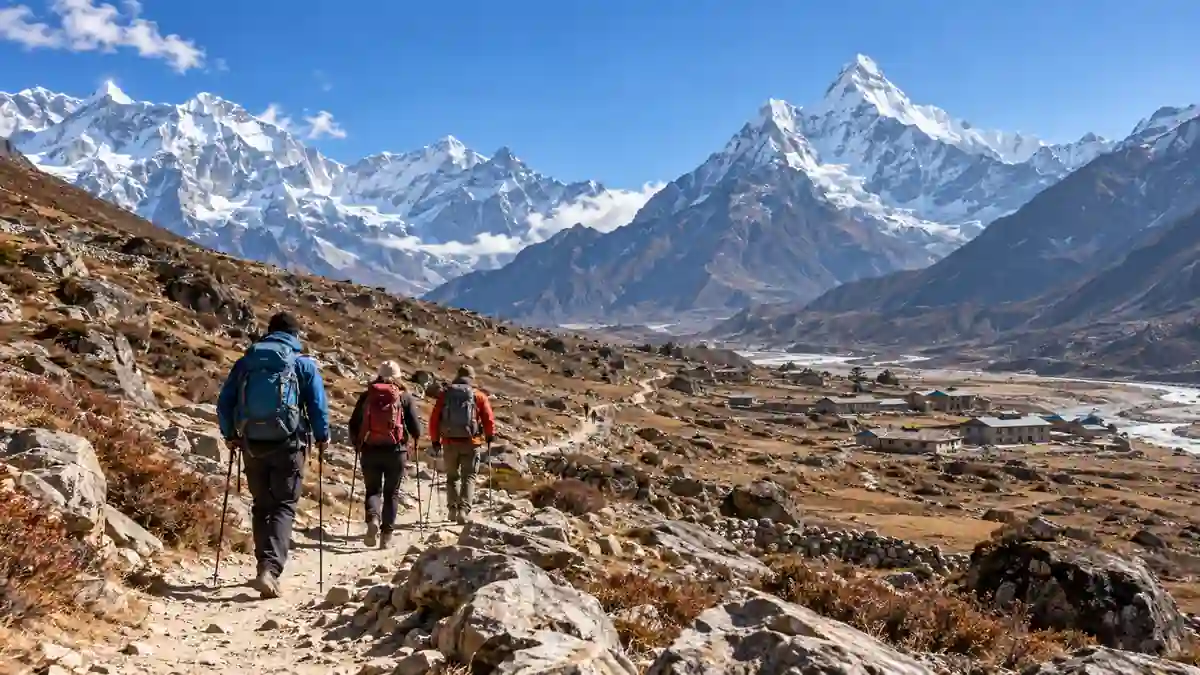
Each day on the Everest Base Camp trek feels distinct, shaped less by numbers than by thinning air and uneven ground. Progress shows not only in steps taken yet also through pauses forced by height and steep climbs. What appears simple on maps becomes layered once walking begins. Standard summaries often miss rhythm changes that come with altitude adjustments. Movement splits into parts governed by stamina, rest schedules, frequent stops – elements left out of most plans.
Total Distance and Acclimatization Pauses
About 130 kilometers make up the entire Everest Base Camp route, going from Lukla to Base Camp and returning. Still, movement along it rarely follows a straight path forward. Often, hikers spend one complete day resting in Namche Bazaar, then later pause again in Dingboche or Lobuche – less due to immediate tiredness, more because the body adjusts slowly when air thins. Such breaks do not disrupt progress; instead, they form part of how distance is managed. Missing these intervals may lead to strain that shows no clear warning until too late.
Distance vs Effort on the Trail
Some days cover just eight kilometers, others push toward fourteen – yet effort shifts sharply based on climb. Though the path climbs close to 600 meters across nine kilometers from Monjo to Namche, it hides its strain behind modest numbers. Steep steps cut into slopes slow movement, making the journey last up to six hours despite short measure. Meanwhile, the route from Debuche to Pangboche spans only five kilometers, mostly level in shape. During early or late season, ice coats the trail, forcing cautious steps regardless of map scale. Duration tells a clearer story than kilometers alone, however most trip outlines overlook such detail.
Teahouse Locations and Daily Stages
Where teahouses exist shapes travel patterns. Grouped irregularly, shelters gather near central settlements from Phakding to Namche, permitting shifts in daily schedules. Past Tengboche, however, resting places grow sparse. Adjusting stage lengths becomes difficult due to limited rooms, especially between March and May or October through November. Following set stops then follows not choice but need.
River Crossings and Timing Strategy
Early passage matters near rivers such as the Dudh Kosi and Imja Khola, which swell as glaciers thaw through daylight hours. Mid-morning brings stronger currents because solar warmth increases runoff volume gradually. Traversing at first light reduces exposure on hanging footbridges where steel decking erodes without pattern. Foot traffic later in day meets greater instability, amplifying sound and movement beneath boots. Fatigue builds differently – not from muscle strain but from sustained alertness amid trembling spans. Distance perception alters subtly; seven kilometers feel denser once uncertainty rises with water levels.
Weather and Navigation Challenges
Occasionally, weather introduces quiet complications. As clouds move into valleys, visibility drops where trails cross bare moraines close to Gorakshep. In narrow gorges, satellite connections weaken at random intervals, so digital tools become uncertain guides even when devices are available. Certain travelers follow marked stone piles or colored flags tied along high edges – clues absent from standard route charts. Everest Base Camp Trek travelers rely upon steady attention during each stage of movement.
Rest Stops and Energy Preservation
Here, rest areas operate unlike those on lowland trails. Though teahouses provide boiled water, simple food, and small snacks, their purpose is not only supply. Instead, they act as shelters against cold. Even under bright sun, thin air at heights past 3,500 meters increases danger when winds blow. Warmth retention becomes necessary where weather shifts without warning. Resting inside helps stabilize body heat, enabling continued movement afterward. Failing to pause – thinking it saves time – typically results in faster fatigue because small exposures accumulate unnoticed.
Local Knowledge and Trail Efficiency
What stands out becomes visible through motion. Though burdened with sacks near thirty kilograms secured by cloth bands across the forehead, residents move these paths without seasonal break. Speed surprises those who expect struggle – guides on foot often find themselves passed by figures weighted down more than they are. Such ability does not arise only from bodies shaped by thin air over decades, yet includes knowing exactly how each stretch behaves: which slabs slide under pressure, where cold splits masonry when night falls. Knowledge of this kind cannot be passed on by manuals. Because newcomers do not have ingrained physical experience, small risks often go unnoticed – each one adding delay. What seems trivial may disrupt rhythm when repeated.
Hydration and Cognitive Impact
Perceived effort shifts when hydration routines falter. In high-altitude settings, thin air carries moisture away through breath at a faster rate. Lack of reliable fluid sources leads certain individuals to drink less, wary of needing rest stops often. Cognitive clarity and motor control decline slightly under these conditions – though such effects tend to be blamed on leg fatigue instead. Treating water takes minutes; allowing it to boil introduces lags that shorten available trekking hours later in the day.
No Fixed Daily Distance Reality
A fixed daily distance does not exist. What changes is how each stage resets conditions through hidden limits: when blood oxygen falls under 88%. Meal timing matters – how long since eating before effort begins. Mental stamina adjusts depending on how well one slept during earlier nights above sea level. Such elements function outside visible metrics like number of steps taken.
Beyond Distance: Understanding Movement
What defines the EBC trek cannot be captured by kilometers alone. Movement here includes stops, backward steps during altitude adjustment, delays due to weather or physical strain. Achievement comes less from ground covered and more from recognizing standard pace models do not hold where oxygen drops. Conditions follow their own logic. Shifting perception requires noticing subtle cues – sun warming stone surfaces enough to release vapor on icy paths, or shade creeping sooner along slopes facing west beyond Lobuche. Slow precision overtakes haste. Within such change, insight emerges – less about daily distance covered, more about how motion transforms under harsh conditions.
Disclaimer
This article is for general information and does not replace professional trekking or medical advice. Distances, walking times, trail conditions, and accommodation availability may vary. Consult a qualified local guide for current route conditions and a healthcare professional about high-altitude travel. Do not rely on a single oxygen reading to judge whether it is safe to continue. Mentioned trekking services are not a guarantee of safety or quality.